
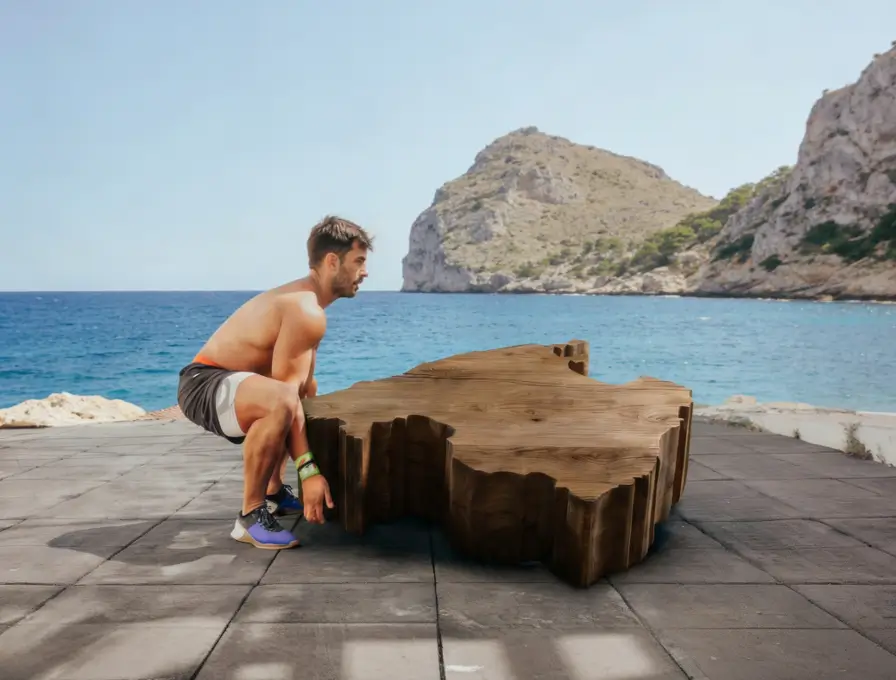
Mallorca is experiencing a surge in physical exercise that goes far beyond the gym: it combines health, image, social pressure and an increasingly powerful industry.
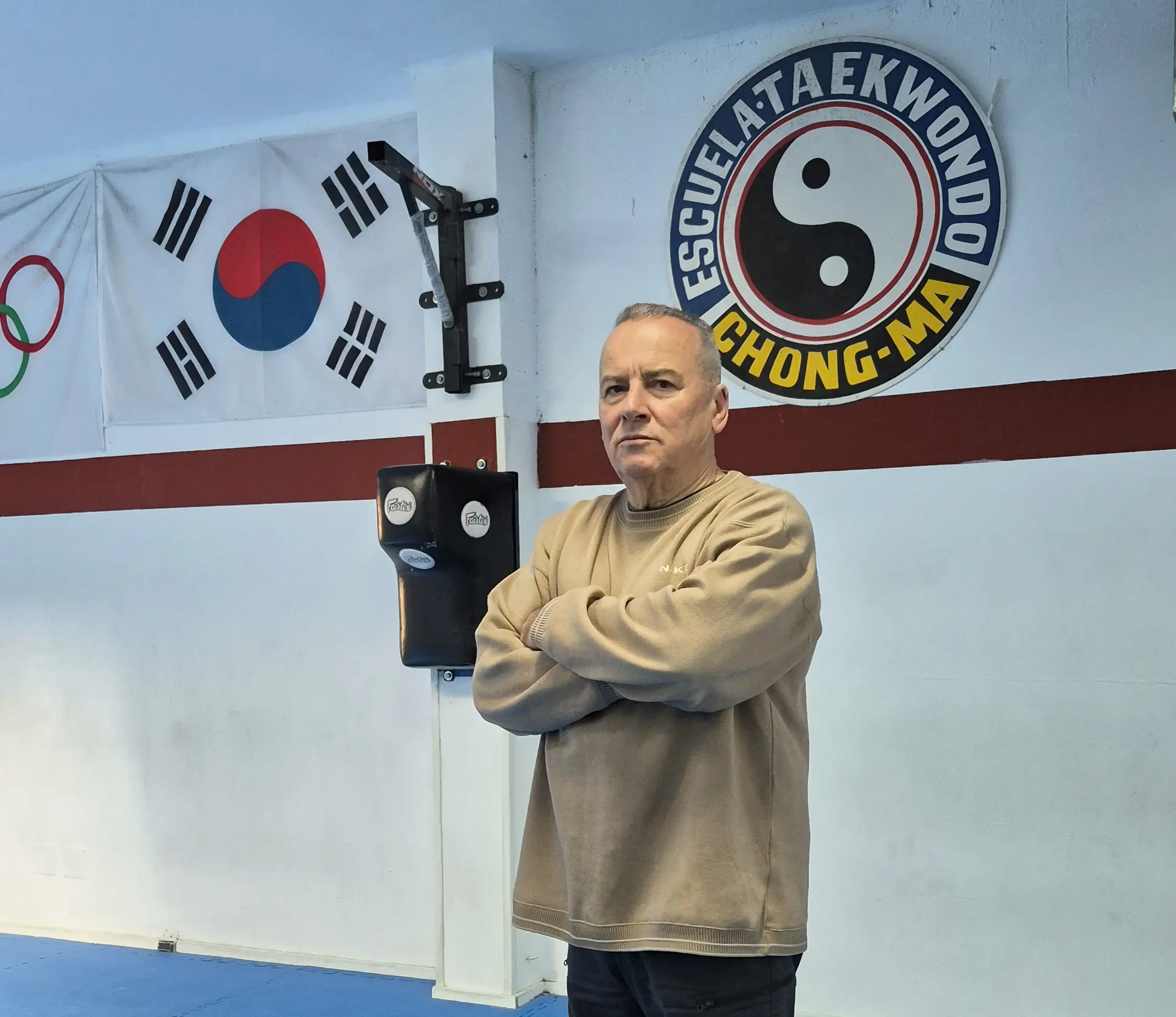
There was a time when the island’s gyms could be counted on one hand. “There were four or five of us, and we all knew each other: Judo Club Palma, Olimpic, another one on Calle Huertos…,” recalls Patricio Gómez, owner of what is probably the oldest gym still operating in Palma, Chong Ma, opened in 1976. “There wasn’t as much fitness hype or body culture as there is now,” he says.
Back then, interest focused mainly on martial arts, fuelled by the imagery of the films of the time, while the weights room was little more than a complement. “The only place devoted to weights and bodybuilding was Hércules, which later closed because it didn’t have the turnout there is today.” Half a century on, the picture is very different.
Patricio Gómez places that change within a very clear timeline. “Things started to shift in the 1980s; popular musicals like Fama pushed many girls towards gymnastics. In the 1990s, more strength-focused gyms opened, and from 2000 to today it has been a boom — they’re everywhere,” he says.
Mallorca is now living through a sports boom visible in the spread of chains, boutique centres, personal training and outdoor exercise spaces, but also in a new relationship with the body, increasingly linked to image, exposure and social pressure. The gym is no longer just a place to train: it is also a space for socialisation, a personal routine and an expanding industry.
Large chains have gained ground in Palma and other urban centres, while premium centres, specialised studios and personal training continue to multiply as physical activity moves outdoors, with calisthenics parks and wellness areas. Never before have there been so many ways — or so many places — to train.
The importance of appearances
Body culture is nothing new. In ancient Greece, physical form symbolised virtue, and in Rome it became spectacle. But never before had the body been so exposed or so closely tied to identity and social recognition as it is today.
For UIB sociology professor David Abril, this boom points to a deeper social transformation in which “it is no longer only important to be, or even to have, but to seem.” “The body and the image we project,” he says, “have become a central element of our lives.”
Abril believes the pandemic accelerated this logic by intensifying digitalisation and reinforcing a society “based on constantly displaying our image, and preferably that of a normative body.” More than a passing trend, he sees it as one of the new urban rituals: “As religions no longer have the importance they once had, what now gives us order and structure in everyday life are gyms or physical activity.”
In Mallorca, he adds, this trend is even more intense. “The island itself lives off its image,” he says. In a highly touristic society, where residents and visitors expose their bodies much more, appearance takes on even greater weight, also in sectors where, he says, the image projected by workers matters a great deal, in line with what sociology has defined as “erotic capital.”
And everything suggests that this dynamic “is here for the long term”: in a fragmented society, the gym offers not only socialisation, but also an immediate, visible reward. “The effort you put into the gym shows in the body in the short term. In other areas of life, unfortunately, it doesn’t.”
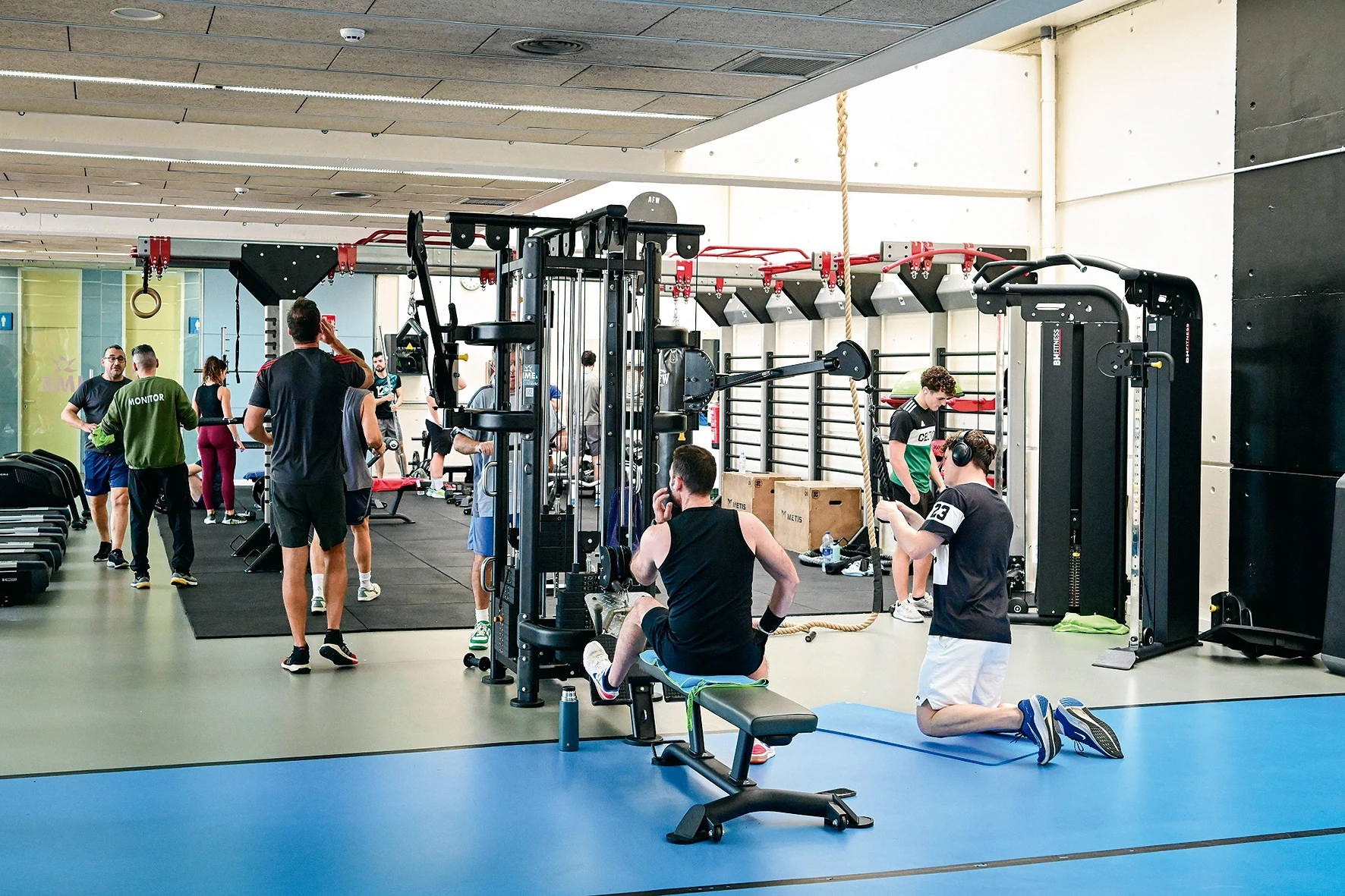
Photo: IME.
Body dissatisfaction and aesthetic pressure
But this new centrality of the body also has a darker side. Clinical psychologist Esther Bautista, a specialist in eating disorders, warns that the relationship with the body remains, in many cases, “problematic or conflictive,” with body dissatisfaction appearing at increasingly early ages. “We know that 70% of adolescents do not feel comfortable with their bodies,” she stresses.
Aesthetic pressure, she adds, has not disappeared and “in some cases has even increased,” despite the rise of movements such as body positive, mainly because of digital overexposure and the omnipresence of unrealistic images on social media.
That pressure also affects men. “At present, stereotypes encourage women to pursue thinness and men to pursue a muscular, defined and athletic body,” she explains. Bautista warns that this pressure can lead to body dissatisfaction, eating disorders, compulsive exercise or vigorexia.
She adds one striking fact: gay men are, after heterosexual women, the group most affected by eating disorders. “What these two populations have in common is that both are constructed through the male gaze.”
Social media acts as a powerful amplifier of this pressure, turning comparison into a constant experience, “since people display themselves and receive approval through ‘likes’, comments and followers,” in a context where routines, advice from influencers and body transformations can encourage healthy habits, but also reinforce standards that are difficult to attain and create feelings of guilt.
Hence, in her view, “within fitness culture there is a very blurred boundary between commitment and obsession or over-demand”: the problem arises when exercise stops responding to wellbeing and becomes a rigid necessity, marked by control and fear of not measuring up.
Longevity, health and professionalisation
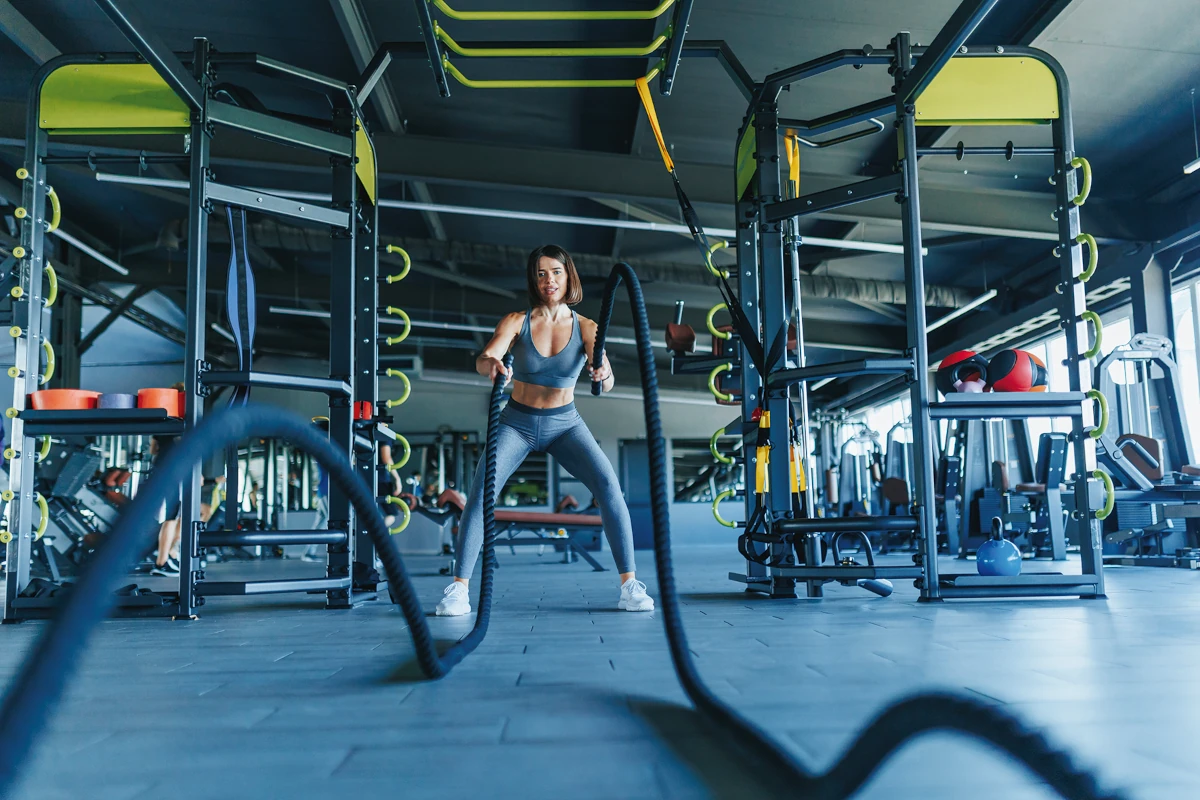
At the same time that exposure and pressure on the body are increasing, this transformation is also driving greater professionalisation in the sector. From the UIB, Aina Galmés, head of the degree in Physical Activity and Sport Sciences, notes a “very notable evolution” in recent years, “with growing social presence and increasing awareness of the benefits of physical activity for health.”
The degree’s launch in 2024 also began with “extraordinary” demand: 275 first-choice applications for 35 places in its first year. In Galmés’ view, the current moment responds to a combination of factors: on the one hand, a cultural shift around the body and image; on the other, a growing awareness of longevity, quality of life and the maintenance of autonomy.
In this context, the university insists on the need to continue advancing in professionalisation, with profiles that are “properly trained, competent and ethically responsible,” capable of offering a practice that is “safe, high-quality and aligned with the needs of the population.”
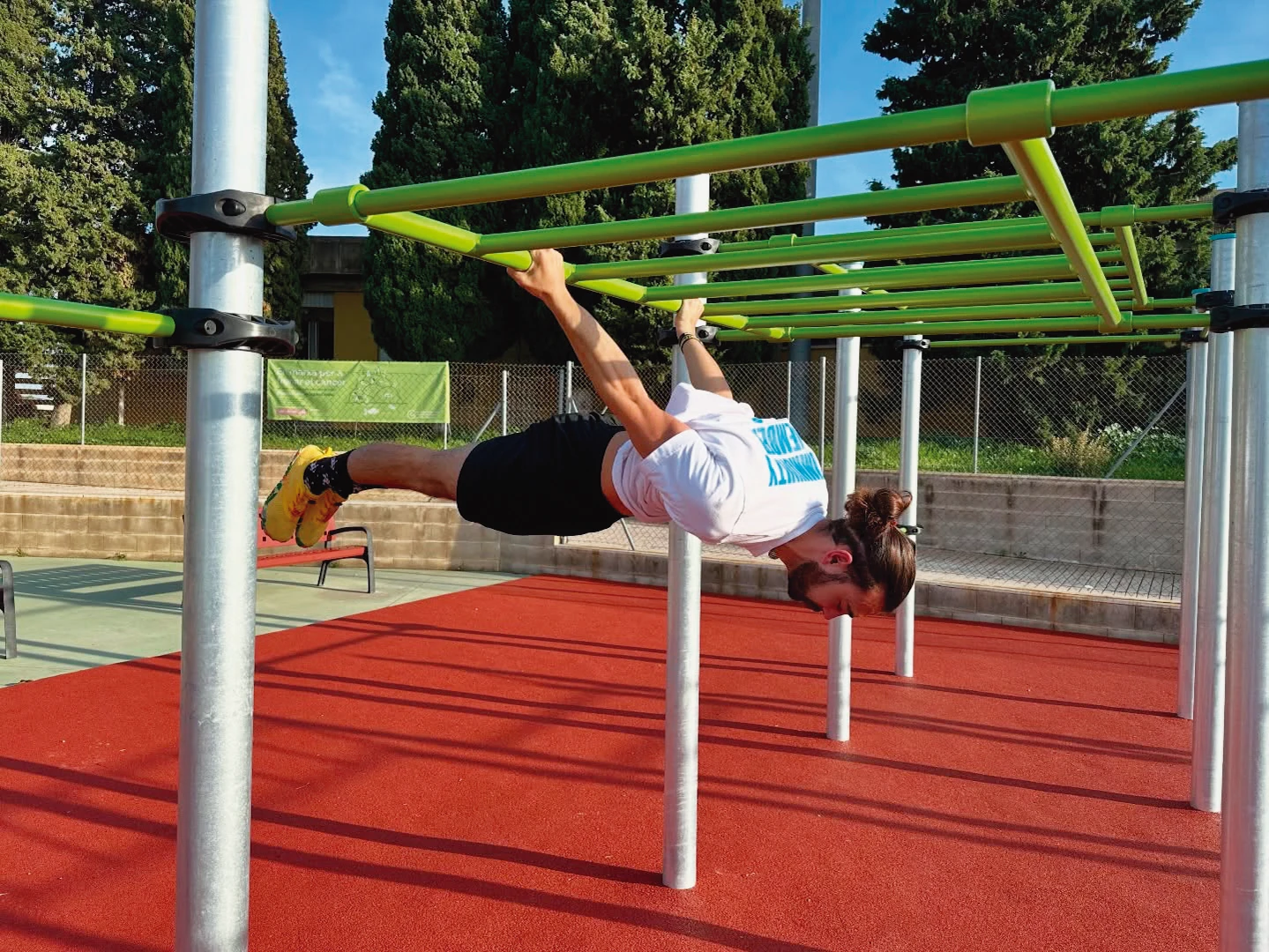
Between the pursuit of health and the need to fit in, this phenomenon reveals the extent to which the body has come to occupy a central place. In Mallorca, where image weighs heavily in leisure, tourism and many work environments, that transformation is especially visible. And it is also measurable: in sports spending, in the proliferation of centres, in public investment and in the consolidation of an increasingly broad and professionalised sector.
A snapshot of the fitness sector in Mallorca: from neighbourhood gym to a multi-million-euro industry
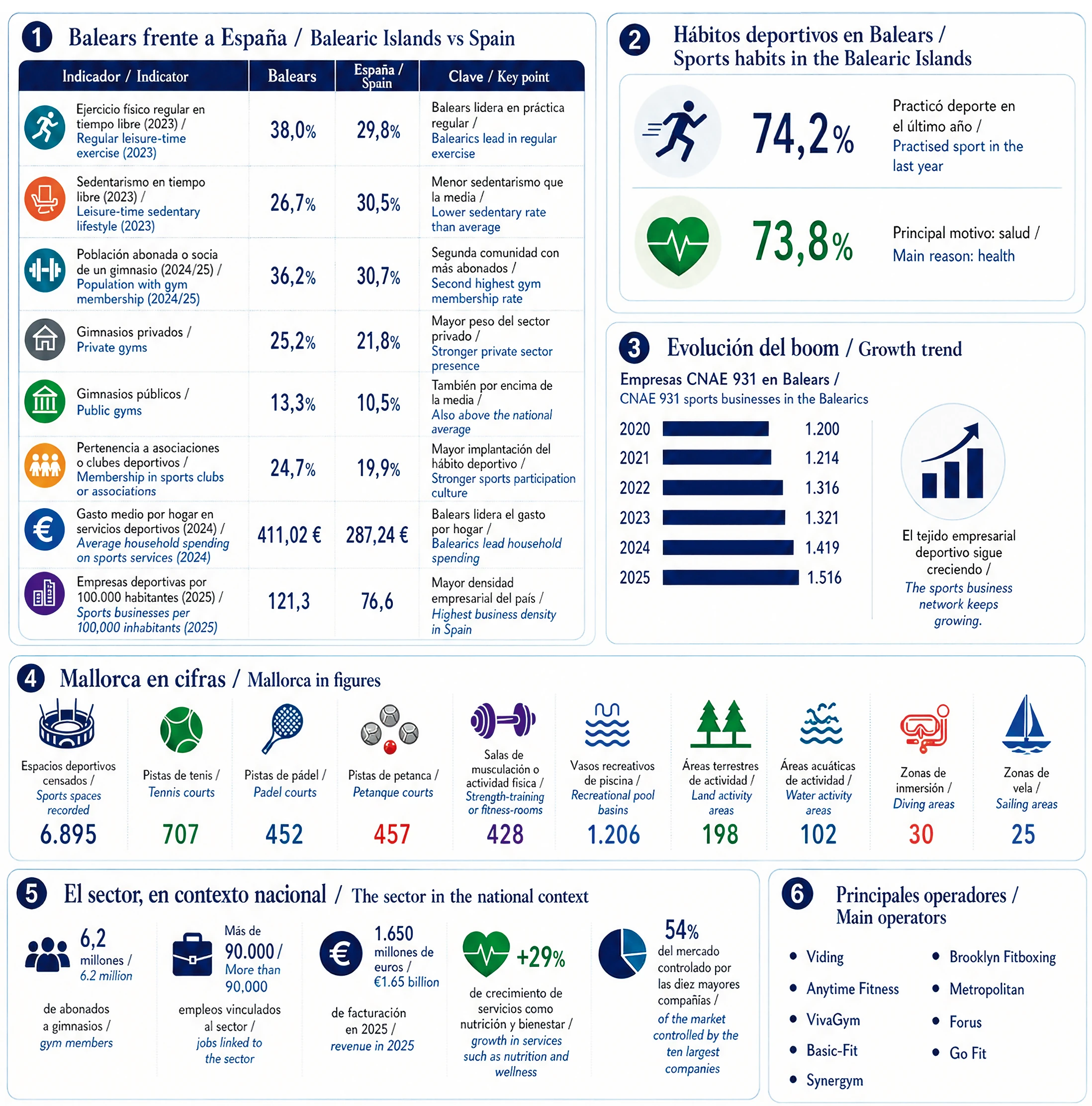
The boom in physical exercise is visible not only in the streets, on social media and in the constant opening of new centres. It is also reflected in the data. In 2023, the Balearic Islands recorded the highest rate of regular leisure-time exercise in Spain and, according to the 2024/25 Survey of Sports Habits in Spain, the second-highest share of the population subscribed to or registered with a gym.
This strong sporting culture is also reflected in spending: the Balearic Islands lead Spain in average household spending on recreational and sports services, well above the national average.
The president of the Balearic Association of Sports Facility Entrepreneurs (AEIEB), Naty Company, places that shift on a structural level. She speaks of “several hundred centres, including gyms, boutique studios, personal training centres and large sports facilities,” in addition to the whole associated business network.
After the pandemic, she says, the sector not only recovered but entered a phase of sustained growth. “Today’s user is more informed and demanding. They want to improve their health, prevent illness, achieve physical and mental wellbeing, and receive a personalised service,” she sums up.
That momentum is also reflected in the rise in companies linked to sport. In 2025, the Balearic Islands recorded 1,516 companies in sports activities, up from 1,200 in 2020, making the archipelago the Spanish region with the highest density of sports companies per inhabitant.
The big chains
The offer has diversified rapidly. Traditional gyms are now joined by major chains, premium studios, personal training, crossfit boxes and hybrid centres. Company points out that “the models growing the most are those that provide added value,” from the boutique approach to more personalised formats.
Mallorca has also become an attractive market for national operators and franchises. Viding, which strengthened its presence on the island after acquiring Illes Fitness, now operates centres in Marratxí, Calvià, AiguaBlava and Son Rapinya, while brands such as Anytime Fitness, VivaGym, Basic-Fit and Synergym are reinforcing an increasingly competitive market.
This process is part of a wider national context of expansion: Spanish gyms increased their turnover in 2025, surpassed 6.2 million members, and the ten largest companies already control more than half of the business.
An island built for training
The expansion has also reached public space. By the end of 2025, the Consell de Mallorca had promoted the installation of 142 modules in different municipalities across the island, with an investment of more than four million euros.
Mallorca also has an especially broad and diverse sports ecosystem: the official census counts 6,895 sports spaces.
Habit data helps explain this strong presence: 74.2% of the Balearic adult population practised sport in the last year, and health appears as the main reason.
But the challenge, Company warns, is no longer only to grow, but to organise that growth. Among the sector’s priorities are professionalisation and regulation, with malpractice remaining a constant concern, alongside talent retention, digitalisation and business sustainability. AEIEB is also working to make gym membership fees deductible under personal income tax, as is already the case in other regions.
The final picture is that of a sector that can no longer be read only in sporting terms. In the Balearic Islands, and especially in Mallorca, it has become an industry with economic weight, the ability to attract chains and franchises, and a growing presence both in urban space and in household budgets.
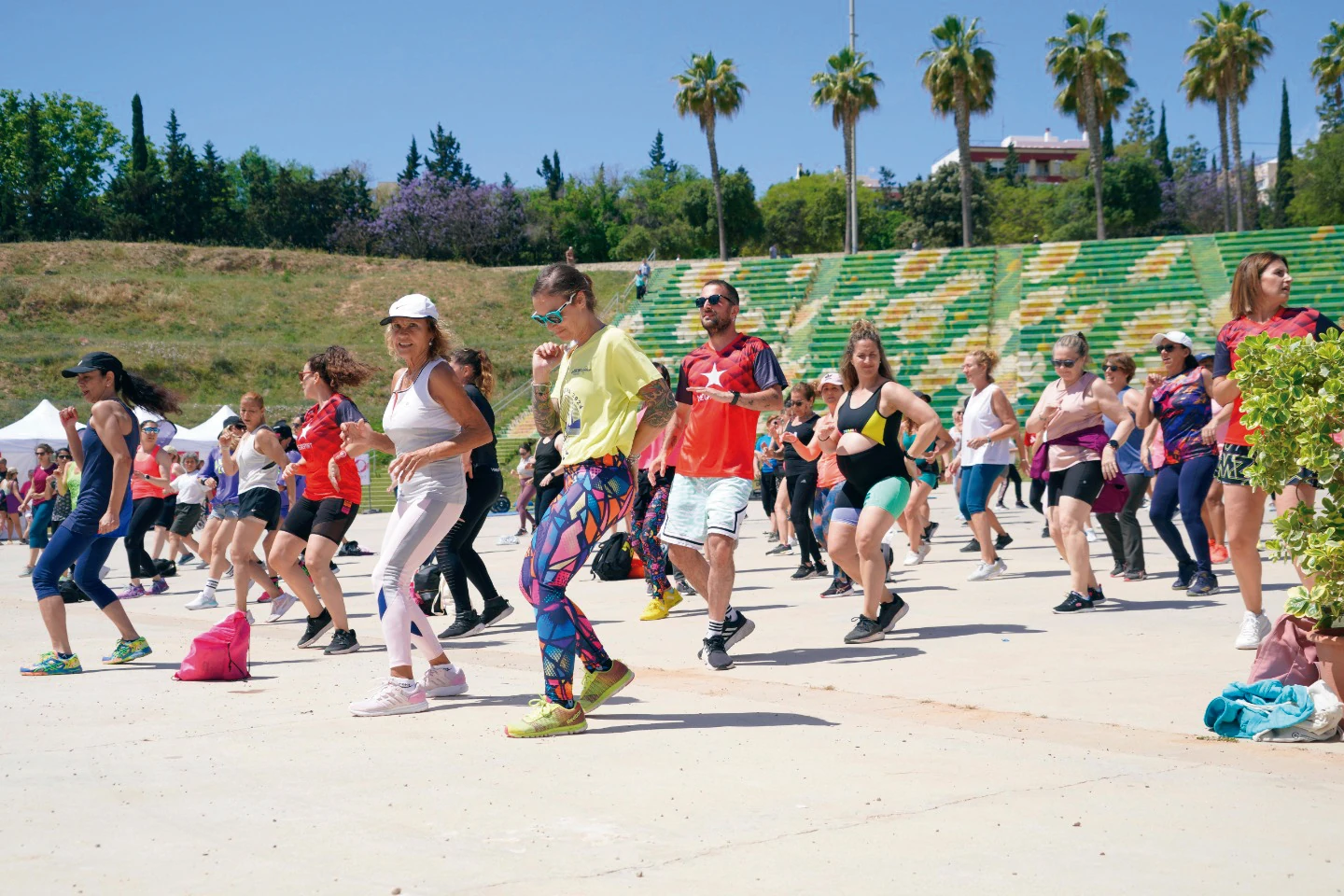
Photo: IME.
The new gym diet
Nutrition has become another pillar of this new physical culture. María Colomer, Head of Training at CODNIB and a dietitian-nutritionist, notes that more and more people understand that food and exercise cannot be treated separately.
“You should eat to do sport, not do sport so you can eat,” she sums up. And she adds a key idea: “Any recommendation a dietitian-nutritionist can make is for a human being who does physical activity; for a sedentary person, that is not health.”
Colomer also detects a change in the way people take care of themselves: it is no longer seen as something done alone. “They look for a social group that does sport, and very often the family or partner ends up coming too…”
The other side of the phenomenon is the normalisation of supplements. Protein and creatine are part of this ecosystem, often without professional supervision. “People now come in and tell you what they take. Young people tell you the colours of what they bought as if we were supposed to know what that means,” she says.
For the nutritionist, this points to “misinformed purchasing of products that, if not used properly, will not provide any benefit.”
“Food first, and then see whether a supplement is needed and which one.” Creatine, she admits, is a safe and common product in sport, but not necessarily essential for everyone, while protein can often be covered with real food. “If they are used, it is better for them to be plain, without flavours.”
Her final advice is straightforward: consult a professional. “A good diet is one that gives vitality, prevents illness and provides energy…”
RELATED CONTENT
Interview with Aina Galmés, Head of Studies for the Bachelor’s Degree in Sports Science at the UIB.
UIB sociologist David Abril analyses the phenomenon of the fitness boom in Mallorca.
Interview with Esther Bautista, a psychologist specialising in eating disorders.





Leave A Comment