
UIB sociologist David Abril analyses the surge in physical exercise, the centrality of the body and the growing weight of image in an increasingly digital, more exposed society that is also more in need of references of order and validation
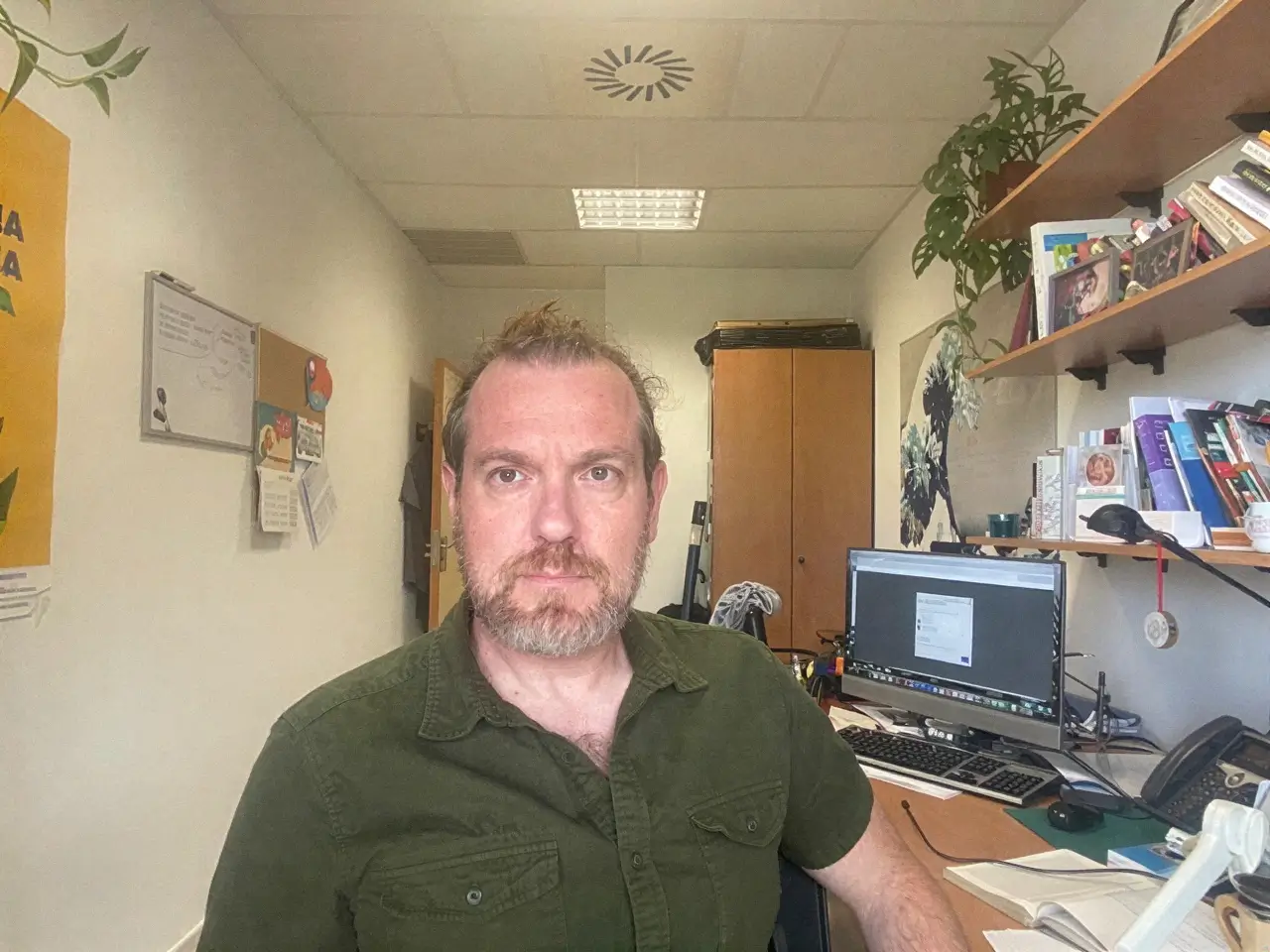
The boom in gyms and physical exercise cannot be read only in sporting terms. For David Abril Hervàs, a sociologist at the UIB, behind this expansion there is a deeper cultural shift: a society in which the body and projected image are taking on an increasingly central place. In this interview, he reflects on the logic of spectacle, constant exposure, the role of Mallorca as a territory especially sensitive to appearance, and the function that spaces such as the gym now fulfil in a context of uncertainty and social fragmentation.
— How would you interpret the current rise of fitness and the centrality of the body in society? What is really happening?
— Back in the 1980s, when social media did not yet exist but television did, Guy Debord coined the concept of the “society of the spectacle”, in which personal image was gaining importance. It is what he called reification: it is no longer only important to be, nor even to have — as Erich Fromm also said — but to seem. The body and the image we project have now become, both through social media and beyond it, a central element of our lives and, to some extent, of the way society functions.
— What has changed compared with 10 or 15 years ago in our relationship with the body?
— We have been through several consecutive economic crises, which have also transformed society. Covid, for example, beyond the fact that many people started doing exercise at home during lockdown, and that this later led to an increase in sporting activities, above all involved an intensification of the digitalisation of society. And therefore, it also intensified that society based on constantly displaying our image, preferably the image of a “normative” body.
— Are we looking at a fashion or at a deeper and more lasting cultural change?
— Bauman speaks about new rituals in urban societies, in the sense that, as religions no longer have the importance they once had, what now gives us order and structure in everyday life are gyms or physical activity. For example, there are also many more people than before the pandemic practising running. I also think that, in a society loaded with uncertainty and precariousness for the majority, taking care of the body gives us a certain feeling that “I am here”. In fact, when faced with depression or other mental health problems, professionals often prescribe physical exercise in addition to medication.
— In a context like Mallorca, with constant exposure of the body due to the beach, tourism and certain lifestyles and professions, do you think this phenomenon intensifies?
— Absolutely. The island itself lives off its image. And that is true both for residents and for those who visit us. In a tourist-driven society, our bodies are much more exposed than in other societies. Added to this is the fact that service-sector companies, especially in everything involving contact with the public, also place a great deal of value on the image projected by their workers, which is what Catherine Hakim calls “erotic capital”.
— How is social media influencing this?
— There is a positive side, in terms of health, and I think that lockdown in some cases helped raise awareness of the importance of taking care of our health and, therefore, also of our body. But there is also a rather unhealthy side, like seeing girls who have not even reached adolescence yet hooked on “skin care” routines.
— Traditionally, aesthetic pressure has been associated more with women. Is that changing? What is happening with men?
— Unfortunately, “equality”, in this case, has led to a situation in which the objectification suffered by women is now also suffered by men. In reality, it is levelling, not equality. But anyway… One fact: according to the Spanish Society of Plastic Surgery, men already account for 15% of all cosmetic surgery procedures. In other, less intensive interventions, I am convinced that men will end up matching women, but that is something negative, both for them and for women. We are much more than a body.
— Where do you think this trend is heading? Will we see greater intensification or a certain degree of weariness?
— I also know many people over the age of 40 who are going to the gym because these spaces also play a certain role as places of socialisation. While associations, trade unions and NGOs are losing weight in an increasingly fragmented society, these kinds of spaces are gaining it, because perhaps we need to meet other people and share things with them. Everything suggests that, whether it is a fashion or a trend, it is here for the long term, because it is the result of a fairly lost society in which we try to cling to things that give us a certain sense of security. The data tells us that meritocracy is a deception — no matter how hard we try, if you were not born rich, it is very difficult to become rich — but effort in the gym does show on the body in the short term. In other areas of life, unfortunately, it does not.
💡 Read the feature on the rise of fitness in Mallorca, included in our magazine Mallorca Global Mag.





Leave A Comment