
Patricio Gómez, founder of Chong Ma in 1976, looks back on the transformation of gyms in Mallorca from the era of martial arts to the current boom in physical exercise.
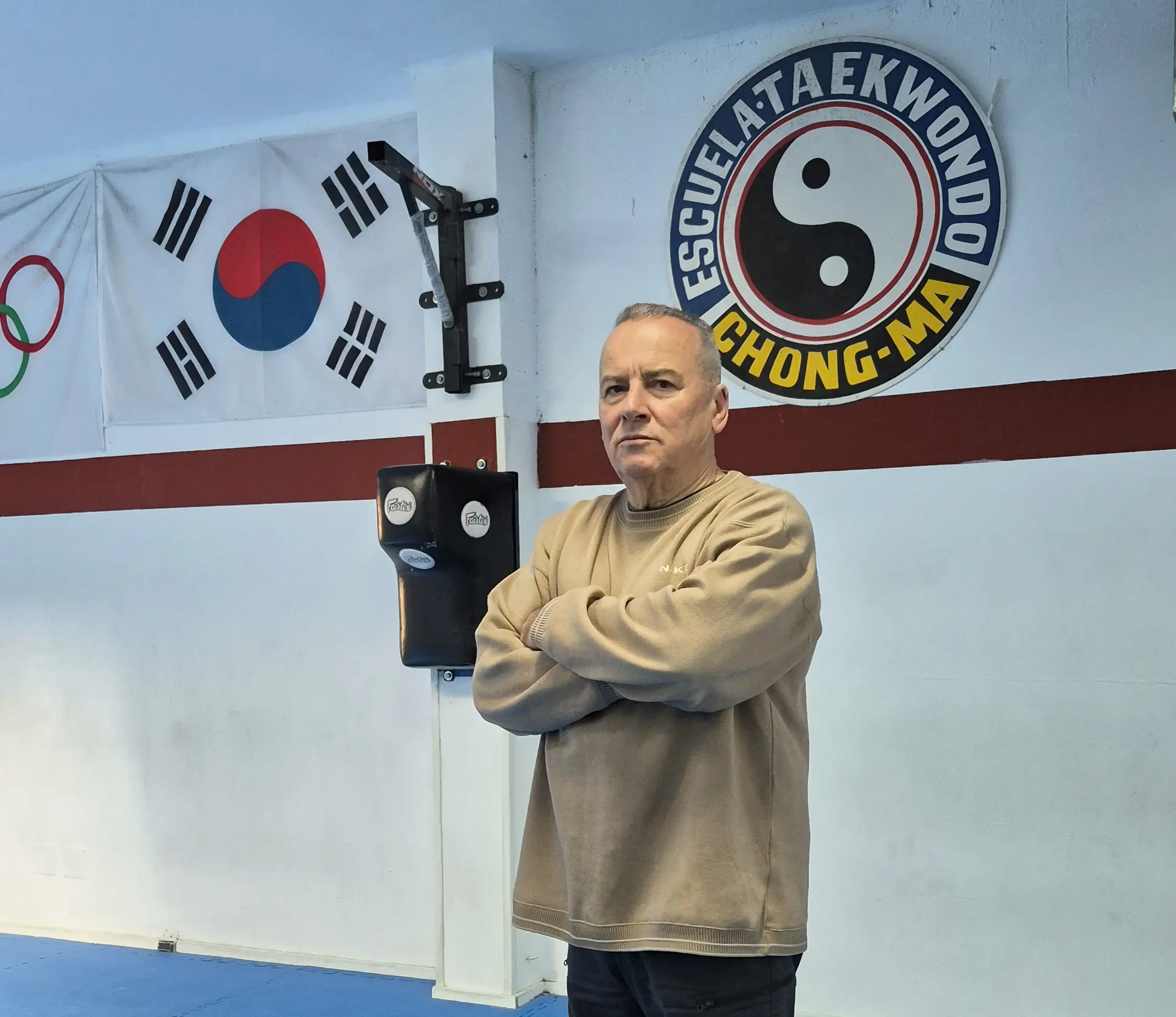
Patricio Gómez has spent a lifetime in gyms. Founder of Chong Ma, one of Palma’s most historic training centres, he has seen the island move from the era of martial arts and women’s gymnastics to the fitness boom, the rise of chains and the cult of the body. His journey is, in a way, a living snapshot of how training culture has changed in Mallorca.
— How did you decide to open the gym?
— It was something vocational. I finished in the army as a professional soldier and, because at that time the pay was poor, I decided to get into the gym world. I was a young lad and I went for it. And here I still am. I’m from Castilla-La Mancha and I was a professional in the army for two years. My intention was to continue, but since the pay was low… In the end, it’s been 55 years in gyms. By 1970 I was already involved in the world of martial arts, and the gym opened in 1976. There is huge, fierce competition, and sometimes I get a bit tired of all this. But if there’s someone who can keep up with me, I go out and keep doing things. For now, we’re still here, keeping going.
— It was a different era. What was the gym like when you opened it?
— I had very little money, in pesetas, maybe 200,000, which would be around 1,200 euros today. I set up the gym at 20 San Joaquín Street. I stayed there for 40 years, but they wanted me to take over the premises and I said no, so I moved up here (Carrer de Guillem Cifre de Colonya). People were very different back then. They were more focused, there wasn’t as much fitness fashion as there is now, nor so much body worship. It was going in another direction: martial arts. That was what people were looking for. I think it was also partly due to the influence of films at the time. I had facilities adapted for everything related to martial arts, which was what people mainly wanted. I had three rooms: one for taekwondo, another where a woman taught women’s gymnastics, which was also fashionable, and a small weights room to complement training and do maintenance work. That was something secondary, not like it is now.
— What has changed since then, both in the way people train and in the type of customer?
— People are more perfectionist now, more picky… Body culture wasn’t such a big thing before. Back then it was just about exercising, nothing more. There wasn’t such a mass of people. At the time, they were more focused on martial arts, stretching, learning… Now it has changed a lot: exercise has become widespread. Before, sport itself did not have that much visibility.
— Have people’s goals changed too?
— What people want is to reach a certain age and feel physically well. Today, after a certain age, men and women stop being active, and the human body no longer works the same way, and that brings consequences. I believe that, beyond whether it is fashionable or not, if you keep your body active, it responds. The same goes for food and rest.
— Is there more pressure over physical appearance today?
— Now people realise it and want their physical condition to improve. There’s no need to aim for too much. As long as your body works and responds… For that, two or three days a week is already fine, and if you do more, even better.
— Has the profile of the people who come changed as well?
— Before, people trained up to a certain age, but now… Martial arts don’t limit you, but after a certain age perhaps people lose interest.
— When you opened, there were very few gyms. Did you all know each other?
— At that time there were four or five gyms: Judo Club Palma, Olimpic, another one on Calle Huertos, in the centre… We all knew each other. The only place dedicated to weights and bodybuilding was Hércules, which later closed because there wasn’t the turnout there is now. Then martial arts also grew. Things started to change, whether because it was fashionable or because people felt good doing it… Sometimes I run into people in the street after 45 or 50 years and they say: “Do you remember me?” But I’ve already lost track of many of them. In the 1980s things started to change. Musicals like Fama also got many girls into it, and that happened alongside martial arts. Later, from the 1990s onwards, there was a shift towards fitness-type gyms and, in the 2000s, the boom arrived. Now there are gyms everywhere. Whether they are effective is another matter: you have to look for the professional ones.
— And what about the influence of social media? Is it noticeable?
— A lot of people move because of social media. In a way, there is a constant bombardment telling you what is most suitable, what is most convenient. But the person has to have some grounding and actually like what they are doing. Many are what I call showroom trainers. They go two or three days, get an adrenaline rush, but after a month or month and a half they stop. Then they come back… That is not really their thing; there has to be continuity and consistency. There is more precision now, machines are more sophisticated, but everything depends on what each person is aiming for. In martial arts, people are looking for things more related to their work, given the way society is: self-defence or even showing off. In the fitness world, many people are focused on staying fit and feeling physically well because they know that in the long run it is beneficial.
— Being on an island, is sport different here?
— Mallorca has become very international. Trends arrive here earlier than they do in smaller provinces in Spain. There is greater evolution here.
— Do you still experience your profession as a vocation?
— As long as I can, I’ll carry on. There are clients, and I’m very clear about that every time I put on a kimono to teach. Sometimes I ask myself how much longer, but for me it’s vocational. Some people say to me: “Master, I don’t know how you keep going and how you’ve managed for so many years.” But I like it. I see it like being a doctor, a journalist… If you like it, you keep going and you enjoy what you do.
— What assessment do you make of all these years?
— Everyone speaks from the field that belongs to them. We, through taekwondo, at Chong Ma have produced regional, national and international champions… even Olympic medals, like Yagüe’s. He started at Chong Ma, and there have been two or three major champions. That is a great achievement and a total success. Because when you do an activity, you aim for the best possible development, and seeing students reach the level of those people makes you feel proud. Before, there wasn’t so much information. You informed yourself, you prepared, but it wasn’t like now. You taught people, guided them, and there were requirements that had to be met.
— What is someone looking for today when they come to your centre?
— When they come for martial arts, they’re looking for the physical side. They don’t do it so much to learn as to feel good. They train, stretch and feel better. We also have a boxing gym, which complements it.
— Would you like the gym to continue within the family?
— My four children have had to move to different parts of Europe. They are very good professionals. I suggested to one of them that he continue, because I would like him to carry it on, since he was connected to fitness and martial arts. And he said to me: “Dad, you’ve kept going for many years, I’ve known you like this all my life and you’ve never had a life of your own, it’s very demanding.” You get up in the morning and then you keep going in the afternoon until ten at night… That was his way of explaining to me that he was going to choose a different path.
— Today there are gyms with huge numbers of clients, big chains… How do you compete against that?
— There are gyms with thousands upon thousands of clients, chains… In my case, I try to create a family atmosphere where the people who come feel comfortable, and to give them personal training. And the same with children. It’s very hard, yes, but if we’ve been doing it all our lives, we’ll keep doing it.
💡 Read the feature on the rise of fitness in Mallorca, included in our magazine Mallorca Global Mag.



Leave A Comment