New registrations of bone marrow donors in the Balearic Islands have increased more than twelvefold in just two years. The Spanish Bone Marrow Donor Registry (REDMO) registered 44 people in 2023 and 545 in 2025, while there are currently 7,609 registered donors in the islands.
The figures show a sharp increase in the recruitment of new donors. Between the two years, registrations rose by 501 people, while 2024 had already seen a significant rise, with 395 new additions to the registry.
Bone marrow donors in the Balearic Islands support growing transplant activity
The growth coincides with an increase in bone marrow transplants in the Balearic Islands. During 2025, 92 procedures were carried out in the archipelago: 78 at Hospital Universitari Son Espases – compared with 61 the previous year, representing an increase of nearly 28% – and 14 at Hospital Universitari Son Llàtzer.
The increase was particularly pronounced in allogeneic transplants, which use cells from a compatible donor, whether a relative or an unrelated donor. These procedures rose from 17 to 38, an increase of more than 120%, and now account for almost half of all transplant activity.
The increase in transplants from unrelated donors was even greater, tripling in one year from 9 to 27, an increase of 200%.
More donors increase the chances of finding a compatible match
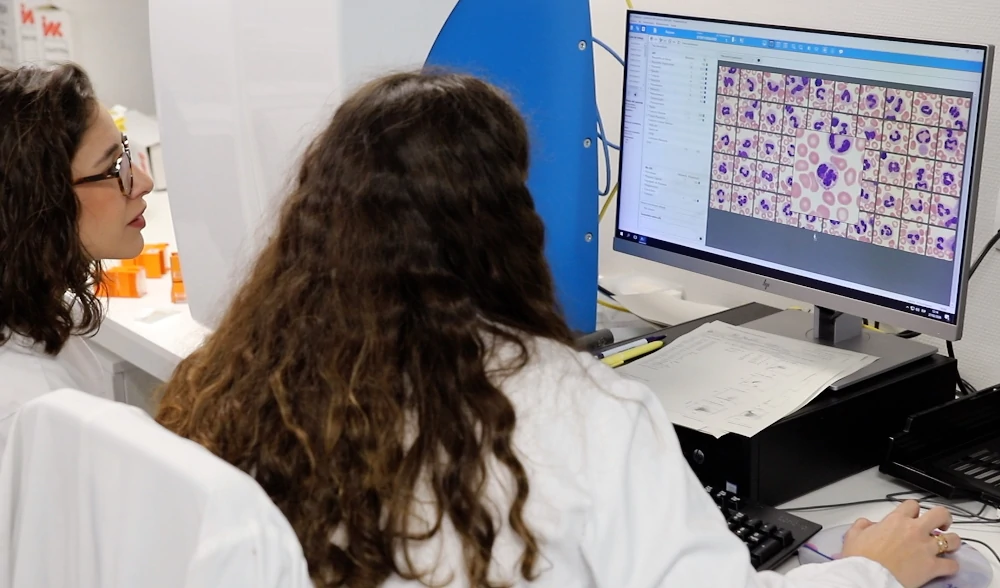
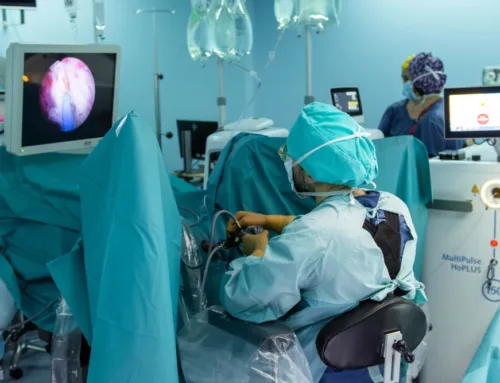
Healthcare professionals analyse samples related to bone marrow transplants in the Balearic Islands. Photo: CAIB.
The increase in new registrations is particularly significant for patients who need a transplant but do not have a compatible donor among their relatives. In these cases, the search is extended to national and international registries of voluntary donors, according to a statement from the Regional Ministry of Health.
In Spain, this process is managed through the Spanish Bone Marrow Donor Registry (REDMO). Having more donors available increases the chances of finding a compatible match, which is particularly important given the growth in transplants from unrelated donors.
The recruitment of new donors involves multidisciplinary teams from hospitals and the Blood and Tissue Bank, which carry out information and awareness initiatives to promote bone marrow donation.
Donation is voluntary and altruistic and is based on a principle of international solidarity. A person registered as a bone marrow donor is available to provide haematopoietic progenitor cells, the blood-forming stem cells, to any compatible patient who needs them.



Leave A Comment