A total of 397 people showed evidence of sexual exploitation or trafficking for the purpose of sexual exploitation in Palma, according to the municipal report for 2025. The figure represents 43% of people in prostitution contexts included in the population analysed by Palma City Council.
The Report on the Identification of Cases of Sexual Exploitation and Trafficking for the Purpose of Sexual Exploitation (TFES), prepared by the Equality Department, compiles data obtained through municipal services and organisations working directly with people in prostitution contexts. The document itself warns that the 397 identified cases should be understood as an estimate based on those who received assistance, due to the difficulties involved in detecting certain situations.
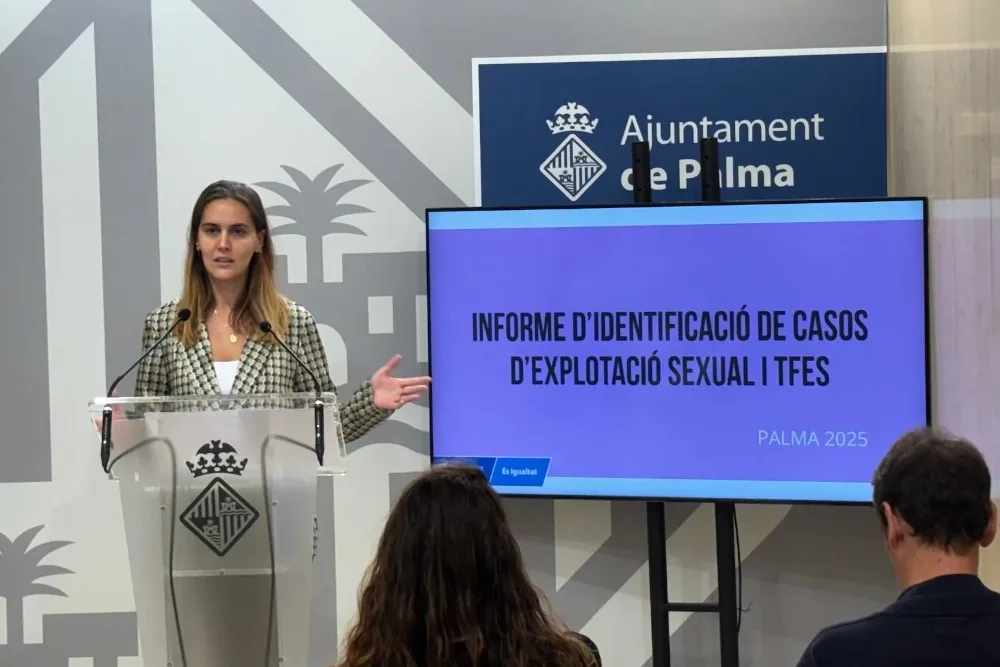
Second Deputy Mayor and Councillor for Equality Lourdes Roca during the presentation of the 2025 Report on the Identification of Cases of Sexual Exploitation and Trafficking for the Purpose of Sexual Exploitation. Photo: Palma City Council.
During 2025, 1,328 people in prostitution contexts in Palma received assistance. Of these, 62% received ongoing or longer-term support, allowing them to establish a relationship with professionals, while 38% received one-off assistance aimed at addressing specific needs.
Most people assisted received healthcare
Figures on the assistance provided during 2025 show that healthcare was the most widely used service. Specifically:
- 84% received healthcare.
- 71% received social support.
- 46% received legal advice.
- 29% received career guidance, training or job skills support.
- 15% received psychotherapeutic support and specialised psychological assistance.
Second Deputy Mayor and Councillor for Equality Lourdes Roca highlighted the need to maintain comprehensive and ongoing support, particularly in cases showing signs of human trafficking in Palma.
“These figures show the importance of accessible, personalised and ongoing support. Often, the first step is not filing a complaint, but finding someone who will listen, provide support and offer an alternative”, she said.
The difficulties of detecting sexual exploitation in Palma
The municipal report stresses that identifying trafficking for the purpose of sexual exploitation is difficult due, among other factors, to the obstacles faced by those affected when trying to speak about their situation or report it.
Roca believes this reality reinforces the importance of professionals being able to intervene directly in prostitution contexts. “Trust and continuity are essential tools for detecting, protecting and supporting people”, she explained.
Support is provided through various resources, including the Xarxa de Coordinació per a l’Atenció Directa (XADPEP, Direct Assistance Coordination Network), promoted by Palma City Council. Casal Petit, Metges del Món, Creu Roja, the Institut Balear de la Dona, the Policía Nacional and the Policía Local collaborate in the network.
The network provides assistance and support to people in prostitution contexts and victims of sexual exploitation in Palma, with the aim of facilitating access to protection resources and promoting alternatives that enable them to move towards greater autonomy.
“At Palma City Council, we remain firmly committed to protecting victims and providing a coordinated response involving public authorities, police forces, specialised services and organisations”, Roca concluded.






Leave A Comment