
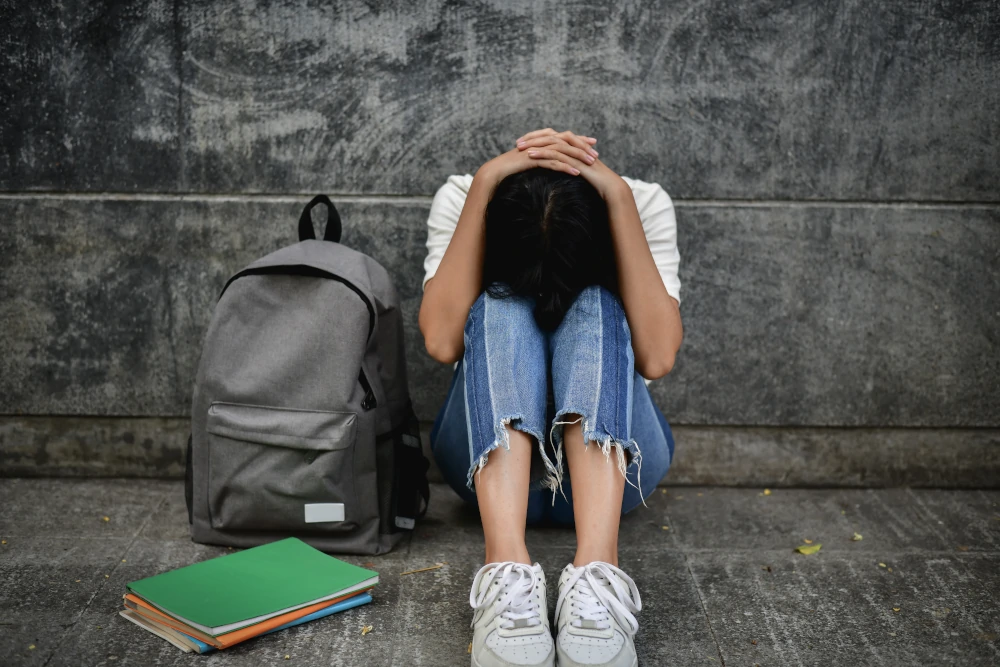
Anxiety, difficulties with personal relationships and family problems are the main issues addressed by educational psychologists in secondary schools across the Balearic Islands. During the 2025–2026 academic year, the service’s 79 professionals carried out 7,664 individual interventions, 31% more than in the previous academic year, according to the report presented by the Conselleria d’Educació i Universitats (Regional Ministry of Education and Universities). Demand for support was highest among students in the second, first and third years of compulsory secondary education (ESO), in that order, with an average age of 14.6 among those receiving support.
Anxiety, relationship difficulties and family problems
Anxiety symptoms were the most common issues addressed in individual interventions, followed by relationship difficulties and family problems. Psychologists also dealt with behavioural problems, adjustment difficulties and other issues affecting the emotional wellbeing of children and adolescents.
Group interventions focused mainly on preventing anxiety and exam-related stress, emotional management, social skills, positive relationships within schools and conflict resolution.
The educational psychology service comprises 79 professionals working in secondary schools, integrated vocational training centres and schools combining primary and secondary education (CEIPIESO) across the Balearic Islands.
Individual psychological interventions increase by 31%
The report on the Figura del Psicólogo General Sanitario en el Ámbito Educativo (General Health Psychologist in Educational Settings), prepared by the Institut per a la Convivència i l’Èxit Escolar (Convivèxit, Institute for School Coexistence and Educational Success), shows an increase in activity compared with the 2024–2025 academic year.
Individual interventions rose from 5,833 to 7,664, an increase of 31%. According to the regional ministry’s figures, 6,666 interventions were directed at students and 1,812 at families.
Group interventions also increased, from 1,078 to 1,233, a rise of 14.4%. These activities reached 20,225 students, compared with 17,932 in the previous academic year, representing an increase of 12.8%.
The increase in interventions reflects greater activity within the service, although the figures alone do not establish whether mental health problems among students have also become more prevalent.
More than 800 cases referred to primary healthcare
Coordination with healthcare services is another key aspect of educational psychologists’ work. During the 2025–2026 academic year, 815 cases were referred to primary healthcare services and 743 cases were coordinated with mental health services. In addition, 1,163 referrals or coordination activities were carried out with other specialist services.
This collaboration aims to facilitate the early identification of students’ needs and provide a coordinated response across education, healthcare and social services.
Regarding the service’s evaluation, the report records a perceived improvement of 77.62% following individual interventions, while family satisfaction reached 4.25 out of 5.
For group interventions, the perceived improvement stood at 74.93%, with an overall satisfaction rating of 4.10 out of 5.
The role of the general health psychologist in educational settings is coordinated by Convivèxit, which also organises training and monitoring activities for professionals in collaboration with educational guidance services, healthcare providers and other specialist organisations.




Leave A Comment