
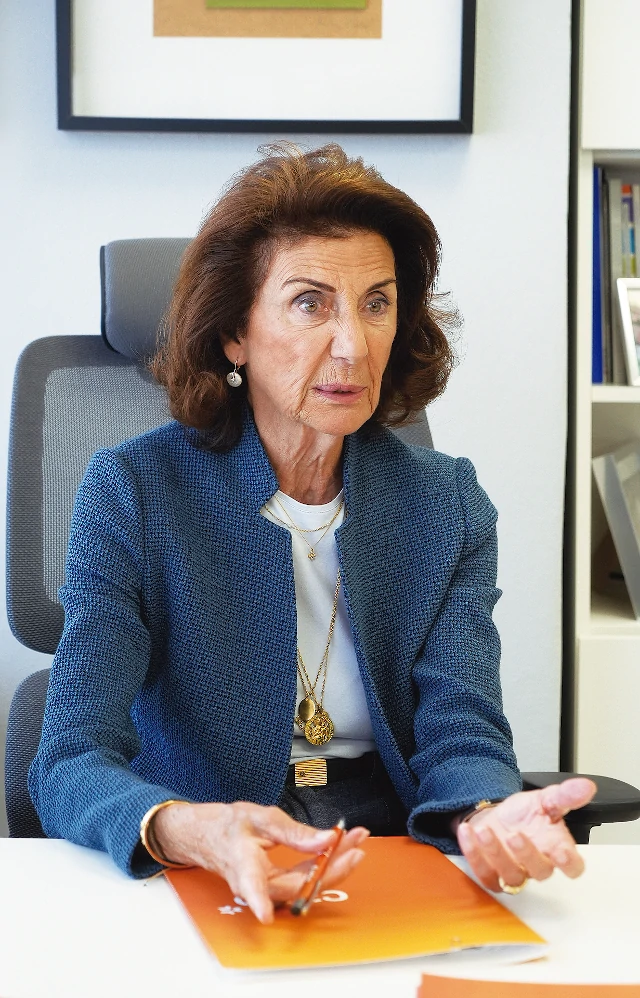
Carmen Planas, a graduate in Pharmacy from the University of Navarra, soon realised that she wanted to steer her professional career towards management and leadership. “I have always been very active, and although I liked it as a degree, I did not want to spend my life in a pharmacy.” She therefore trained in hospital management at ESADE, among other qualifications, before embarking on a career linked to healthcare management which, as she admits, “I enjoyed much more”.
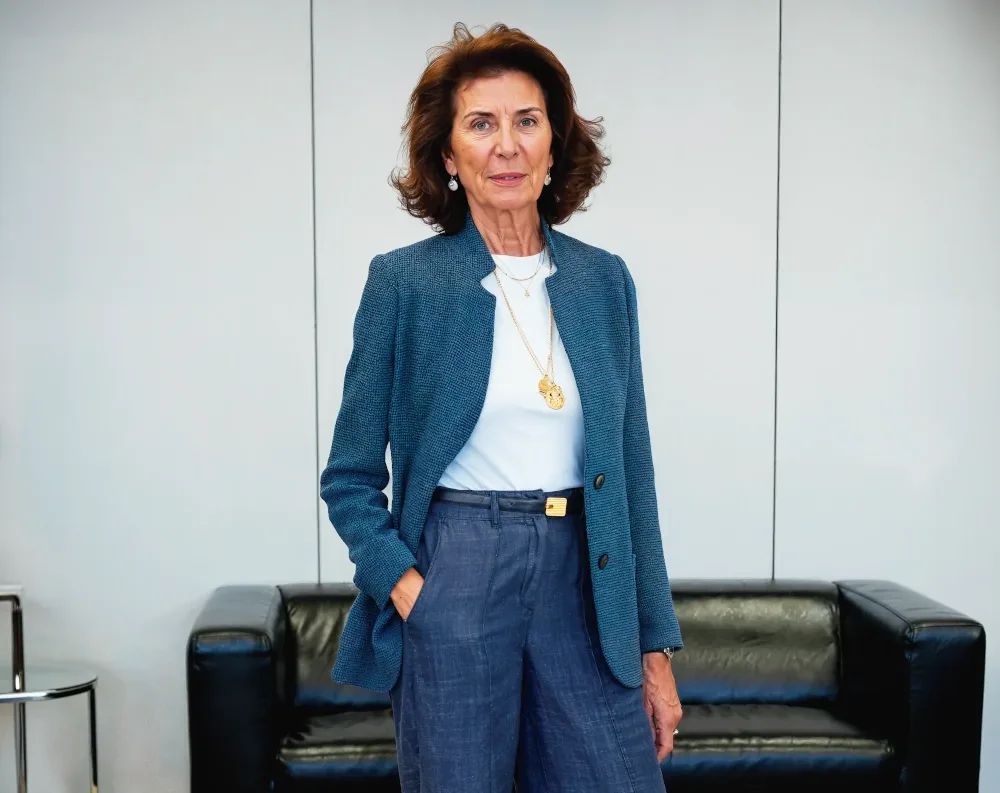
Carmen Planas in her office at the Confederation of Business Associations of the Balearic Islands. Photos: Jaime Verd.
– When you took over the presidency of CAEB, you said you felt “surrounded by ties”. Is that still the case today?
– In those days, yes, it was. Until recently, the business world and, above all, senior management, had traditionally been very male-dominated. In my case, I also came from the healthcare sector and people did not know me, so there was quite a bit of scepticism. In Madrid, for example, on the Executive Committee of CEOE there were only two regional presidents, Margarita Fernández from Melilla and myself. I arrived there and they said, “Who is she?” But over time that has been changing. I always say that when my granddaughters grow up, they will not even think about it, because there is more and more equality.
– Does being a woman bring a different way of leading?
– I believe so, because we have a different way of seeing things. We are different, each with our own strengths and weaknesses. Perhaps we have a broader, more human and closer perspective. But both men and women can lead, and do so well.
The territory is limited and the population cannot grow indefinitely
– What have you learned during all these years at the head of CAEB?
– I have learned a great deal, because before I was only familiar with hospital and pharmaceutical management, but I did not have that broader view of the business fabric as a whole. At CAEB we work with more than 90 different sectoral associations, each with its own particularities and challenges. That means I am still learning every day.
– The Balearic economy is soaring, but productivity and competitiveness are declining. What is going wrong?
– One of the main problems is company size. In Spain, 99.8% are SMEs and most have fewer than ten workers. In countries such as Germany or France, firms are larger and therefore more competitive and productive. There are also gaps in training and in attracting talent. To improve productivity, it is key to add innovation, technology and skilled staff. But we return to the root problem: here there are many self-employed workers and very small firms of two or three people who already struggle to make ends meet, so doing this is far more difficult. Tax pressure also plays a role, as it is above the European average. In this country, it is very high. According to the OECD, it is among the highest in Europe, to the point that it costs more to work than to consume. Workers are often not aware of their real cost to the company: an employee may take home around 1,200 euros a month, but the firm pays close to 2,000 once social security contributions, income tax, holiday pay and other costs are included.
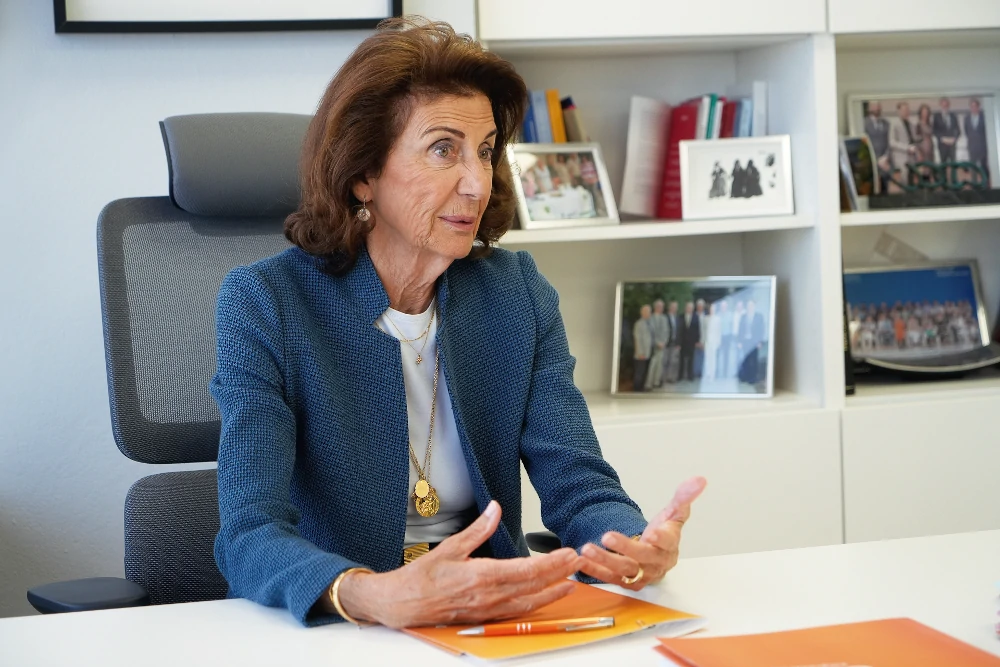
– When you talk about improving productivity, what does that mean in a specific company?
– It means doing the same with fewer resources, which does not mean with fewer staff. It is about being more efficient. This involves automation, technology and digitalisation; in short, innovation. In this context, artificial intelligence can be of great help in improving processes, although it will never be able to replace the human side of people.
– Where is the balance between growth and pressure on the territory?
– It is a very complex balance. The Balearic Islands have limited land and in recent years the population has grown a lot, from one million to one and a half million, and we cannot keep growing indefinitely. But at the same time, we need workers to sustain economic activity and more housing is also needed. That is why it is necessary to improve and expand infrastructure, such as roads and wastewater treatment plants, in order to cope with the current pressure, because for many years it has not kept pace with that growth. Even more so if we consider that in summer we reach two million people with the arrival of tourists.
Women have a broader, more human and closer perspective
– Is it necessary to set a limit on the number of tourists arriving?
– I am not saying we should limit tourist arrivals. The key is to shift from volume to value, focus on quality, improve the overall offer and upgrade mature areas, where two- or three-star hotels can move up a category. This way we can attract higher-spending visitors. It is also key to extend the season and spread demand more evenly, so it is not focused on July and August, for example by reducing flights in summer and increasing them in other months.
– Could this risk projecting an overly elitist image?
– I do not think so, because there is still a long way to go. We have a very varied offer, with very good three- and four-star hotels in beach areas and others with five stars in Palma. There are options for all types of visitors and, moreover, demand exists at all levels, as the hotels are full.
– Is there life beyond tourism?
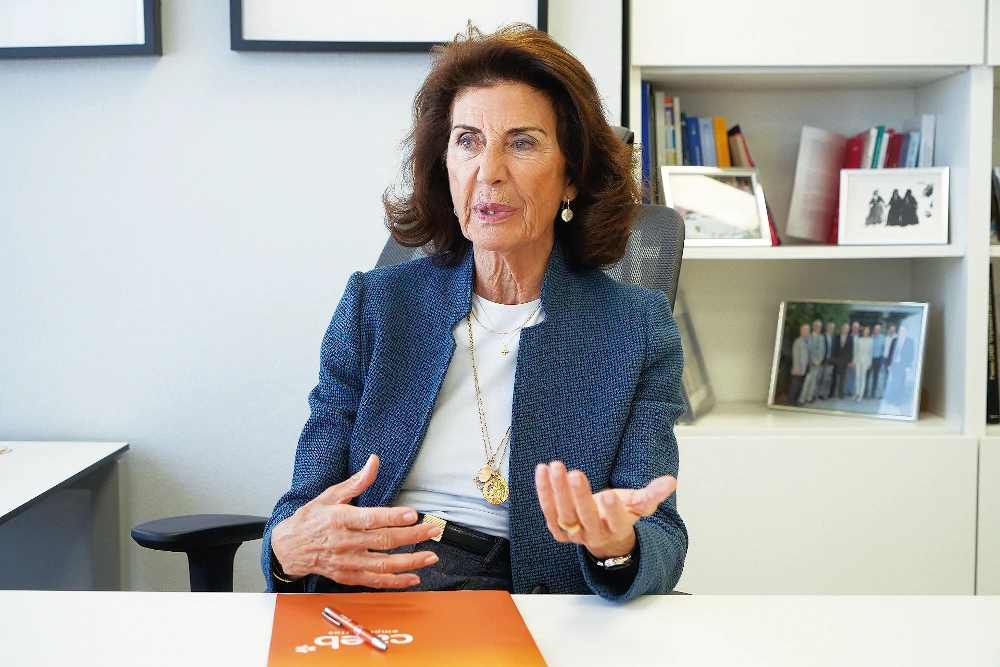
– We live off tourism and the services sector, that is the reality, and 80–90% of activity revolves around them. That said, there are also technology companies that are growing and gaining importance, and there is scope to strengthen the industrial sector, even if it has less presence today than in the past. The problem is that starting a business in our country is complicated. There is a lot of bureaucracy and launching a project can take years. Many entrepreneurs have ideas, but in the end they become discouraged by the number of procedures and difficulties.
– Has the rise in sick leave become a structural problem?
– I have always argued that when a person is ill, they should be on sick leave, but it is true that this is an issue widely discussed among businesses, public authorities and employers’ associations, because absenteeism levels in Spain are very high. According to data from CEOE, around one and a half million people are absent from work each day. The impact on companies, especially SMEs, is significant. In small teams, a single absence can force a reduction in activity or even temporary closure. There is also a striking situation: there are more cases of sick leave among workers aged between 30 and 45 than among those over 45, and a significant proportion is linked to mental health issues, which are complex and long-term processes. To this are added some isolated cases of misuse and the strain on the public healthcare system. Waiting lists delay diagnoses and medical discharges, and sick leave lasts longer than necessary. That is why the Balearic Islands are the first autonomous community where a public-private collaboration agreement has been promoted so that mutual insurance bodies can help speed up diagnostic tests.
Many entrepreneurs have ideas, but they are discouraged by the number of procedures and obstacles
– What impact could the regularisation of immigrants have on the Balearic labour market?
– From the employers’ association, we believe the shadow economy must be brought into the open. Many of these people already work informally, and it is only reasonable that they should be able to do so legally, pay into Social Security and have the same rights and obligations as everyone else, such as healthcare and education. That said, we support a regularisation linked to employment and training, with a process that ensures their skills and helps increase productivity and competitiveness. However, we do not agree with granting permits to people who will not work and will depend on public support to live, because state resources are limited.
– There is a perception that the business world feels more comfortable negotiating with right-wing governments than with left-wing ones. Is that the case?
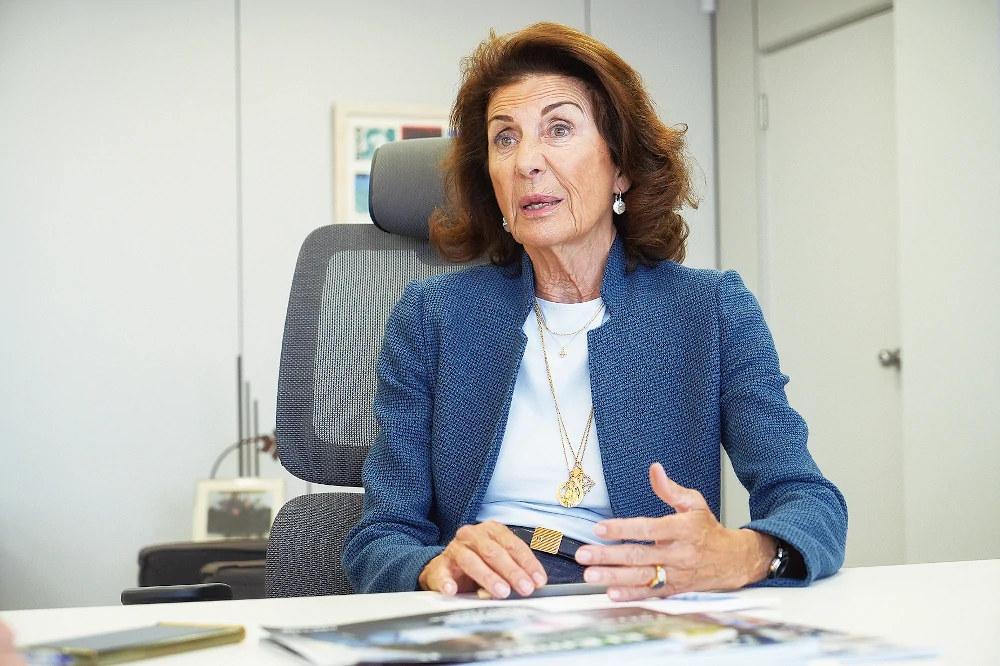
– When it comes to representing businesses, what matters is dialogue, not the political colour of the government. Our role is to defend the interests of the business community and reach agreements. To do that, we need to set out the problems, listen and find solutions that work for both sides, regardless of ideology. In my experience, I have felt just as comfortable working with the left as with the right. I have worked with governments of both PSOE and PP, with whom we have had to deal with very complex situations, such as the pandemic or the current economic context shaped by war, and we have worked hand in hand to find solutions.
– Do you think the business community is well regarded in Balearic society?
– When I arrived at CAEB, I was clear that we had to better highlight the role of business people. That is why I promoted the gala and the Businessperson of the Year Award, because for a long time entrepreneurs had been unfairly demonised. Business people are those who risk their assets, sacrifice personal and family time, invest and create jobs. Without entrepreneurs, there would be no employment. I believe the general perception is gradually improving and, in the Balearic Islands, the level of public trust in business people is above the national average.







Leave A Comment