
The Balearic economy accelerated its growth during the first quarter of 2026, recording a 2.9% increase in gross domestic product (GDP) compared with the same period the previous year. This is according to the Economic Outlook Analysis of the Balearic Islands, presented by the Vice-President and Regional Minister for Economy, Finance and Innovation, Antoni Costa, and the Director General for Economy and Statistics, Catalina Barceló.
Growth in the Balearic economy outpaced that of Spain as a whole, where GDP rose by 2.7%, and was four times higher than in the European Union. In addition, all the islands recorded stronger economic activity during the first three months of the year. Mallorca grew by 3%, while Menorca and the Pityusic Islands (Ibiza and Formentera) both recorded growth of 2.8%.
According to Costa, these figures confirm that the Balearic economy has maintained solid performance at the start of 2026.
Construction and services drive the Balearic economy
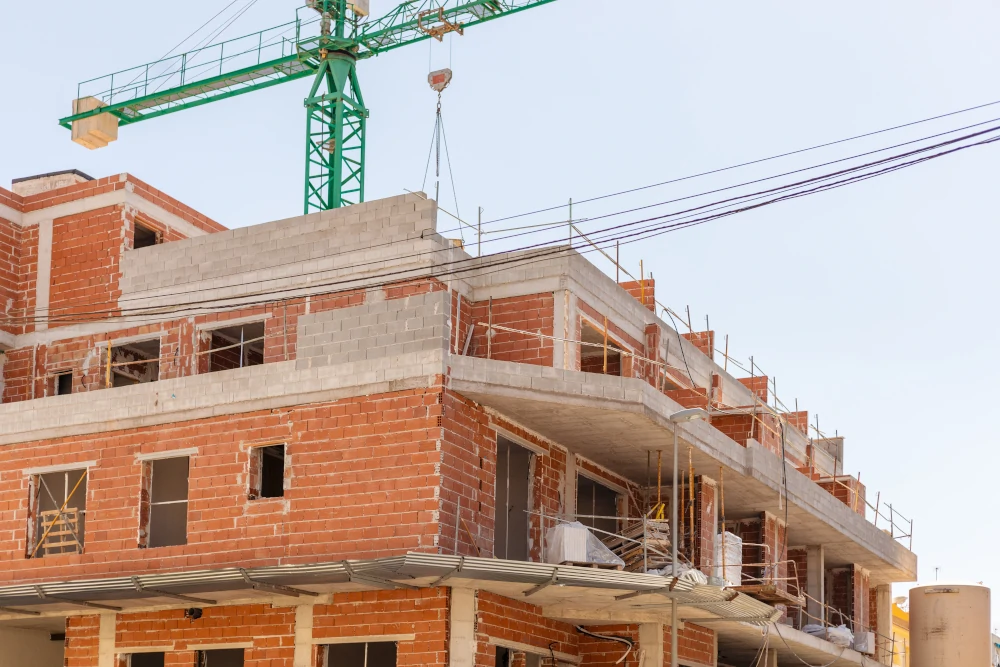
All economic sectors recorded positive results during the first quarter, although construction (+3.1%) and services (+2.9%) showed the strongest performance.
The strength of the construction sector is also reflected in residential activity. The number of new homes started reached 1,325, the highest figure since 2008, while 536 homes were completed during the first quarter.
Costa highlighted that the outlook remains positive thanks to the increase in planning permissions for new housing developments. “Housing permits have reached their highest levels since 2008, with a 70% increase to 2,418 homes approved during the first four months of 2026, driven mainly by multi-family residential developments,” he said.
Tourism and employment continue their upward trend
Tourist spending reached a new record high between January and May, totalling €5.861 billion, a 4.3% increase compared with the same period a year earlier. During those five months, the islands welcomed 5.4 million visitors, up 3.3%, while average daily tourist spending reached €194.
However, overnight stays fell by 0.3% and the average length of stay declined to 5.6 days.
The labour market also maintained its positive trend. Employment reached a new record high, with 588,858 people registered with Social Security during the first half of the year. Construction led employment growth with an increase of 3.8%, followed by services at 3.1%.
Inflation remains above the national average
The report also shows that the Consumer Price Index (CPI) reached 3.4% in May, 0.2 percentage points above the Spanish average. Meanwhile, core inflation stood at 3.3%.
Industrial production, on the other hand, fell by 6.2%. However, electricity demand increased by 3.7%, and renewable energy generation now accounts for 16.5% of all electricity produced in the Balearic Islands.






Leave A Comment