
 It was in 1435 that the Jewish religion was prohibited in Mallorca. Logically, a decree cannot make someone stop believing what they believe. By this I mean that those who were forced to be baptised all remained Jewish in their innermost selves.
From that point onwards, however, these converts behaved in different ways: some fled to places where they could continue to be Jewish freely; others allowed their descendants to become assimilated and diluted among the “old” Mallorcan Christians —a ridiculous term, since through baptism all Christians are new. Within a few generations, they became fully integrated among Mallorcan Christians, eventually forgetting their Jewish origins completely.
A third and final option for the converts was to remain in Mallorca while staying faithful to Judaism, albeit in the strictest intimacy of the family or small supra-family group, hiding their beliefs from the rest of society.
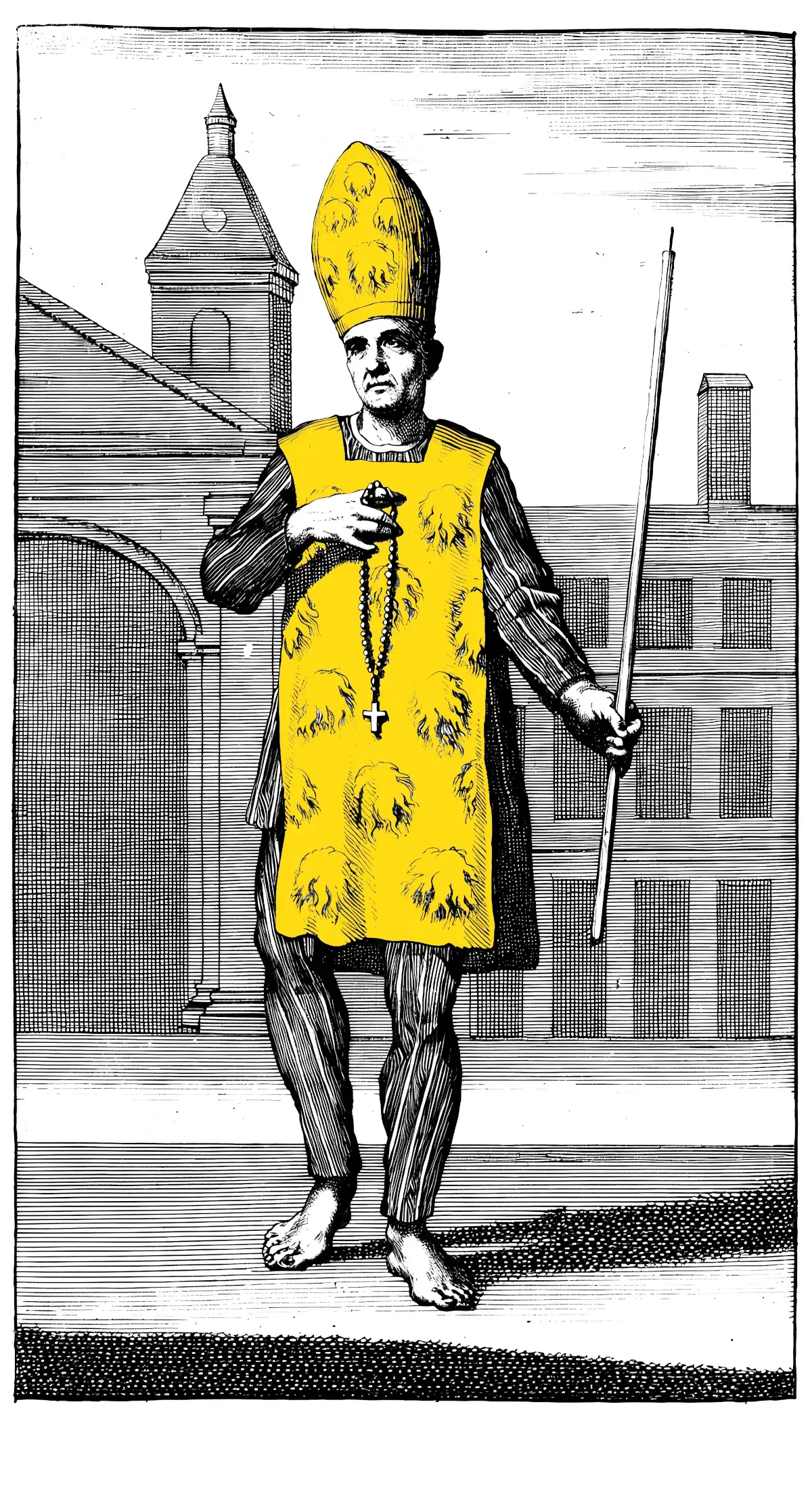
Penitent wearing a sambenito.
This third option was followed by quite a few converso families who, despite the passing of the years, were not assimilated into Christian society. By persevering in Judaism, this group did not enter into “mixed” marriages and therefore continued to marry exclusively among those secretly faithful to the faith of Moses.
This latter group, the crypto-Jews —who over time would come to be known as Chuetas— always felt that they formed part of the people of Israel. And although, as already mentioned, this whole matter was handled with the utmost discretion, the rest of the citizens soon became aware of the existence of these “parallel lives”.
Even so, as Francesc Riera points out, during the 16th century and the first half of the 17th century, inquisitorial persecution of the Jews remained half asleep. In the daily life of the city, the groups kept their distance, but in a more or less peaceful way.
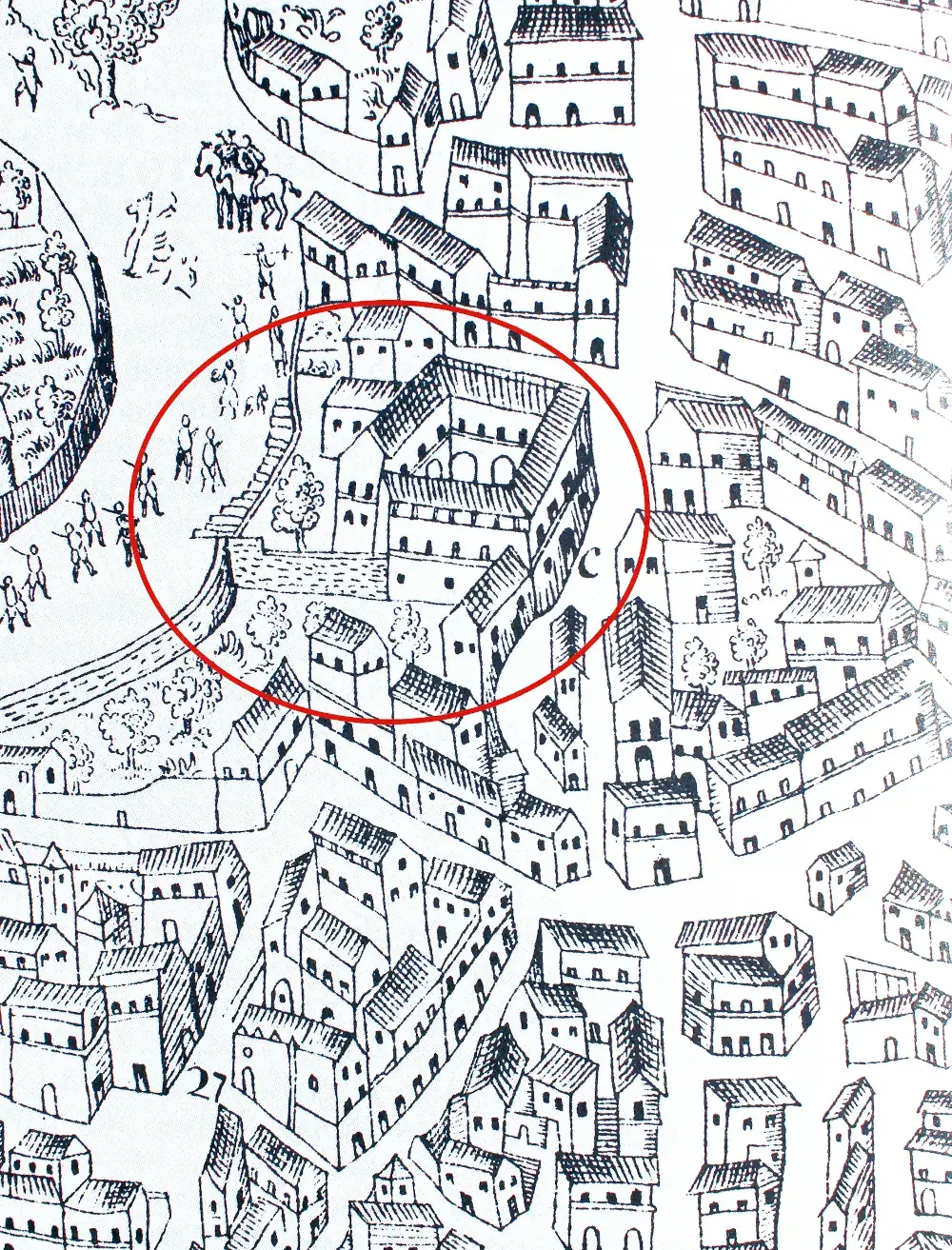
Former seat of the Inquisition in today’s Plaça Major.
Other authors, such as Ángela Selke, point to the corruption of some inquisitors, viceroys or royal prosecutors, who allowed themselves to be bribed by the Chueta community, as one of the causes of this pacification.
Whatever the case, this situation changed radically from 1672 onwards, when the inquisitorial machinery launched a process involving a large number of residents of Carrer del Segell, a public street in Palma’s former small Jewish quarter where Chueta families lived, today’s Carrer Jaume II.
The causes of this turning point must basically be sought in the convergence of two circumstances: on the one hand, the religious aspect and, on the other, the economic one. The religious aspect because, far from disappearing, Judaism on the island was growing stronger thanks to contact with Jewish communities abroad; and the economic aspect because some Chueta families were gaining a foothold among Palma’s oligarchy. This aroused suspicions among both the Inquisition and the urban patriciate.
Without going any further into the subject, the consequences were mass arrests and interrogations, and the imprisonment of a significant part of the Chueta community. From that moment onwards, most of their property was confiscated.
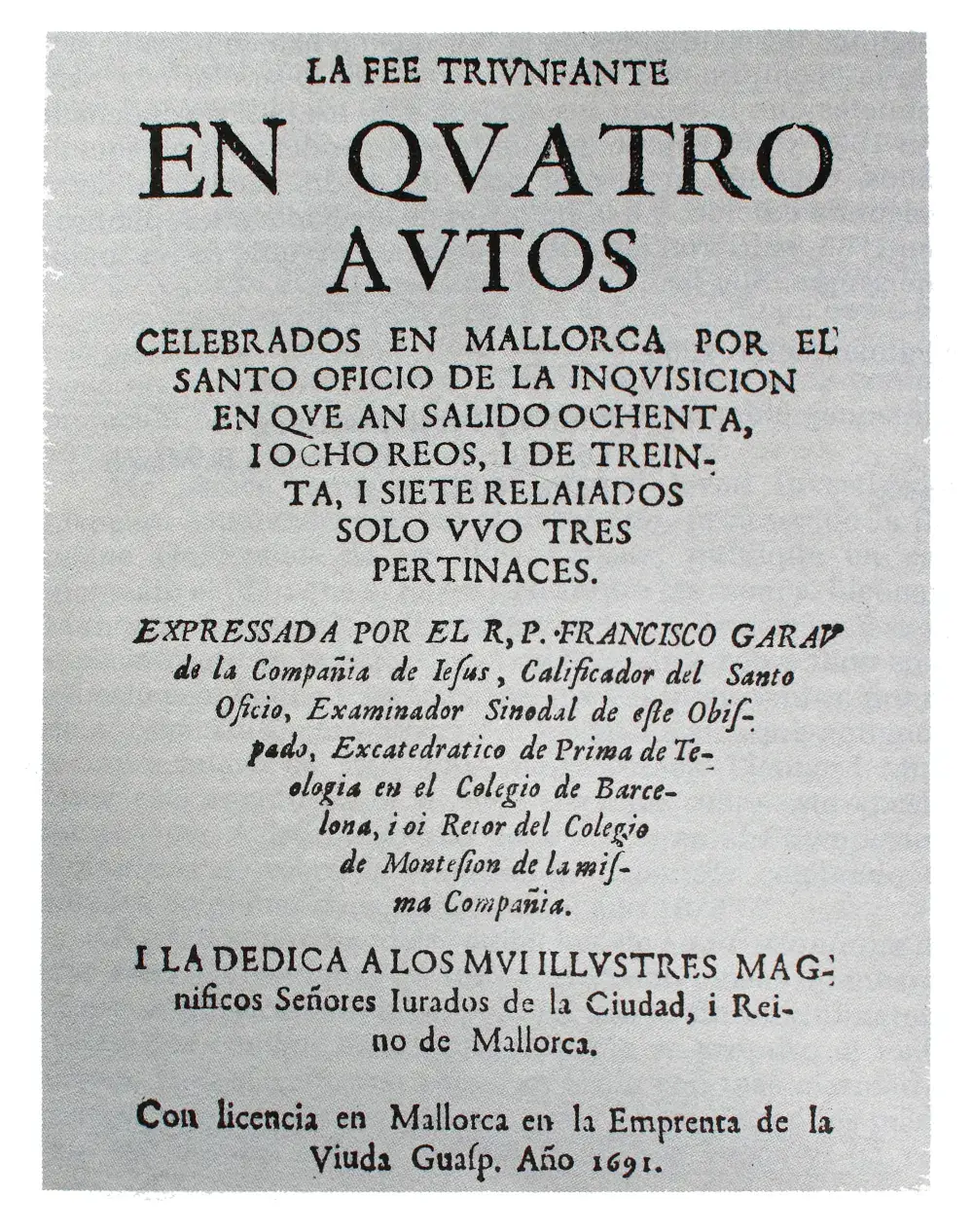
La Fe Triunfante, 1691.
The accusations, prompted by witnesses such as merchants, maids or informers, were very clear: “those from Carrer del Segell were as Jewish as those from Livorno”. They were accused of observing the precepts of Judaism: they kept the Sabbath, “rabbinated” animals —that is, slaughtered them according to Jewish ritual—, celebrated the Hebrew Passover —Pesach— and, on Fridays, at the beginning of the Sabbath, recited the blessing over the wine —Barakhah—.
The process ended in 1679 with 218 Chuetas sentenced to financial penalties and imprisonment, but no one was executed. All of them were ridiculed and subjected to public scorn by being forced to parade through the streets of Palma wearing sambenitos.
This trial meant the ruin of many crypto-Jews, while also prompting the gradual flight of some of them, so that they could freely join Jewish communities abroad.
The community that remained in Palma, despite the great repression of the 1670s, continued to persevere in the Hebrew faith. The Inquisition suspected as much.
By the late 1680s, the situation had become untenable for the Chuetas, so they planned to flee as a group. The plan failed because a storm prevented the English ship that was waiting to take them to freedom from setting sail.
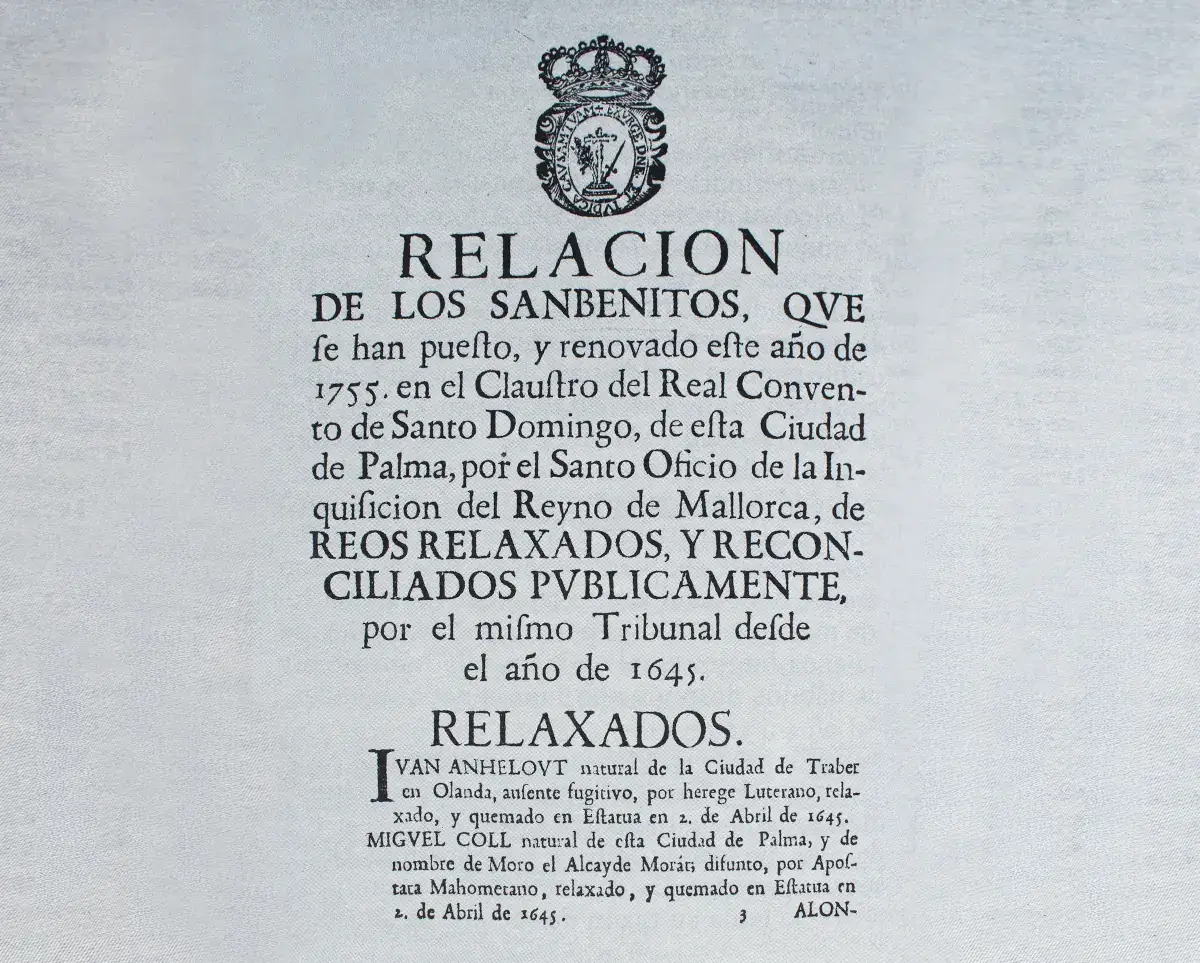
List of the sambenitos, 1755.
Eighty-eight people were arrested, of whom 33 were executed near today’s Plaça Gomila by garrote vil, with the exception of three who were burned alive for remaining faithful to their faith: the rabbi Rafel Valls and the siblings Rafel and Caterina Tarongí.
With this macabre act, a new nightmare began: the brutal discrimination against Chueta families, marked by their fifteen surnames that stigmatised them, and which lasted until the final decades of the 20th century.







Leave A Comment