
The solar eclipse on 12 August 2026 coincided with one of the highest population concentrations ever recorded in the Balearic Islands, with 2,116,491 people, including residents and visitors. According to the latest Human Pressure Index (IPH) figures published by the Institut d’Estadística de les Illes Balears (Ibestat), the archipelago recorded the highest values in the entire historical series in the days leading up to and during the astronomical event.
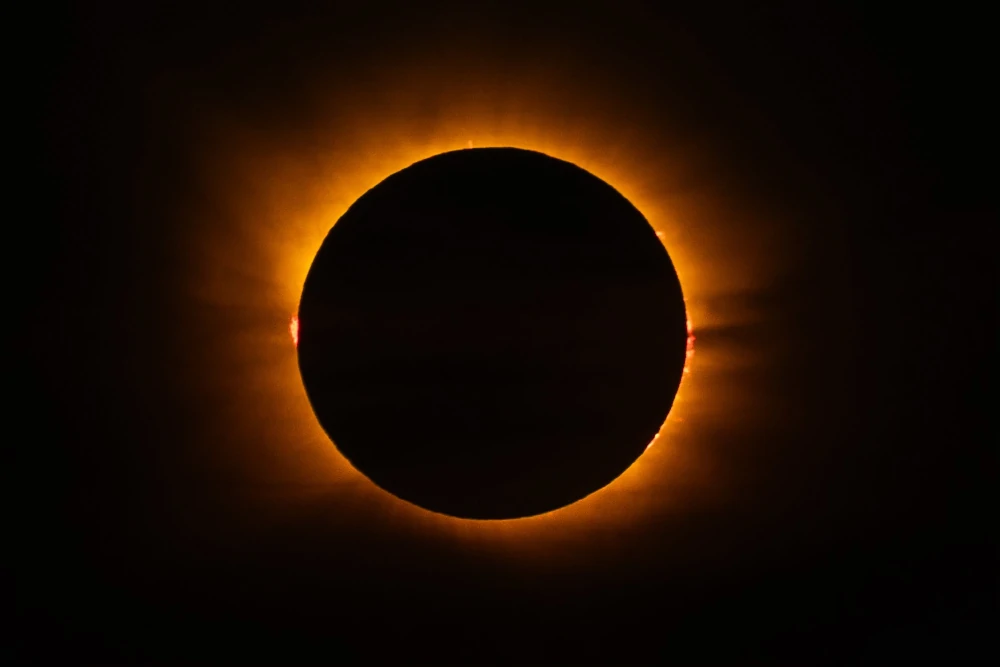
Photo: Rafel Blanc / CAIB.
The record was set on 11 August, with 2,117,026 people, while 2,116,491 were recorded on the day of the eclipse. These figures reflect the impact of the astronomical event on visitor numbers in Mallorca and the other islands during the peak tourist season.
Nearly 850,000 visitors in the Balearic Islands during the 2026 solar eclipse
According to figures from Spain’s National Statistics Institute (INE), the Balearic Islands had 1,266,279 residents at the end of July. Comparing this figure with the Human Pressure Index suggests that approximately 850,000 people present in the archipelago on 12 August were visitors.
The daily evolution of human pressure shows a gradual increase in the days leading up to the eclipse, reaching an all-time high on 11 August. From 12 August onwards, the figure began to fall throughout the rest of the month, reaching 1,901,214 people on 31 August.
The phenomenon also altered the usual pattern of peak tourist numbers. While the highest IPH figure in 2025 was recorded on 6 August, in 2026 the peak shifted five days later, to the day before the eclipse.
Special arrangements to observe the solar eclipse in Mallorca and the rest of the Balearic Islands
In anticipation of large crowds gathering to watch the eclipse, the Govern activated the ECLIPBAL civil protection plan, which complemented the Balearic Islands Territorial Civil Protection Plan (PLATERBAL).
The operation included measures to regulate traffic and access to natural areas, particularly in the Serra de Tramuntana and other sensitive locations. A total of 26 official viewing points were also established across Mallorca, Menorca, Eivissa and Formentera to enable people to watch the phenomenon while preventing large crowds from gathering in vulnerable areas.
The operation involved nearly 3,000 personnel from different authorities and organisations, with a maximum of 2,147 professionals deployed simultaneously during the busiest hours.
Fewer incidents than usual despite record human pressure
Despite the unprecedented concentration of residents and tourists, the 112 Emergency Coordination Centre recorded 46 incidents during the 24 hours of 12 August, fewer than on the same dates in previous years.
By island, Mallorca accounted for 34 incidents, followed by Eivissa with eight, Menorca with three and Formentera with one. According to the Govern, road traffic was also lighter than usual.
The results of the operation show that, despite coinciding with an all-time high in human pressure in the Balearic Islands, the 2026 solar eclipse had a relatively limited impact on emergency services.





Leave A Comment