
On the evening of Wednesday 4 November, the Ajuntament de Palma removed the tents and other structures that had occupied plaça d’Espanya since 28 September. The operation, involving the Local Police, Emaya and the municipal Infrastructure Department, included the dismantling of the installations and an intensive clean-up of the square, following more than a month of occupation of the public space.
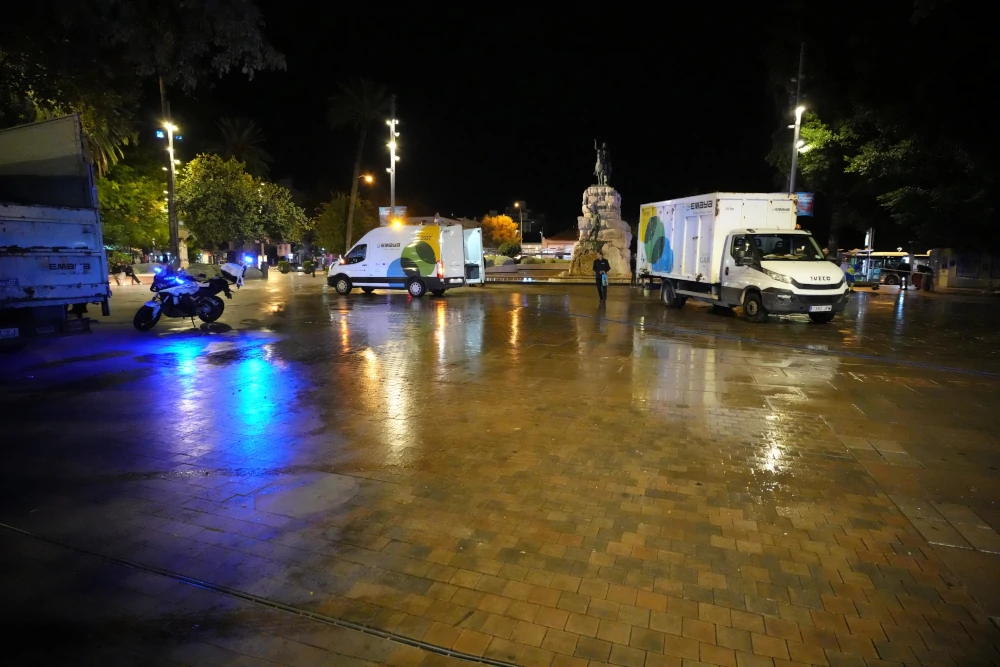
Emaya and Local Police vehicles following the clean-up after the removal of the protest camp at plaça d’Espanya in Palma. Photo: Ajuntament de Palma.
The protest camp was established on the night of 28 September, following a demonstration in defence of the right to decent housing. Participants called for measures to tackle property speculation and joined the protests that had begun in Madrid.
The intervention followed repeated requests by Palma’s mayor, Jaime Martínez Llabrés, for the Spanish Government Delegation to take action to end the encampment. According to the City Council, the protest had exceeded both the duration and the conditions initially notified by its organisers, prompting the council to intervene under the Civic Ordinance and municipal regulations governing the occupation of public spaces.
Local Police identify nine people before removing the camp
As part of the preliminary measures, the Local Police identified nine people in plaça d’Espanya on Tuesday 3 November. During the inspection, officers found that most of the tents were unoccupied and that some of those identified might not have been directly connected to the original protest, according to the Ajuntament.
The City Council maintains that the organisers’ initial notification did not include the installation of tents or the permanent occupation of the square. It also points out that the number of people present had changed compared with the conditions originally notified at the start of the demonstration.
During the removal operation, municipal social services attended the site to offer assistance to anyone who might need it. Specifically, they assisted an elderly woman and offered her accommodation.
After dismantling the tents, barriers and other structures, municipal services carried out an intensive clean-up to restore the usual conditions for the use and maintenance of plaça d’Espanya.
Dispute between Cort and the Spanish Government Delegation over the protest camp
The removal of the structures brings to an end more than a month of requests from the Ajuntament de Palma to the Spanish Government Delegation in the Balearic Islands. The City Council formally requested its intervention on 1 October, arguing that the notified duration of the demonstration had expired.
The mayor repeated this request on 3 November, after the National Police intervened to clear a protest camp in Madrid’s Puerta del Sol. Martínez Llabrés called for the same criteria to be applied in Palma and announced that the Local Police would begin taking action within their powers.
The Ajuntament eventually removed the structures on 4 November and informed the Spanish Government Delegation of the operation that same day.
Cort argues that the occupation was no longer protected by the right to assembly and demonstration because it had exceeded the conditions initially notified. It also maintains that the prolonged presence of tents and barriers had hampered cleaning and maintenance work in the square, which, according to council figures, is used by approximately 50,000 people every day.
The City Council reiterates its respect for the right to demonstrate but considers that exercising this right must be compatible with compliance with municipal regulations and the shared use of public spaces.




Leave A Comment