
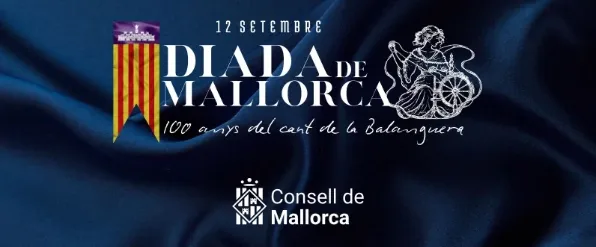
The Diada de Mallorca 2026 (Mallorca Day 2026) will be celebrated this year with a programme of activities taking place from 6 to 13 September at various venues in Palma and across the rest of the island. The main date of the commemoration is 12 September, marking the anniversary of King Jaume II’s oath of the Carta de Privilegis i Franqueses (Charter of Privileges and Franchises) in 1276, a key event in Mallorca’s history.
Another highlight is the free Rels B concert on 11 September at Parc de la Mar-Passeig Marítim in Palma. The performance celebrates his appointment as Fill Predilecte de Mallorca (Favourite Son of Mallorca). The Mallorcan singer is also one of the most-streamed Spanish artists outside Spain. More information is available at this link.
100 years of “La Balanguera”
One of the main features of this year’s celebrations is also “La Balanguera”, marking 100 years since it was officially adopted as Mallorca’s anthem. The anniversary features prominently in the Diada programme, which includes an exhibition dedicated to the origins of the anthem, as well as activities related to the island’s history and identity.
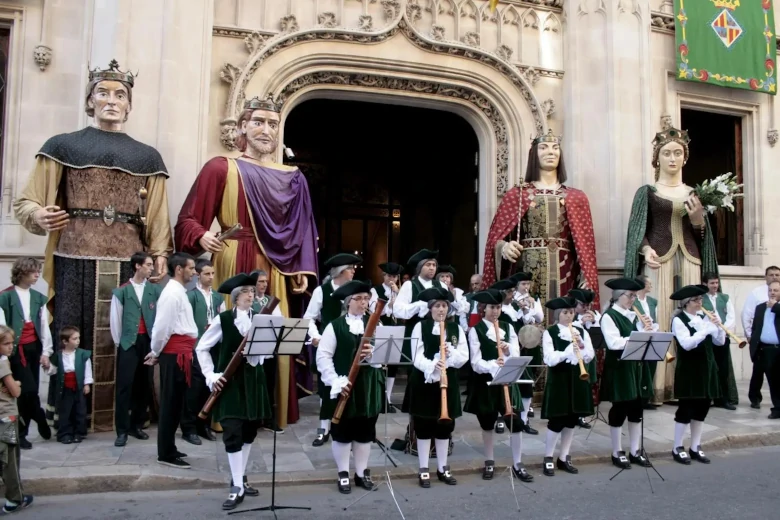
Activities include the premiere of the documentary “Un regne dins la mar” (“A Kingdom within the Sea”), the traditional Fira d’Artesania (Craft Fair), the Pujada a Lluc a Peu de la Part Forana (Part Forana Walk to Lluc) (more information at this link), the Premis Honors i Distincions (Honours and Distinctions Awards) and a re-enactment of the proclamation of Jaume II.
Diada de Mallorca 2026 programme
Sunday 6 September
- 10:00 to 13:00 – Diada esportiva (Sports Day).
Poliesportiu Sant Ferran (Sant Ferran Sports Centre), Palma.
Wednesday 9 September
- 19:30 – Premiere of the documentary “Un regne dins la mar”.
Castell de Sant Carles (Sant Carles Castle), Palma.
Friday 11 September
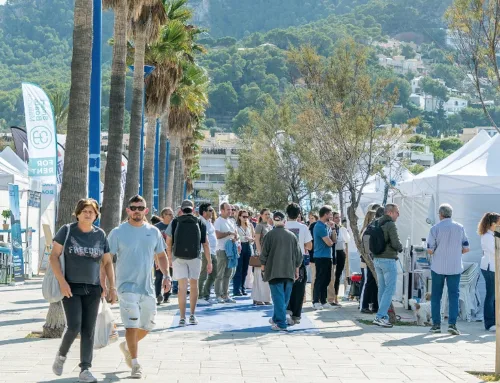
- Fira d’Artesania.
Centre Cultural la Misericòrdia (La Misericòrdia Cultural Centre), Palma. - 11:00 – Exhibition “La Balanguera: Orígens d’un himne” (“La Balanguera: Origins of an Anthem”).
Palau del Consell (Consell Palace), Palma. - 21:30 – Rels B concert.
Free admission.
Parc de la Mar-Passeig Marítim, Palma.
Saturday 12 September
- Fira d’Artesania.
Centre Cultural la Misericòrdia, Palma. - 19:00 – Premis Honors i Distincions del Consell de Mallorca.
Teatre Principal de Palma.
Sunday 13 September
- 04:00 – Pujada a Lluc a Peu de la Part Forana.
Plaça des Bestiar (Plaça des Bestiar Square), Inca. - Fira d’Artesania.
Centre Cultural la Misericòrdia, Palma. - 10:30 – Re-enactment of the proclamation of Jaume II.
Església de Santa Eulàlia (Church of Santa Eulàlia), Palma. - 19:00 – Theatrical guided tours.
Palau del Consell, Palma.
Why is Diada de Mallorca celebrated on 12 September?
The Diada de Mallorca commemorates 12 September 1276, when King Jaume II swore the Carta de Privilegis i Franqueses at the Església de Santa Eulàlia. This event marked the birth of the Kingdom of Mallorca and ushered in a new political and institutional era for the island.
During Jaume II’s reign, there were significant advances in the rights and freedoms of the people of Mallorca. The kingdom’s own institutional structures were also consolidated. These included the organisation of the administration, the municipal system, urban and rural planning, markets, water supply, and the creation of its own monetary and taxation systems.




Leave A Comment