
The housing challenge for the inmigrant population
The consuls of Morocco, Argentina and Finland discuss the housing crisis and its impact on foreign communities in Mallorca at Inca
Access to housing has become one of the main factors of exclusion on the island, especially for the immigrant population. This issue was at the heart of the second edition of “Mallorca in the Spotlight”, held on 28 April at Café Esment, a forum promoted by the agency Mallorca Global and sponsored by the Ajuntament d’Inca. This space for dialogue and reflection on the present and future of the island brought together Zakaria Balga, Consul General of the Kingdom of Morocco; Carlos Nazareno Ayala, Consul of the Republic of Argentina; and Carlos Panizo, Honorary Consul of Finland, in a round table moderated by José E. Iglesias, director of Mallorca Global, with the participation of Miguel Ángel Cortés, Councillor for Promotion, Trade and Digital Management at the Ajuntament d’Inca, where the extraordinary regularisation process for immigrants in Spain was also discussed.
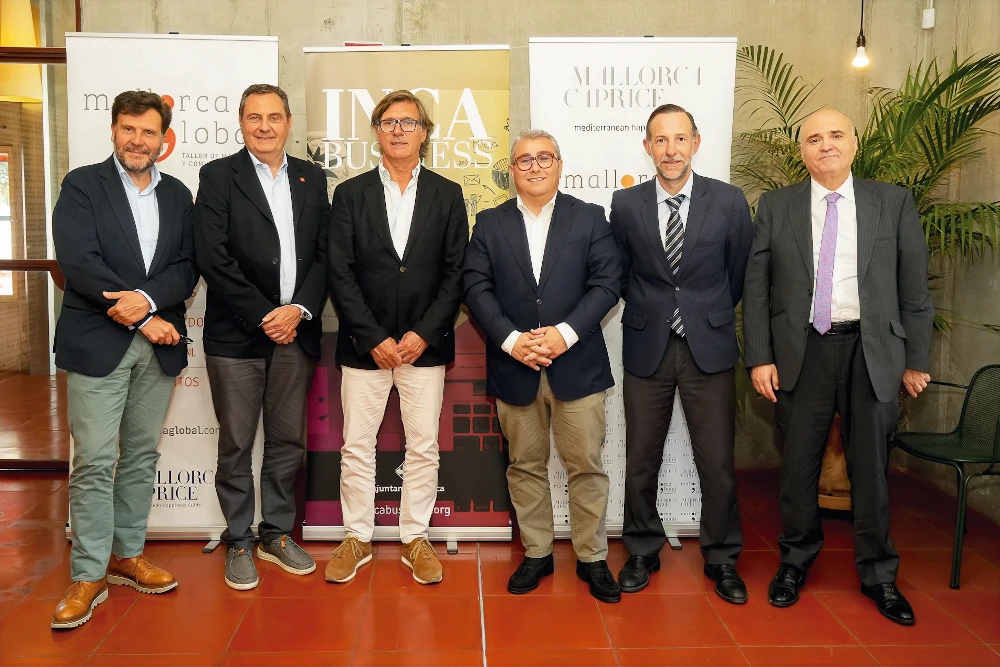
From left to right: Miguel Ángel Cortés, Councillor for Promotion, Trade and Digital Management at the Ajuntament d’Inca; Carlos Panizo, Honorary Consul of Finland; José E. Iglesias, director of Mallorca Global agency; Virgilio Moreno, Mayor of Inca; Carlos Nazareno Ayala, Consul of the Republic of Argentina, and Zakaria Balga, Consul General of the Kingdom of Morocco. Photos: Jaime Verd.
Zakaria Balga summed up the reality conveyed to him by the Moroccan community in a clear idea: “There is work, there is a future, but there is no broad access to the right to housing,” which has a direct consequence, since “when you do not have housing, you do not have identity.” A situation that particularly affects his community, which “does not have the same social and economic status” as others such as the German or the British, and therefore “suffers much more.” He also warned of the “multidimensional” impact of this issue, as it leads to “young Moroccans not wanting to stay here” and moving to other parts of Spain or Europe, while also reducing the arrival of their compatriots and affecting the stability of family units.
Carlos Nazareno Ayala: “If we add the lack of housing to all the variables a migrant faces on arrival, the situation is far more complex”
For his part, Carlos Nazareno Ayala placed the issue in a broader context by noting that around 28% of the population in the Balearic Islands is foreign — about 320,000 people — of whom roughly 39,000 are Argentine. “If we add the lack of housing to all the variables a migrant faces upon arriving on the island, the situation becomes far more complex,” he explained. Unlike a local resident, a migrant goes through this process without family networks or support, and with constraints such as administrative and family status or job stability. “If you cannot rent or buy a home, you cannot register, and without registration you cannot move forward. It is a vicious circle,” he warned. In some cases, a cultural factor also comes into play, as “Argentinians are not used to sharing their residence”, a common practice on the islands that adds further difficulties to adaptation.
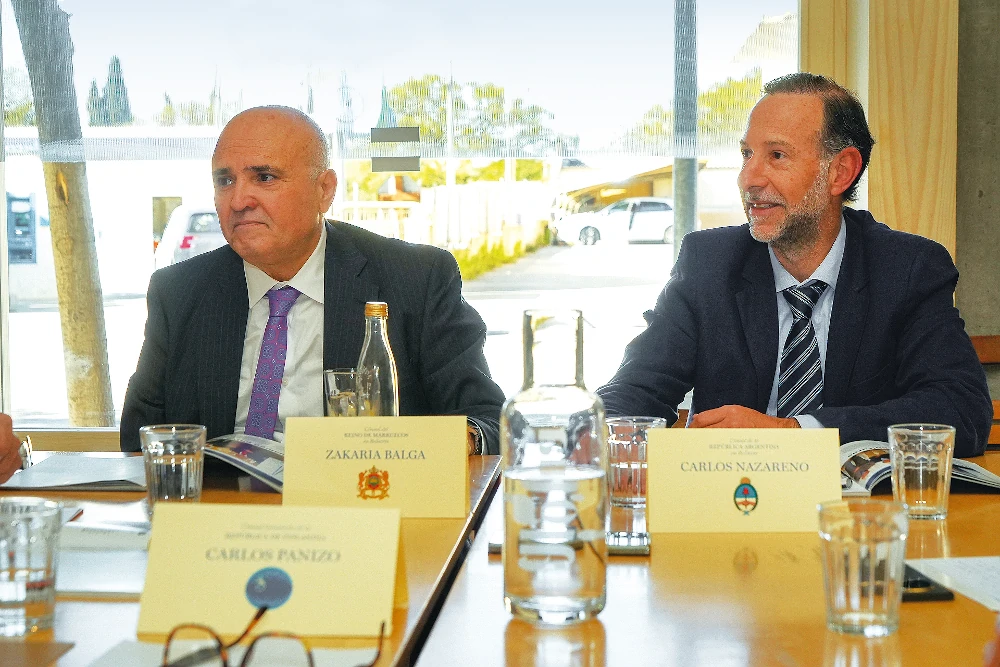
Zakaria Balga, Consul General of Morocco, and Carlos Nazareno Ayala, Consul of Argentina.
In his case, Carlos Panizo noted that the Finnish community in the Balearic Islands is small — barely a thousand residents — and, in general, in a more stable situation. However, he warned that the overall reality on the islands is very different. “Housing is the primary problem, by far,” he stated, in a context of an economy close to full employment and a territory that is “attractive to live in, but where we have nowhere to live.” Panizo pointed to the mismatch between growth and supply, noting that “we have grown by 70,000 residents in recent years and have not provided housing solutions for these people”, which, combined with a market that “responds to the highest bidder”, ends up driving up prices and pushing out both migrants and residents. For this reason, he stressed the need to address the issue “with a broad outlook and in a comprehensive way.”
Carlos Panizo: “We have a system of education and universal healthcare; housing must follow that path”
As for possible solutions, Zakaria Balga advocated a long-term strategy based on structural agreements. “It is a problem that requires ten, fifteen or twenty years and strong political will,” he noted, recalling that modern Spain is the result of state-level agreements. As an example, he referred to the model applied in Morocco, where in the 1990s the State promoted agreements with the private sector to create large operators specialising in social housing: “the State provides land and developers sell at affordable prices”, which has meant that, despite also being a country that receives immigration, Morocco does not face such an acute housing problem.
Carlos Panizo agreed that there are no immediate solutions and advocated addressing housing with a long-term perspective as a matter of State. “We have a system of education and universal healthcare; housing must follow that path,” he stated, referring to the need to treat it as a basic and structural right.
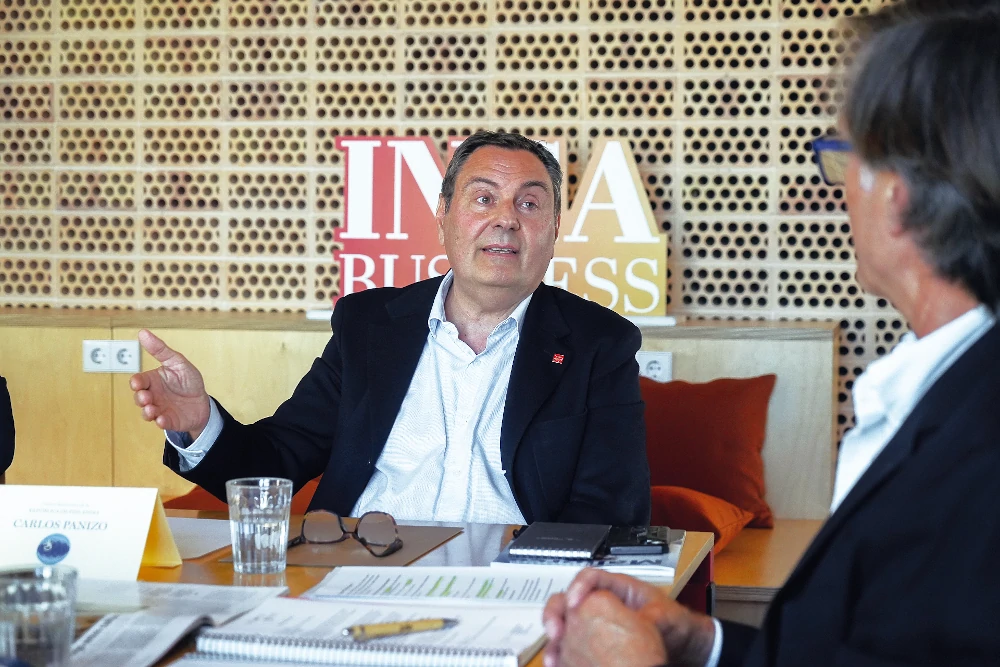
Carlos Panizo, Honorary Consul of Finland, during one of his interventions.
The Argentine consul placed the emphasis on the need to provide a practical response at the point when workers arrive. “Whether Spanish, Moroccan or Argentine, people want stable accommodation, even if it is not owned,” said Carlos Nazareno Ayala. In this regard, he pointed to an obvious contradiction in sectors such as tourism or construction, where “thousands of workers are needed and yet they cannot even be offered a place to live. It’s like the shoemaker’s house having no shoes.” As a proposal, he suggested temporary solutions to allow that initial settlement: “obradores, which in Argentina are spaces where workers live while they are working,” he explained, along with options such as temporary accommodation or modular units. “You bring in workers and give them a place to live during the season. I think we have to start there.”
Regularisation
On the extraordinary regularisation process, the Consul General of Morocco described it as a necessary measure. “People cannot be left in the shadows indefinitely,” he stated, and stressed the need to provide a solution for those who already live and work on the islands. Balga noted that it is a “positive step” enabling them to access basic rights and improve their situation.
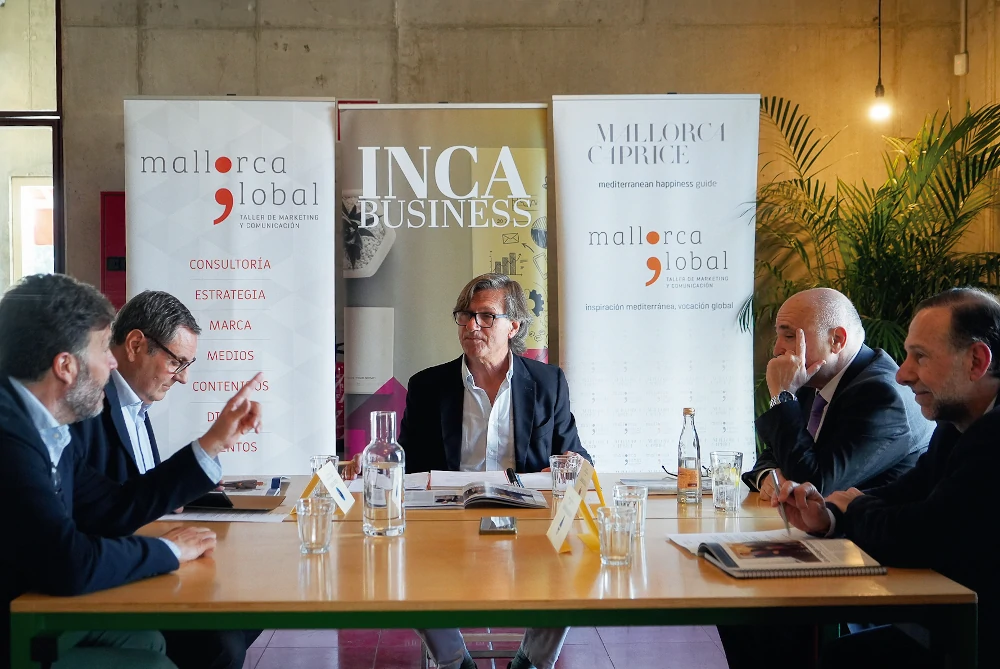
The second “Mallorca in the Spotlight” round table was held at Café Esment in Inca.
In this regard, Carlos Nazareno Ayala responded with a direct question: “Who would choose to live without documents?”, he asked, to underline that everyone seeks stability. The Argentine consul noted that the process is already having an impact on consular activity, with an increase in documentation requests, in a destination that ranks seventh out of the 136 Argentina has worldwide in terms of consular activity. However, he sought to define his role, stating that “everything related to documentation from the country of origin falls within the remit of the consulate, but the regularisation process depends on the Spanish authorities,” concluded Carlos Nazareno Ayala.




Leave A Comment