
Public Health has detected a measles outbreak in Mallorca affecting six people. Five of the confirmed cases involve people who were not vaccinated, while no vaccination record is available for the sixth case. The Directorate-General has activated surveillance, contact tracing and prevention measures in an effort to contain transmission.
The Public Health Surveillance Service has confirmed a measles outbreak in Mallorca involving six linked cases. The cases occurred within the same timeframe and the patients were treated at the same hospital, although the investigation indicates that the source of transmission was outside the healthcare setting. It has therefore been classified as a community outbreak.
The Directorate-General of Public Health, in coordination with the Health Service and in accordance with the protocols of the National Epidemiological Surveillance Network, has activated a monitoring and control plan to prevent further spread.
According to the epidemiological investigation, the index case was a tourist under the age of 18 who attended the Paediatric Emergency Department at Son Espases University Hospital on 19th July. The secondary cases began developing symptoms at the end of July.
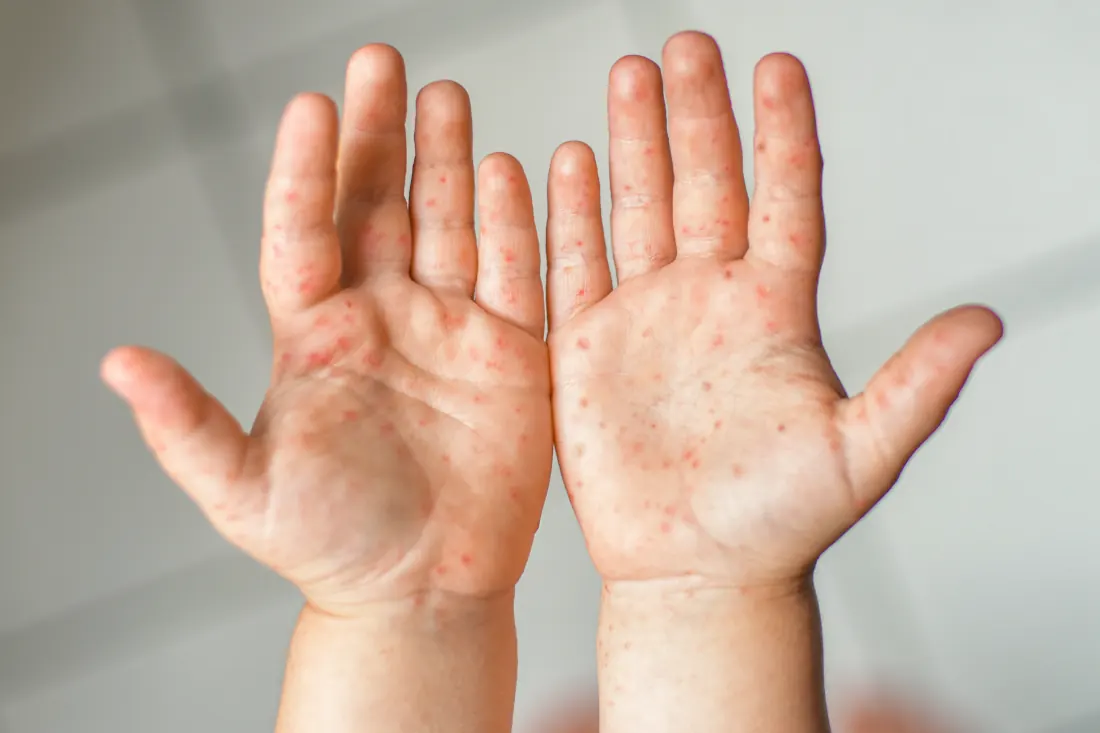
Five of the six cases were unvaccinated
Most of the people affected by the outbreak had not been vaccinated against measles.
Of the six confirmed infections, five had not received the vaccine, while no recorded information on vaccination status is available for the sixth case.
Public Health is tracing close contacts of those affected and has asked them to monitor their health closely for possible symptoms during the 23 days following exposure, particularly if they are not vaccinated.
FFP2 masks recommended in healthcare settings
As part of the prevention measures, the Directorate-General of Public Health has issued an internal recommendation for the use of FFP2 masks in healthcare settings.
The measure applies to both staff and users and forms part of the actions introduced to reduce the risk of transmission while the outbreak is being monitored.
Mandatory self-monitoring for symptoms and a review of the vaccination status of all staff, both healthcare and non-healthcare workers, at hospitals and health centres have also been introduced.
Measles cases have increased in recent years
The current outbreak comes amid an increase in measles cases both in Spain and internationally over the past two years.
In the Balearic Islands, only one case was reported in 2019, with no cases recorded between 2020 and 2023. Six cases were reported in 2024.
The increase was particularly significant in 2025, when 35 cases were recorded in the Balearic Islands: 31 in Mallorca, three in Ibiza linked to an imported outbreak and one imported case in Formentera.
Of those 35 cases, 24 involved unvaccinated people, while the vaccination history of the remaining cases was unknown.
In Mallorca, 22 of the 31 cases recorded in 2025 were linked to the outbreak in the Tramuntana Health Sector. Three others were isolated cases, three were linked to a household transmission outbreak and another three were imported cases.
Public Health stresses the importance of two vaccine doses
Vaccination remains the main preventive measure against measles.
Public Health reminds the public that full protection requires two doses of the vaccine. In the Balearic Islands, vaccination is included in the free public immunisation schedule: the first dose is administered at 12 months as the MMR vaccine, while the second is given at the age of three as the MMRV vaccine.
Vaccination coverage currently reaches 91.11% of the target population in the Balearic Islands, according to figures provided by Public Health.
Health authorities recommend that people born after 1978 who have no record of being vaccinated or having had the disease should review their vaccination history at their health centre.
Routine measles vaccination began in Spain in 1978 with a monovalent vaccine. Since 1981, the MMR vaccine has been used to protect against measles, mumps and rubella.
What are the symptoms of measles?
Measles is a highly contagious infectious disease caused by a virus.
One of its most characteristic signs is the appearance of a skin rash, or exanthem. It may be accompanied by fever and cold-like symptoms such as conjunctivitis, a runny nose, sneezing and coughing, as well as a general feeling of being unwell.
The usual incubation period is between 10 and 14 days, although it can range from 7 to 23 days.
An infected person can transmit the virus from four days before the rash appears until four days afterwards.
How is measles transmitted?
Transmission can occur through direct contact with secretions from the nose or throat of an infected person, as well as by inhaling droplets released when they cough or sneeze.
According to information provided by Public Health, the virus can also remain active on surfaces for up to two hours.
Contact tracing and reviewing vaccination status are now among the main measures being taken by health authorities to contain the measles outbreak detected in Mallorca.




Leave A Comment