
Mallorca’s historic solar eclipse on 12th August resulted in 34 incidents related to the event, none of them serious. The ECLIPBAL operation mobilised thousands of professionals across the Balearic Islands, while public transport absorbed significant increases in passenger numbers and health services actually recorded fewer emergencies than on a typical day.
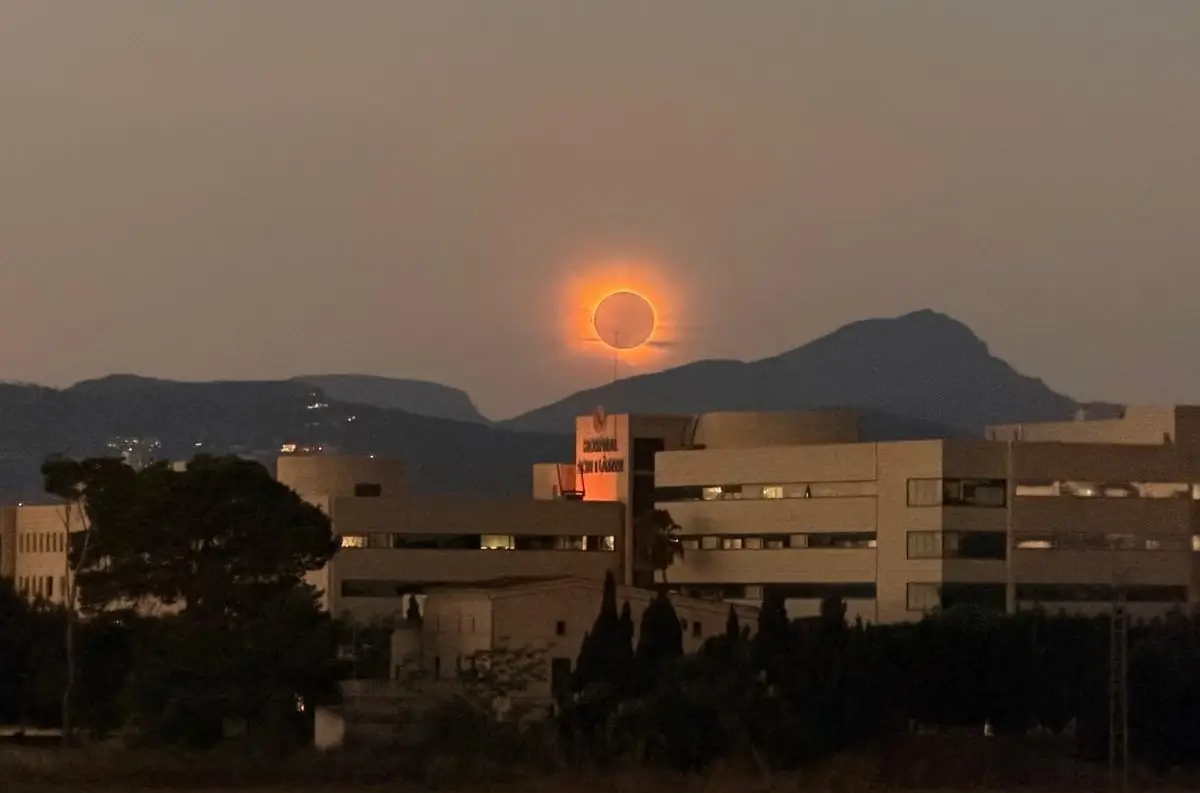
Mallorca experienced one of its most exceptional days in recent years on Wednesday, 12th August. Thousands of people travelled to beaches, viewpoints, areas of the Serra de Tramuntana and other locations across the island to watch the 2026 total solar eclipse, during an afternoon also marked by major traffic restrictions and an unprecedented security operation.
One day later, the overall balance points to relative normality despite the huge mobilisation. The 112 Emergency Coordination Centre recorded 34 incidents related to the eclipse in Mallorca, out of 46 across the Balearic Islands.
None was considered serious.
34 incidents related to the eclipse in Mallorca
Mallorca accounted for most of the incidents recorded by 112 during the 24 hours of 12th August.
By municipality, five were recorded in Valldemossa and another five in Andratx; four in Sóller, Calvià and Pollença; three in Palma; two in Banyalbufar and Llucmajor; and one each in Esporles, Fornalutx, Santanyí, Capdepera and Porreres.
Across the Balearic Islands there were 46 eclipse-related incidents: 34 in Mallorca, three in Menorca, eight in Ibiza and one in Formentera.
The 112 emergency service received 2,340 calls during the day.
The busiest period came after the eclipse had ended. Between 9:00 pm and 11:00 pm, 471 calls were received, while nine incidents directly linked to the eclipse were generated between 9:00 pm and 10:00 pm.
Traffic problems were the most common type of incident, with twelve cases across the islands, although there were also rescues, missing persons, medical emergencies and several incidents involving boats.
Rescues in Mallorca during the afternoon and evening
Emergency services were called to several locations across Mallorca during the hours when the largest crowds had gathered.
Mallorca Fire Brigade teams carried out rescues or searches in El Toro, Sóller, Pollença, Andratx and Estellencs.
In El Toro, Sa Milana personnel rescued one person. Firefighters from the Sóller station carried out another rescue in the municipality and also rescued two people in Andratx.
In Pollença, teams from the Alcúdia fire station and the Inca Mountain Rescue Group took part in the search for two people, while another operation was carried out in Estellencs to locate one person.
Among the most notable incidents of the day were also two maritime rescues in the cap Blanc area. Three people were rescued from a boat that had caught fire, while another five were rescued from a vessel that had broken down.
An operation involving around 3,000 people
The scale of the event led the Balearic Government to activate the ECLIPBAL Protocol, specifically designed to coordinate surveillance and safety during the eclipse and complement the Territorial Civil Protection Plan of the Balearic Islands.
The operation involved around 3,000 people, with a maximum of 2,147 personnel working simultaneously during the busiest hours.
Emergency services, SAMU 061, the National Police, Guardia Civil, local police forces, fire brigades, IBANAT, Civil Protection, Maritime Rescue, the Military Emergency Unit (UME), AEMET and numerous regional, national and island authorities took part.
The protocol was deactivated at 11:30 pm on Wednesday.
The Balearic Government described the day as a “success for Balearic society” and particularly highlighted the behaviour of the public and the operation of the 26 Official Observation Zones set up across the archipelago.
Fewer hospital emergencies during the eclipse
Health services had been reinforced in anticipation of a possible sharp increase in emergencies, but the opposite ultimately occurred.
Public hospitals in the Balearic Islands treated 1,770 emergencies on 12th August, compared with 1,949 the previous day, representing a 9.1% decrease.
The fall was even greater in primary care emergency services, which recorded 1,880 cases, 22.4% fewer than on 11th August.
In Mallorca, primary care emergency services went from 1,364 cases the previous day to 1,059 during the eclipse.
The health authorities had reinforced the operation with up to 160 additional professionals across primary care, hospitals, SAMU 061 and coordination services.
16 ophthalmology cases across the Balearic Islands
One of the main concerns ahead of the eclipse was the possibility of eye injuries caused by looking directly at the Sun without adequate protection.
Following the event, 16 ophthalmology cases were recorded across the Balearic Islands.
Six were treated at Son Espases, two at Son Llàtzer, one at Hospital Comarcal de Inca, one at Hospital de Manacor and another two in primary care in Mallorca. There were also two cases in Menorca and two more in Ibiza and Formentera.
SAMU 061 also received four telephone enquiries related to eye problems between the afternoon of the eclipse and the following morning.
TIB deployed nearly 70 additional bus services
Getting people back from the observation areas was another of the main challenges of the operation.
Mallorca’s TIB interurban bus network operated without any significant incidents and added nearly 70 additional services over the course of the day.
Demand increased particularly after the eclipse. Between 9:00 pm and 11:00 pm, passenger numbers rose by between 20% and 36% compared with a comparable day.
Additional services were deployed in areas with large numbers of spectators, including Formentor, Port de Sóller, Banyalbufar, Santa Ponça and the Llucmajor coast.
In Santa Ponça, for example, line 123 carried more than 6,300 passengers, an increase of 48%. Line 131 between Santa Ponça and Banyalbufar recorded one of the most striking percentage increases, with 360% more passengers than the previous Wednesday.
Ten additional services were also added to line 204 between Port de Sóller and Palma, while nine extra services operated on line 202 connecting Palma with Banyalbufar, Estellencs and Esporles.
The final special services ended around midnight, with the TIB operation concluding at approximately 1:00 am.
An eclipse attracting scientists and media from around the world
For several hours, the eclipse turned the Balearic Islands into a major centre of astronomical and media attention.
The Balearic Government accredited 98 scientists, including international researchers coordinated by six astronomical organisations based in the islands.
Media coverage was also on an exceptional scale: 335 professionals from 49 media outlets from the Balearic Islands, Spain and other countries were accredited to cover the event.
Mallorca and the rest of the islands experienced an afternoon that will be difficult to repeat, with thousands of people looking towards the sky at the same time as daylight disappeared during totality.
Two more eclipses will follow the 2026 event
The eclipse of 12th August 2026 also marks the beginning of an unusual sequence of solar eclipses visible from Spain.
On 2nd August 2027, another total solar eclipse will take place, with the path of totality crossing the south of the Iberian Peninsula.
Then, on 26th January 2028, an annular eclipse — popularly known as a “ring of fire” — will cross the Balearic Islands once again.
Following the huge mobilisation experienced in Mallorca in August 2026, the archipelago will therefore have another major date with the skies in less than two years.




Leave A Comment