
New homes on rural land in the Balearic Islands that meet certain conditions will have to maintain an agricultural link for a minimum of 15 years. This is one of the main new measures included in the draft of the new Balearic Islands Agricultural Act, approved by the Consell de Govern and now set to begin its passage through Parliament.
The measure will apply to new detached single-family homes of more than 100 m² built on plots of at least 14,000 m², provided that territorial and planning regulations already permit construction. The law does not change minimum plot sizes or create new development rights.
What will change for homes on rural land in the Balearic Islands
For the first time, the future law introduces an agricultural requirement for certain new homes. These are the main points:
- Homes affected: new detached single-family homes of more than 100 m².
- Plot size: 14,000 m² or more.
- Duration: the agricultural link must be maintained for at least 15 years.
- Where construction will be permitted: only in areas where territorial and planning regulations already allow it.
- Minimum plot sizes: the Agricultural Act does not change them.
- New development rights: the legislation does not create them.
- Professional farmer: the owner will not necessarily have to become one.
The Balearic Government’s aim is for new homes built in areas where construction is already permitted to also help keep land in production and prevent the abandonment of agricultural activity.
How the 15-year agricultural requirement can be met
The draft legislation provides several alternatives for meeting this obligation. Owners will be able to:
- Develop or maintain agricultural activity on the property.
- Make investments aimed at bringing the land into production or improving its agricultural use.
- Link the property to professional farmers or priority agricultural holdings so that they can make productive use of the land.
- Make the land available to the public land bank for use by farmers or livestock farmers.
Therefore, building a home on rural land under the circumstances covered by the legislation will not necessarily require the owner to work professionally as a farmer or livestock farmer.
Priority for agriculture over residential use
Another key element of the new Balearic Islands Agricultural Act is strengthening the productive role of rural land. The legislation establishes that it must be preserved and primarily devoted to crops and livestock and forestry uses.
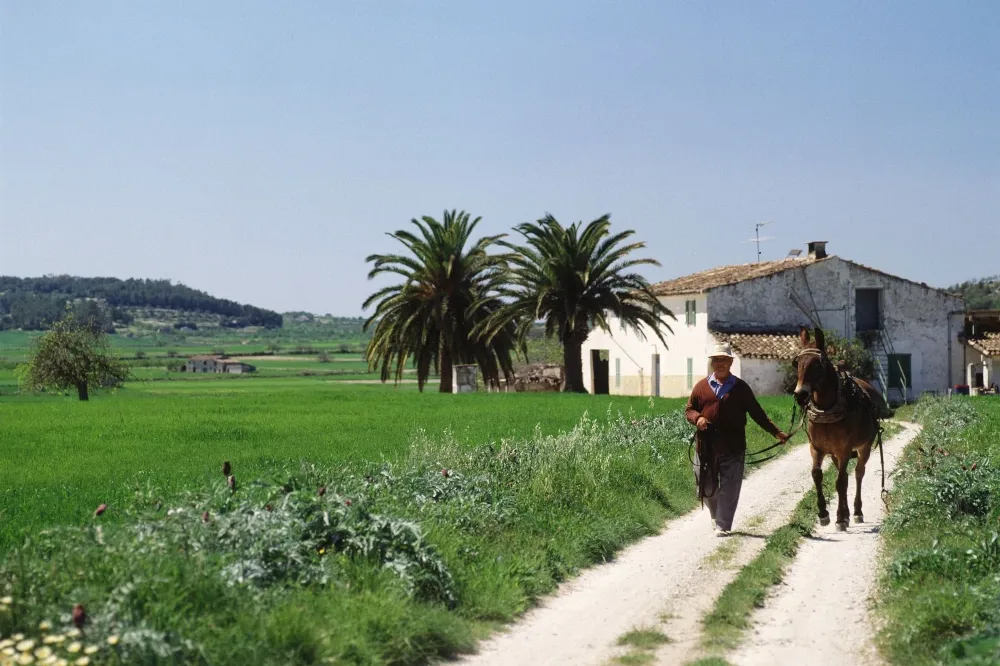
A possessió (traditional rural estate) in Mallorca. Photo: Pedro Coll / AETIB (edited).
Public authorities will have to prioritise agricultural uses over residential use and facilitate the facilities and services needed for agricultural holdings.
The law also includes various measures to improve their profitability, ranging from facilitating access to water and renewable energy to promoting product processing, direct sales and complementary activities.
Agroestancias: accommodation with a maximum of six places
Among these complementary activities is a new category: agroestancias (agricultural stays). This will allow certain agricultural holdings to offer accommodation in existing homes and agricultural buildings.
The main conditions will be:
- A maximum of six accommodation places per holding.
- They must be linked to priority agricultural holdings with genuine activity.
- As a general rule, the holding must have been registered as a priority holding for more than four years.
- The places will come from existing pools of tourist accommodation places.
- They will therefore not result in the creation of new tourist accommodation places.
Water for agriculture will have priority on rural land
The future law also introduces changes related to water resources. Once the water supply for the population has been guaranteed, agricultural activity will take priority over other uses on rural land where there is competition for access to water.
The use of reclaimed water for irrigation will also be strengthened.
More direct sales and greater presence of local produce
The legislation aims to ensure that a greater share of the value of food remains with agricultural holdings by promoting processing, direct sales and short supply chains.
The planned measures include:
- Encouraging the consumption of local produce.
- Prioritising its presence at municipal markets and fairs.
- Introducing criteria to favour local produce in public food procurement.
- Strengthening organic farming and livestock production.
- Giving priority to native breeds and local varieties.
- Promoting cooperation between holdings and agricultural associations.
In forestry, the draft legislation also provides for the use of biomass, silvopasture and the recovery of crops to facilitate land management and help prevent wildfires.







Leave A Comment