
The Menut nursery will produce more than 180,000 native forest plants from 90 different species during the 2026-2027 season. This is the greatest diversity of species achieved to date by the Centre Forestal de les Illes Balears (CEFOR), located in Escorca.
The plants will mainly be used to restore forest ecosystems, recover habitats and conserve threatened flora. Planned projects include areas affected by wildfires in Artà, riverside ecosystems in Cúber and s’Albufera and dune systems in Es Trenc.
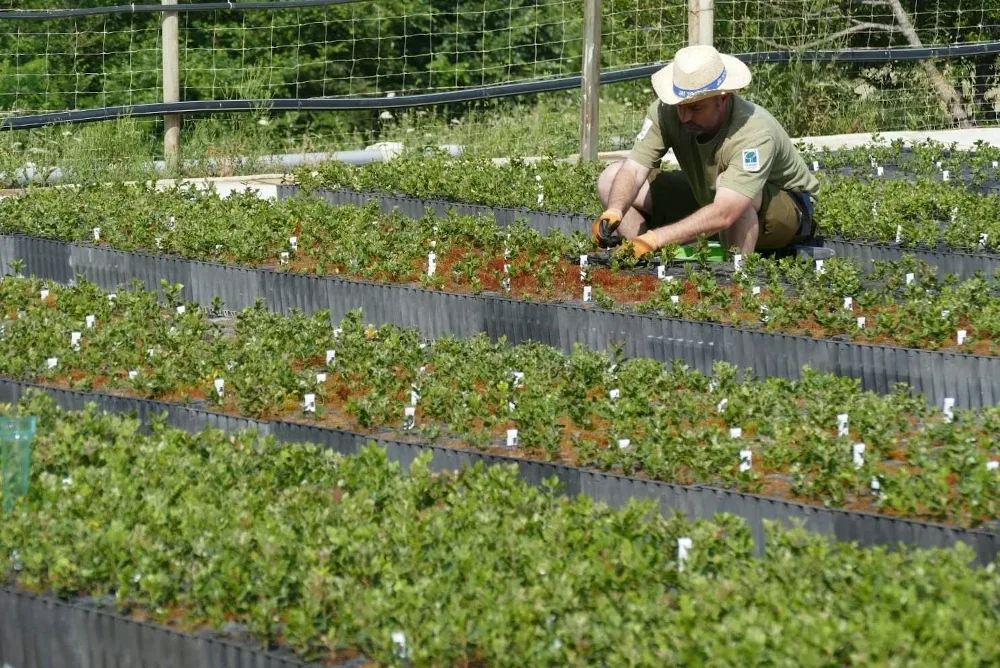
A worker at the Menut nursery tends native forest plants destined for the restoration of natural areas in the Balearic Islands. Photo: CAIB.
The new season exceeds the 150,000 plants produced annually by CEFOR in recent years. It also expands the range of species to adapt restoration work to the characteristics of each ecosystem.
From Artà’s fire-damaged forests to wetlands
Part of the production will be used to restore areas affected by recurrent wildfires in the Parc Natural de la Península de Llevant, in Artà. The initiative forms part of a joint project between TUI and the Balearic Government.
Species such as Aleppo pine, wild olive and strawberry tree, all of local origin, will be planted in these areas.
Another area of work will focus on the riverside ecosystems of the public estates of Cúber, in Escorca, and s’Albufera de Mallorca. Poplars, ash trees and elms will be produced for these areas.
Elms require specific work because of Dutch elm disease, a fungal disease that has severely affected the species. CEFOR is working to produce resistant specimens and support the recovery of elms in riverside ecosystems across the Balearic Islands.
Native plants to restore dunes at the Menut nursery
The Menut nursery will also produce plants for the restoration of dune systems and coastal areas. Work will focus particularly on the Parc Natural Marítim-Terrestre Es Trenc-Salobrar de Campos and the Parc Natural de la Península de Llevant.
Characteristic species such as sea daffodil, sea holly and Elymus farctus will be grown for these habitats.
The director general for the Natural Environment and Forest Management, Anna Torres, highlights the importance of using native plants of local origin. These species are adapted to the islands’ environmental conditions and help increase biodiversity in restored areas.
Critically endangered species from Mallorca
Some of the plants will be used specifically for the conservation of threatened species. This season includes specimens of Limonium pseudodictyocladum and Limonium leonardi-llorensii.
Both are endemic Mallorcan species classified as critically endangered. Propagating them outside their natural habitat provides specimens that can be used to strengthen conservation efforts and reduce the risk of extinction.
CEFOR is also researching new techniques to improve the propagation of native species. One of its areas of work is grafting sweet holm oak, a complex procedure aimed at improving production and preserving its genetic diversity.
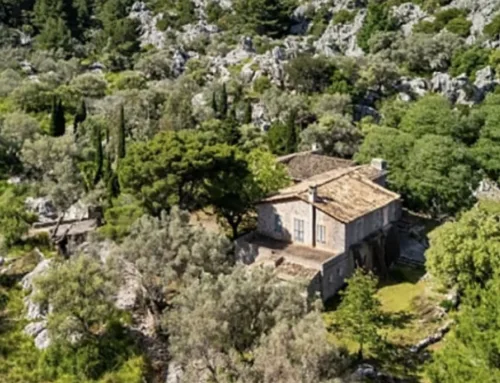
The Centre Forestal has operated on the public Menut estate since 1933. In addition to producing native plants, it works on the conservation of genetic resources, research and forestry experimentation.




Leave A Comment