
The Consell de Mallorca will set the limit on vehicles entering Mallorca this autumn, to be applied during the next season. The cap will affect both private cars and rental vehicles and will be determined on the basis of a new study into the island’s carrying capacity.
The president of the Consell, Llorenç Galmés, will present the proposed legislation regulating the influx of vehicles to the Parliament of the Balearic Islands on 9 September for consideration. The proposal will be processed under an urgent procedure, allowing the timeframe for its final approval to be cut by half.
The proposal was already backed by the Consell de Mallorca on 5 June. Galmés now hopes to secure broad consensus in Parliament and considers vehicle regulation “the main containment measure of this legislative term“.
How vehicle entry to Mallorca will be limited
The maximum number of cars that will be allowed to enter the island has not yet been determined. The Consell plans to approve the limit before the end of 2026, once the study determining Mallorca’s carrying capacity has been completed.
The regulations will distinguish between private vehicles and rental cars, with entry limits established for both. The aim is for the new system to come into force during the next season.
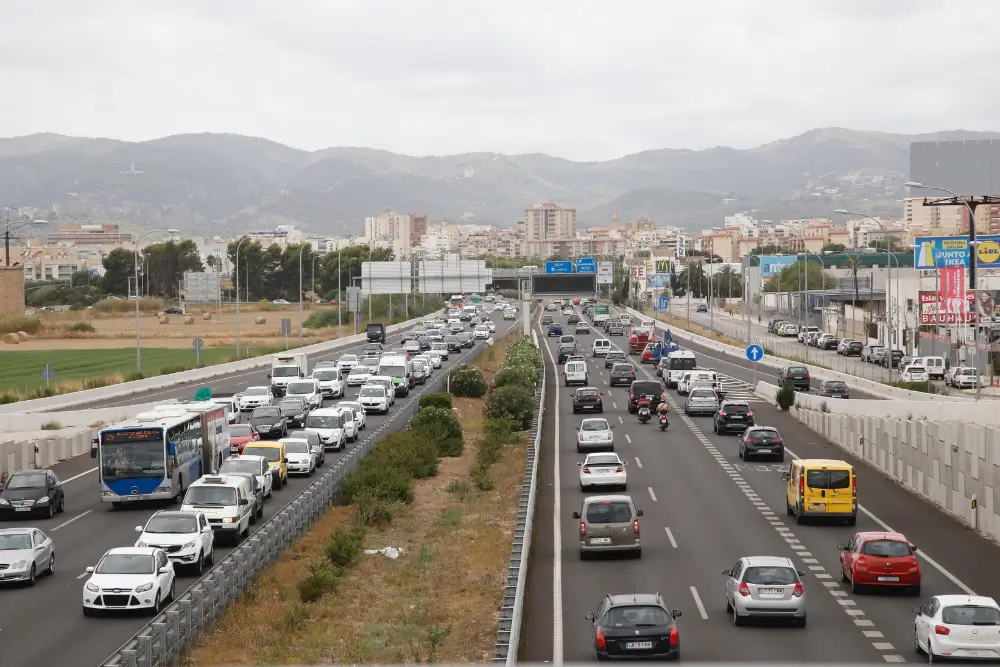
Traffic jams on Palma’s Vía de Cintura ring road. Photo: Teresa Ayuga.
The measure forms part of the policies through which the island authority aims to address population growth and periods of overcrowding in certain places and at particular times of the year.
Roads, tourism and housing
During the meeting marking the start of the new political term, the Consell also outlined other measures planned for the coming months:
- Roads: the Palma Access Improvement Plan will continue, with a budget of €164 million. Upcoming projects include the roundabout on the Sóller road and section I of the Segundo Cinturón.
- Tourism: efforts to combat illegal tourist accommodation will be stepped up, while policies aimed at promoting responsible tourism will continue.
- Housing and disability: the “Ca meva” (“My Home”) programme is due to be launched this autumn at Germanetes in Palma. The plan will create 300 places by 2027, with an investment of €6 million.
- Heritage: planned projects include an exhibition on the recovery of the Ses Fontanelles shipwreck and the restoration of pieces from the Betlem de la Sang (Nativity Scene of La Sang).




Leave A Comment