
The Ses Fontanelles shipwreck has been nominated for the National Geographic +HISTORIA Awards in the Best National Historical Discovery or Find category. The Late Roman vessel, which sank around 1,700 years ago off Playa de Palma, is competing against four other archaeological discoveries in Spain.
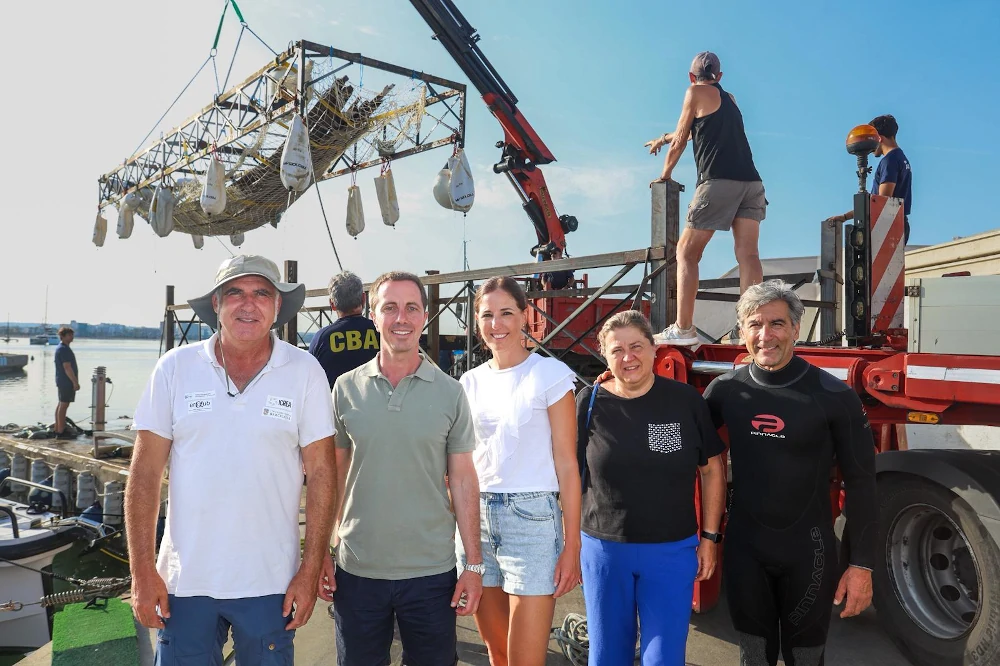
The Ses Fontanelles shipwreck being recovered from the seabed. Photo: Consell de Mallorca.
The nomination comes just two months after the Consell de Mallorca completed the recovery of the vessel’s remains. The research project is led by the island authority, with the participation of the Universitat de les Illes Balears, the University of Barcelona and the University of Cádiz.
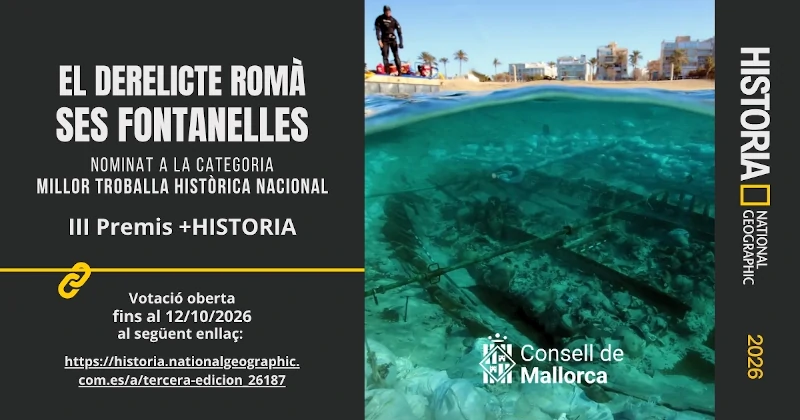
The winner will be decided by public vote, which will remain open until 12 October on the National Geographic Historia website.
Ses Fontanelles shipwreck among five Spanish discoveries
The Mallorcan archaeological site is competing for the award alongside a collection of funerary inscriptions discovered in Cádiz and the Roman sanctuary of Cova de les Dones (Cave of the Women), in Valencia. Also nominated are a collection of beads found in a prehistoric burial site in Seville and the funerary complex at Alarcos Archaeological Park, in Ciudad Real.
The +HISTORIA Awards are celebrating their third edition this year. The initiative recognises outstanding projects, discoveries and figures in history and archaeology in Spain.
The winners will be chosen by readers through an open vote. The Consell de Mallorca is encouraging the public to support the Ses Fontanelles nomination through this link: [https://historia.nationalgeographic.com.es/a/tercera-edicion_26187](https://historia.nationalgeographic.com.es/a/tercera-edicion_26187)
A 4th-century Roman ship fully recovered
The shipwreck is a Late Roman vessel dating from the 4th century AD. On 29 June, a four-month archaeological operation to fully recover its remains was completed, ensuring their conservation and subsequent study.
Work began on 10 March and involved a team of around fifteen people. The final phase recovered the two largest sections of the bottom of the hull, each measuring around 12 metres in length.
The sections were raised using lifting bags and transported by sea to Club Marítimo San Antonio de la Playa. They were then taken to Castillo de San Carlos, where they will remain submerged in desalination tanks for around a year and a half.
The excavation also recovered numerous archaeological artefacts. These include almost complete amphorae, tableware, North African cooking pottery, four anchors, around 90 metres of rope and two baskets made from plant fibres.
A pulley, a sounding lead and remains of linen sails were also found. The latter have made it possible to document for the first time how the sails used on this type of vessel were made.
An exhibition at La Misericòrdia from November
Once the desalination process has been completed, the timbers will travel to the ARQVAtec laboratory at the National Museum of Underwater Archaeology in Cartagena. There, they will undergo a conservation process involving PEG impregnation and freeze-drying.
Researchers will also study the vessel’s naval architecture, carry out radiocarbon dating and classify the different materials recovered during the excavation.
While this process continues, people in Mallorca will be able to learn more about the history of the discovery through an exhibition. The Consell plans to open an exhibition dedicated to the shipwreck at the Centre Cultural La Misericòrdia (La Misericòrdia Cultural Centre) in Palma from November. The exhibition will explain both the history of the vessel and the scientific process carried out since its discovery.





Leave A Comment