
Text and photos: José Eduardo Iglesias.
At one o’clock in the afternoon on Thursday 29 January, we landed at Kilimanjaro Airport after 25 hours of travel, on our way to Arusha, Tanzania. We are in the Great Rift Valley, the cradle of humankind, where remains of Homo habilis, dating back some two million years, as well as Homo erectus and Homo sapiens, have been found. All of this is evidenced by the remains discovered in Olduvai Gorge, located between Ngorongoro and the Serengeti, our main route.
Arusha is a bustling town of around 400,000 inhabitants, with significant commercial, agricultural, mining (tanzanite, a gemstone from the area) and tourist (safaris) activity. In the city centre, there is a constant and chaotic bustle of people with carts laden with farm produce and assorted goods, weaving their way as best they can through the heavy and noisy traffic of motorbikes, cars and lorries. It is the main gateway to the natural parks of the Serengeti (around 15,000 km²), Ngorongoro (8,200 km²) and Tarangire (2,800 km²).
During the first three days, we spotted the African Big Five: lion, leopard, elephant, rhino and buffalo
Between January and February, there is an intermediate season between the short and the long rains. Although it rained on some days, the temperature is ideal, the vegetation is at its most vibrant, there are not too many visitors and wild animals gather because it is the time of calving, the “birthing season”, when thousands of wildebeest and zebras are born each day: an impressive spectacle on the plains of the Serengeti, where hundreds of giraffes, antelopes, rhinoceroses, hippopotamuses and elephants can also be found, along with numerous predators such as cheetahs, leopards, lions, wild dogs and hyenas, as well as hundreds of species of birds.
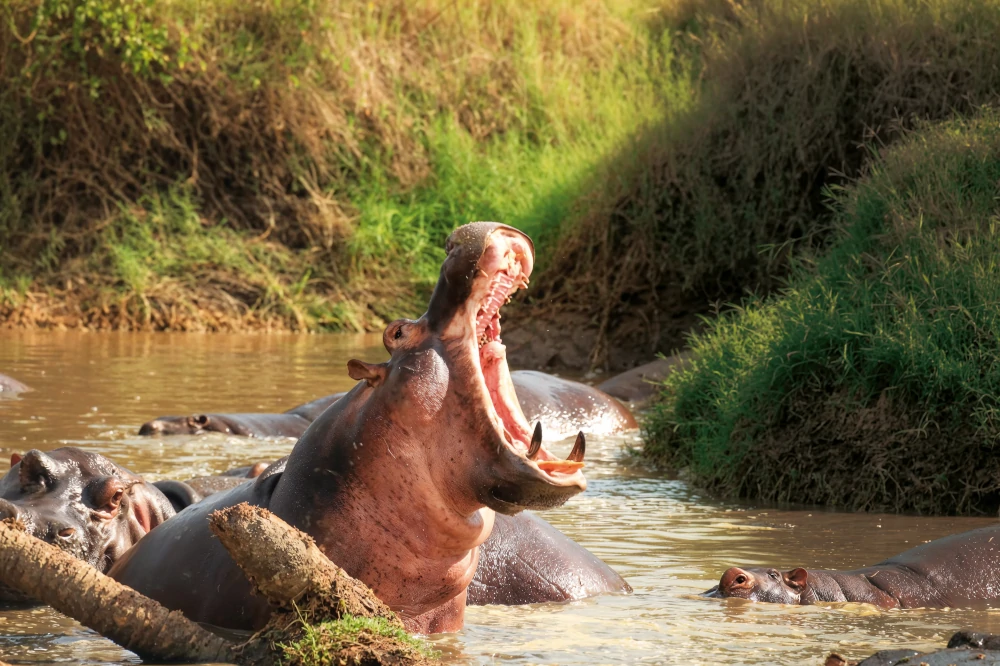
In a large pool of a stream in the Serengeti, dozens of hippopotamuses bathed in their own dung, surrounded by a strong, unpleasant smell. From time to time they bellowed to mark their territory. Photo: Abel.
Our driver-guide was a Maasai man, Baraka, later baptised as Abel, an expert connoisseur of these lands and their tribes. His explanations and cautions accompanied us throughout the seven-day safari that took us across the three natural parks in the north and north-east of the country. The Maasai are pastoralists, once warriors, easily recognised by their red cloaks. Along the road they can be seen with their herds, often children: they prefer children to tend the animals because, in that way, they do not stray, remaining close to the young herder as if they wished to protect them.
The following day, Abel picked us up early in a four-wheel drive with a pop-up roof to head for Tarangire, the smallest reserve and the closest to Arusha. Inside the park, as we ventured along its tracks and paths, we began to see herds of elephants, zebras, wildebeest, buffalo, giraffes, impalas, vultures, carrion-feeding marabou storks and other species that immersed us in the rhythm of the safari: scanning the savannah and woodland vegetation from the vehicle for signs of wild animals, respecting the environment and not interfering in their lives.
Over the first three days, we were able to see Africa’s Big Five: lion, leopard, elephant, rhinoceros and buffalo.
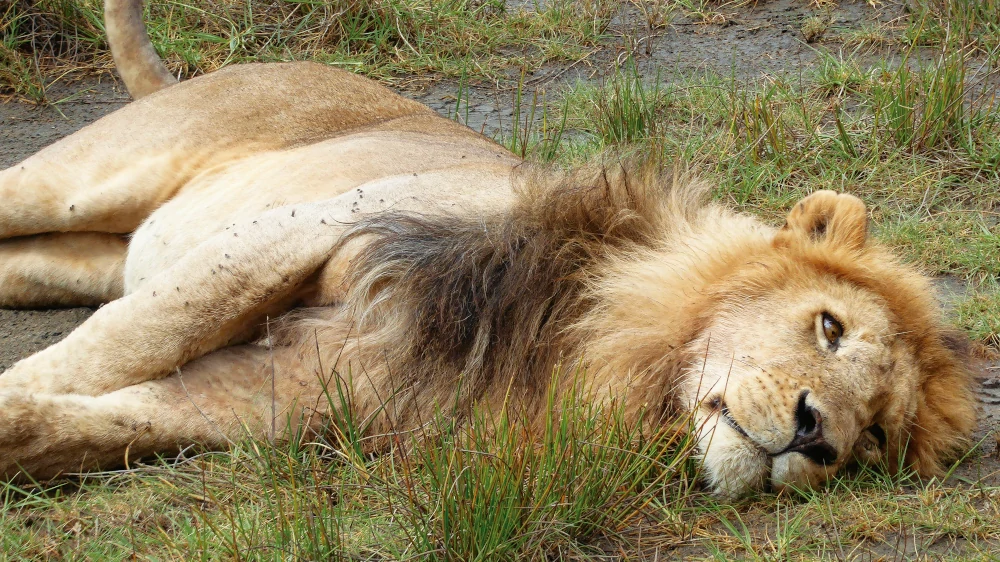
A lion wandered through the savannah scrub before calmly lying down just a few metres from us.
On the way, Abel told us about the tradition marking the passage from childhood to adolescence in the Maasai community where he was born, and how they face the ritual “circumcision without tears” in order to earn social respect (if they cry, they may be rejected by their family and by women). After the ceremony, they are dressed in black for a period during which they visit people from other villages, who receive them with due respect.
Before us stretches the savannah, dotted with baobabs and lush vegetation, which we traverse at the pace set by the appearance, just a few metres away, of herds of elephants: then you stop, silence, you observe, they observe you, they too pause or continue on their way or, like some lions and leopards, settle in the shade of our vehicle to rest, with all their allure and authority. It is then that you truly feel it has all been worthwhile. They are right beside you, imposing, in their own home, and you are, for the most part, indifferent to them… as long as you remain still and inside the vehicle.
Each day we slept in different camps, within the boundaries of the parks, in comfortable lodges — a kind of large tent with wooden floors and canvas walls and roofs, raised about half a metre above the ground to keep out snakes and other dangerous animals. It was not possible to leave the tent because of the presence of predators. To do so, one had to call someone from the lodge by walkie-talkie or telephone to come and escort you. Almost every night we heard the footsteps of animals outside, possibly giraffes, zebras, wild dogs, hyenas or who knows what else.
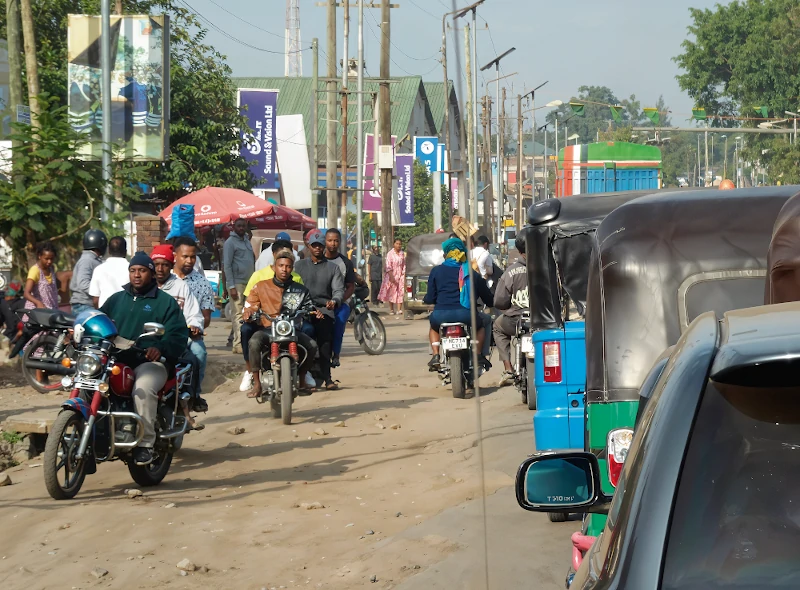
Bustling activity in the city of Arusha early in the morning.
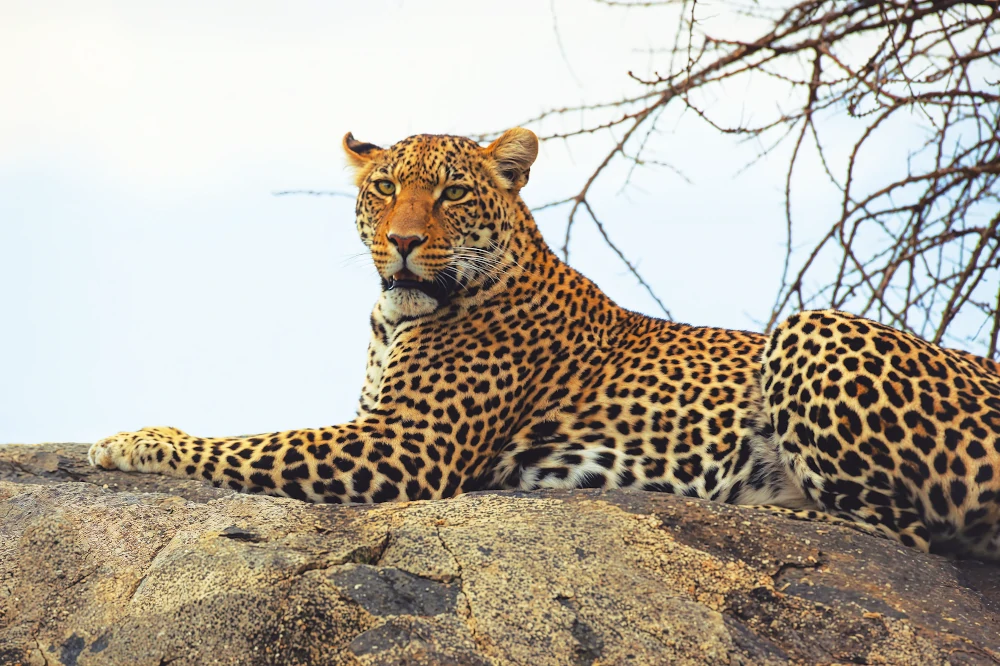
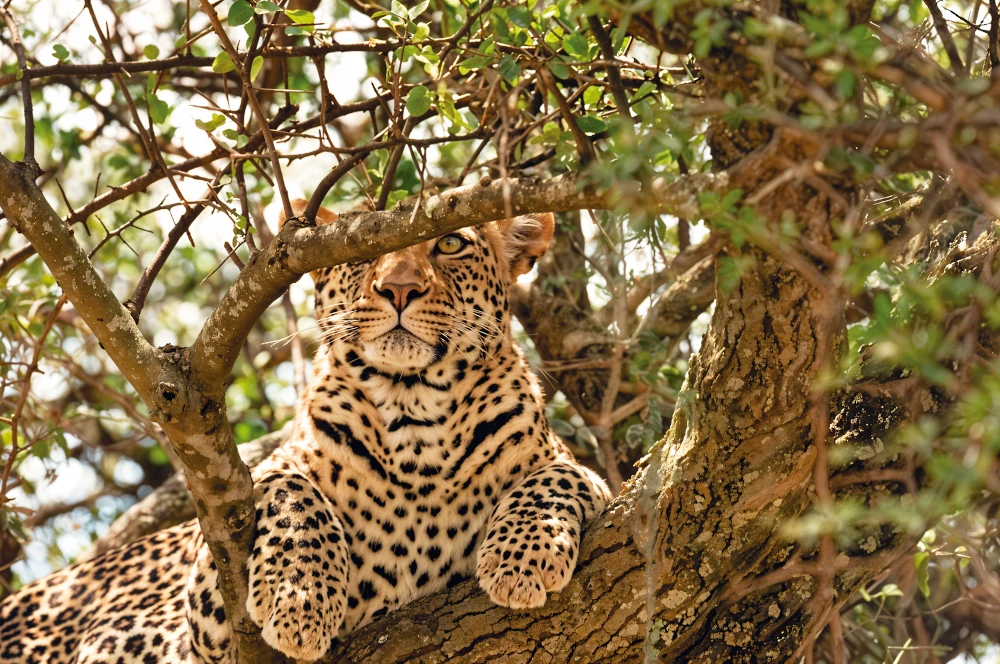
The plains of the Serengeti are vast beyond sight. At one moment during the day, to our surprise, an optical effect makes the sea appear on the horizon. At this time of year, that great expanse is filled with tens of thousands of wildebeest, each with its calf by its side, newly born and already independent, as well as zebras, giraffes and other animals. We saw solitary lions up close (possibly expelled from their pride and trying to establish one of their own), lionesses in groups and lone leopards perched on tree branches and rocks, resting and scanning the distance in search of prey or rivals.
One afternoon, in the Serengeti, we had the misfortune of getting a flat tyre on a small rise above the muddy bed of a lake. After considering what to do, Abel decided to change it; we got out cautiously and on alert, he managed to do so fairly quickly, and we resumed our journey, crossing to the other side of that muddy plain. From there, we watched with unease as a pride of lionesses settled exactly where we had stopped a short while earlier to change the tyre. Soon after, it began to rain and we witnessed a frantic race of four-wheel drives trying to escape the vast mire; spending the night there, inside the vehicle and stuck in the mud, was not an option.
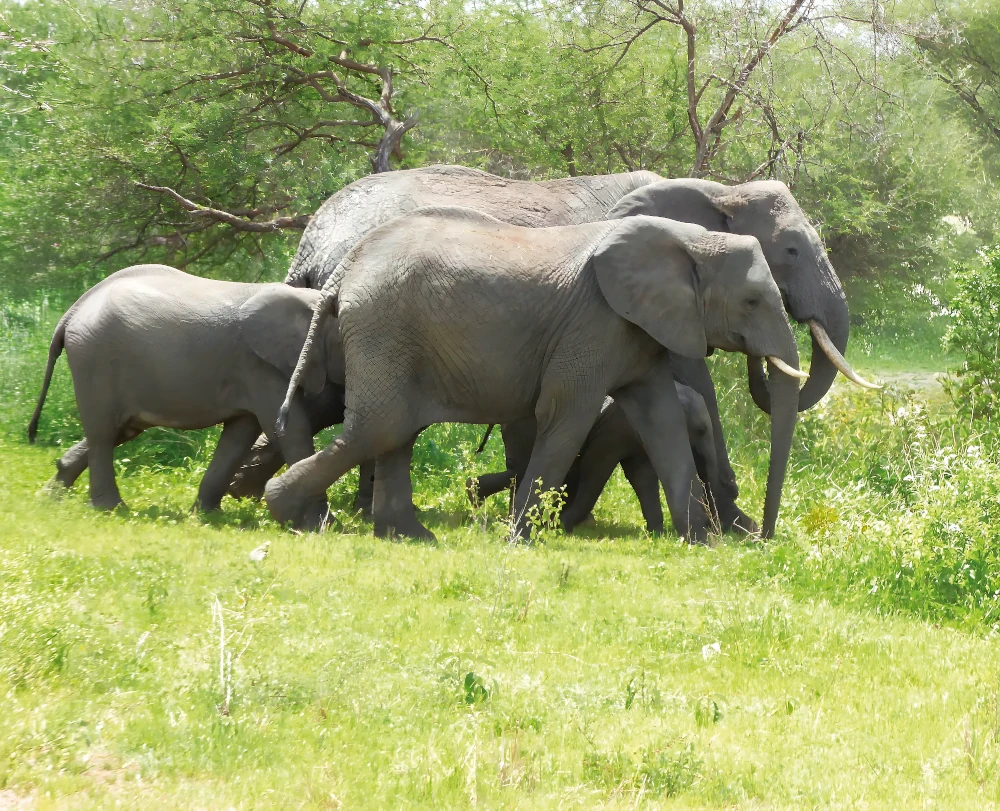
A herd of elephants makes its way towards the river with its calves in Tarangire National Park.
In the morning, we climbed up to Ngorongoro, a volcano covered in impenetrable vegetation; from its summit, looking inwards, Eden appeared. A cinematic landscape. Spectacular. We descended into the crater’s caldera along a vertiginous road that skirts the inner slope: to the left lies the vast plain of the caldera, an idyllic valley dotted with animals, with a large lake at its centre, immersed in absolute tranquillity and silence. As a novelty, we caught sight of a black rhinoceros. Once out of the valley, at the side of the road on the way out of the park, we came across a black mamba, one of the most lethal snakes in the world.
The following day we set off early to return home along the same route. The stop in Doha lasted several hours, which we took advantage of to get to know, a little, a city with little emotional appeal, despite its colours and skyline. Three weeks later, Donald Trump began bombing Iran and the region came to a standstill.
Photo galleries
-
- Foto: Abel.
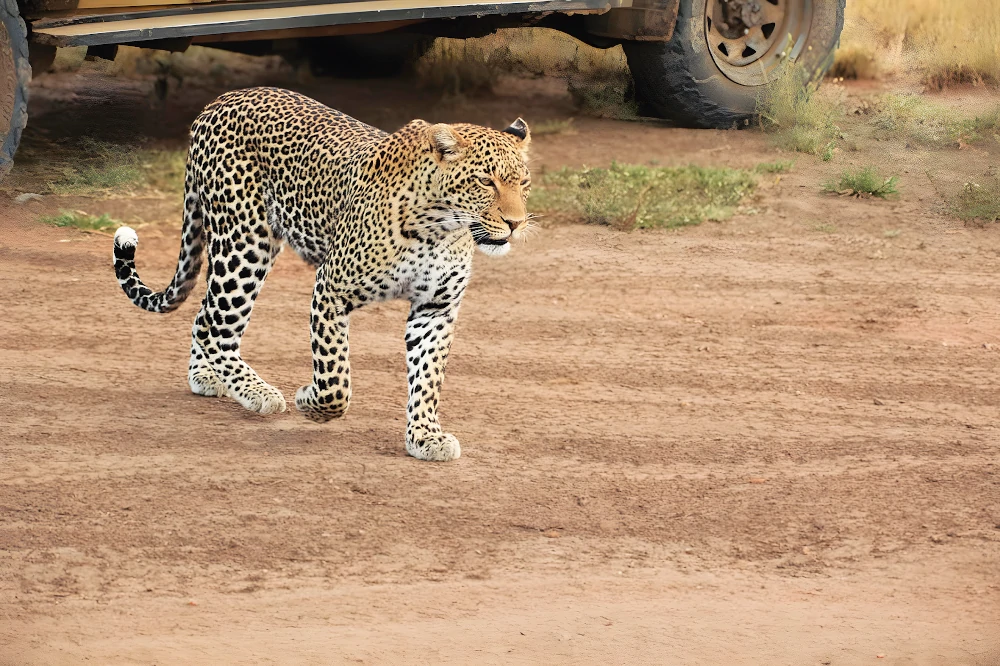
Leopards in the Serengeti. They climb onto rocks and tree branches to rest while keeping watch. In the third photograph, the leopard that had been resting on a branch has climbed down and walks past a safari vehicle close to ours.
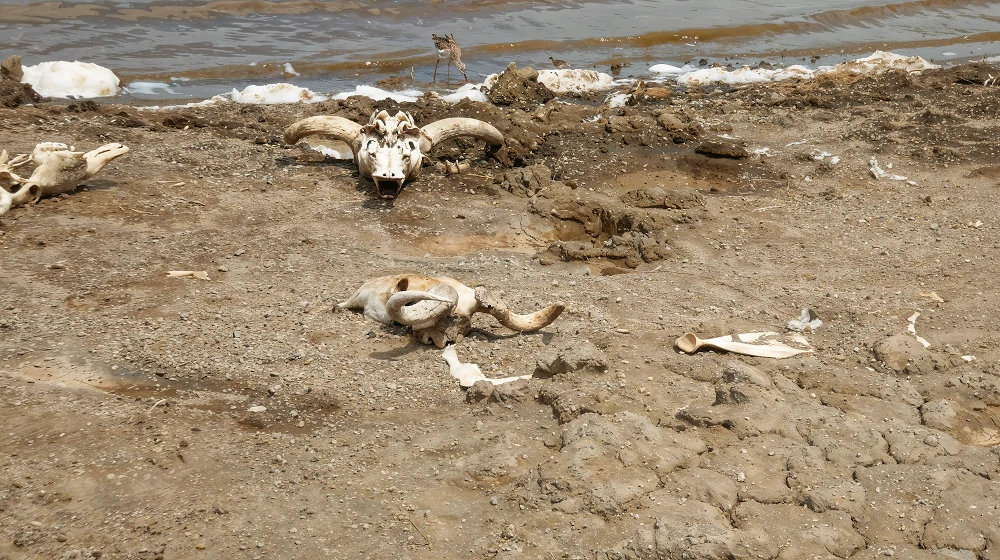
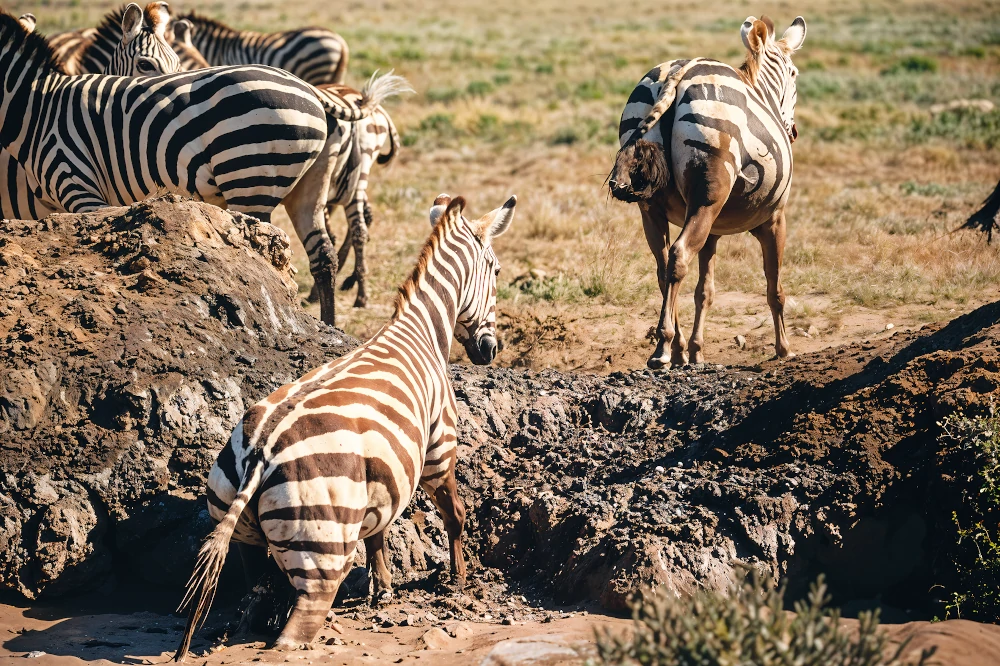
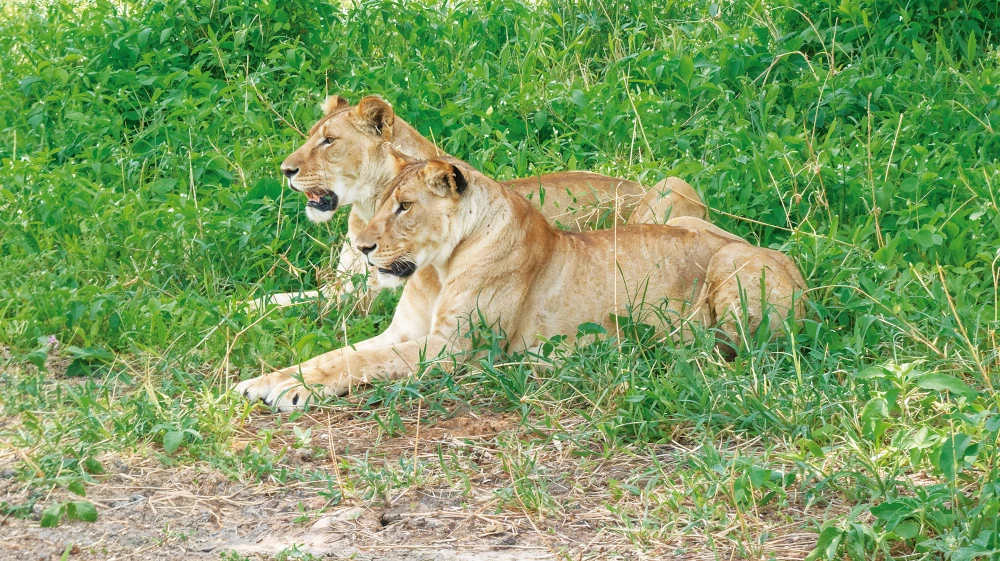
Animal remains by a lake. On the right, typical scenes of zebras fleeing potential threats. In the adjacent photograph, two lionesses keep watch from a distance over a herd of wildebeest and zebras. Shortly afterwards, they became restless, got up and disappeared from view.
-
- Foto: Abel.
-
- Foto: Abel.
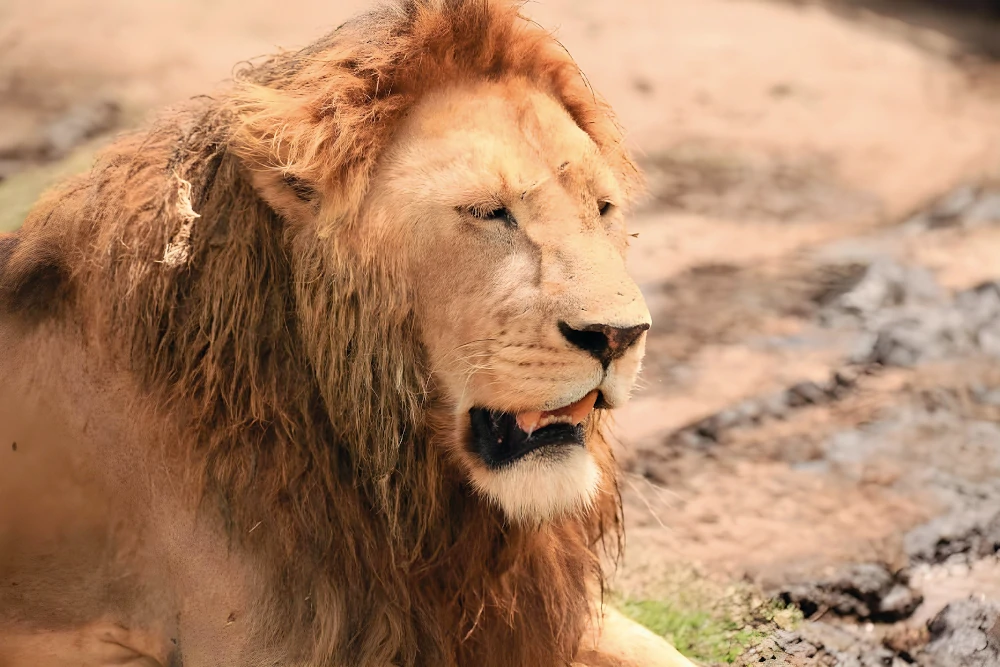
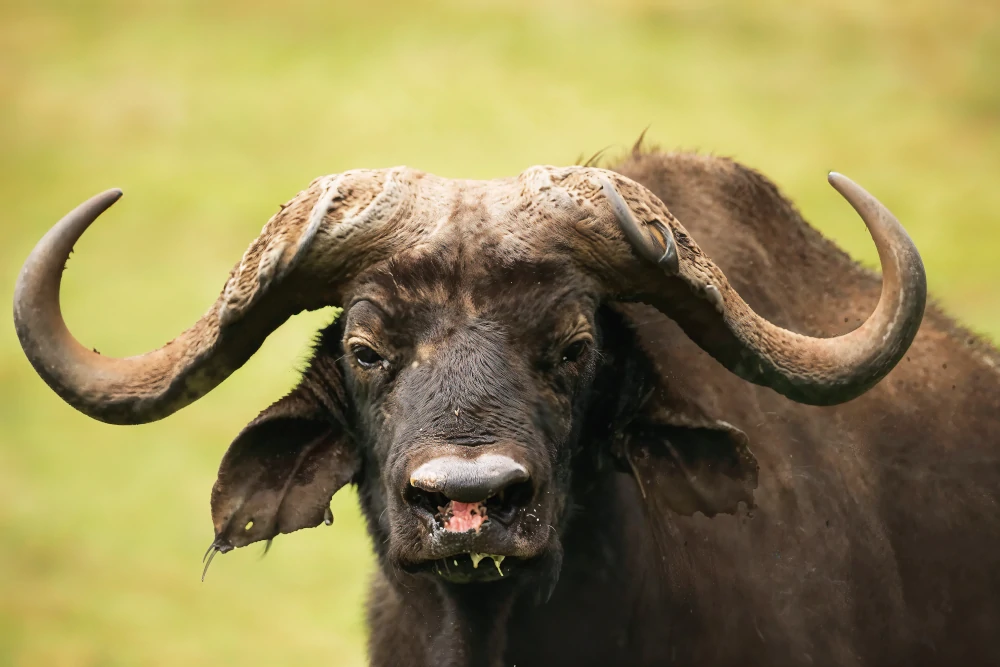
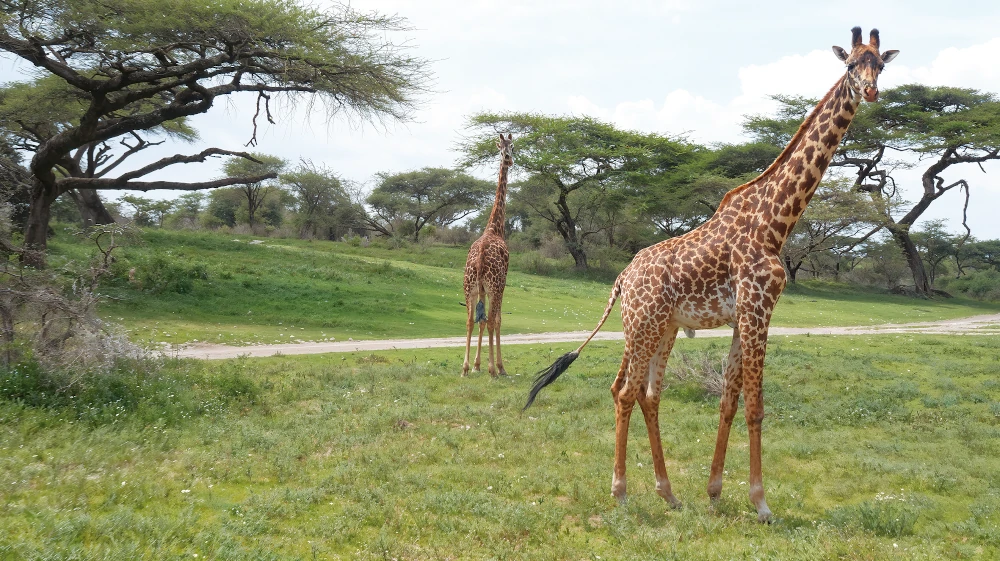
Three familiar Serengeti sights: a seated lion, a buffalo and a group of giraffes, standing between four and five metres tall.






Leave A Comment