
The Universitat de les Illes Balears (UIB) has dropped out of the world’s top 1,000 universities in the 2026 edition of the Academic Ranking of World Universities (ARWU). The institution therefore leaves a ranking in which it was placed in the 701-800 band in 2025.
The UIB’s departure from the Shanghai Ranking comes in a year that has also seen a decline in the number of Spanish universities included. According to figures provided by the university itself, Spain now has 30 institutions among the world’s top 1,000. There were 36 in 2025 and 38 in 2024.
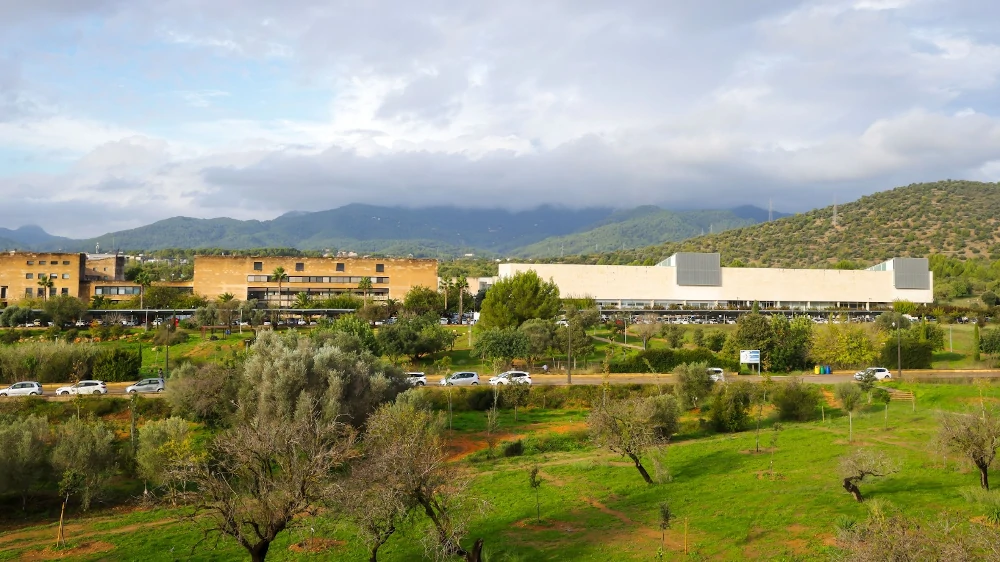
Part of the Universitat de les Illes Balears campus. Photo: A. Costa-UIB
The university attributes this decline, among other factors, to the strong growth of Chinese institutions. The 2026 edition includes 234 Chinese universities among the top 1,000, with 16 making it into the top 100.
UIB explains its departure from the Shanghai Ranking
The UIB also points to the methodology used to compile the ranking. The ARWU focuses primarily on research and assesses a number of very specific factors. These include Nobel Prizes and Fields Medals, highly cited researchers and publications in Nature and Science.
Furthermore, most of these indicators are calculated in absolute terms. As a result, the size of each institution is barely taken into account. Only the academic performance per capita indicator, which accounts for 10% of the score, introduces an adjustment linked to this factor.
UIB sources believe that this system favours large universities and can put medium-sized institutions at a disadvantage. In their view, a university can maintain significant research activity in relation to its resources without this being reflected in the ARWU.
The institution also points out that Camilo José Cela, a UIB professor and winner of the Nobel Prize in Literature in 1989, does not count towards the ranking. It only considers Nobel Prizes in Physics, Chemistry, Medicine and Economics, as well as Fields Medals in Mathematics.
“It does not necessarily imply substantial changes” in research
The UIB maintains that dropping out of the top 1,000 does not necessarily mean that its scientific activity has deteriorated. University sources say that moving in or out of the top 1,000 can be the result of “relatively small variations” in some of the indicators.
They therefore believe that the 2026 result “does not necessarily imply substantial changes in the quality of research” carried out by the universities concerned.
The institution also points out that the Shanghai Ranking does not assess the quality of teaching, knowledge transfer, innovation or social engagement. It argues that these areas are also essential functions of a university and should be taken into account when assessing its performance.
The UIB says it will continue with the measures set out in its Strategic Plan to strengthen research, increase its impact, promote internationalisation and consolidate its research groups. It also highlights that it remains included in other assessment systems that examine different aspects of university activity.








Leave A Comment