
The Balearic Islands’ wildfire response system is preparing for increasingly longer and higher-risk fire seasons
“We are seeing longer, hotter and drier summers, and we must be more alert than ever,” says Joan Simonet, conseller for Agriculture, Fisheries and Natural Environment. In this context, the Inter-Island Forest Fire Operation deploys its full capacity from 1 May to 15 October, the period of highest risk, to protect nearly 250,000 hectares of forest, a key asset for the territory’s environmental and economic balance.
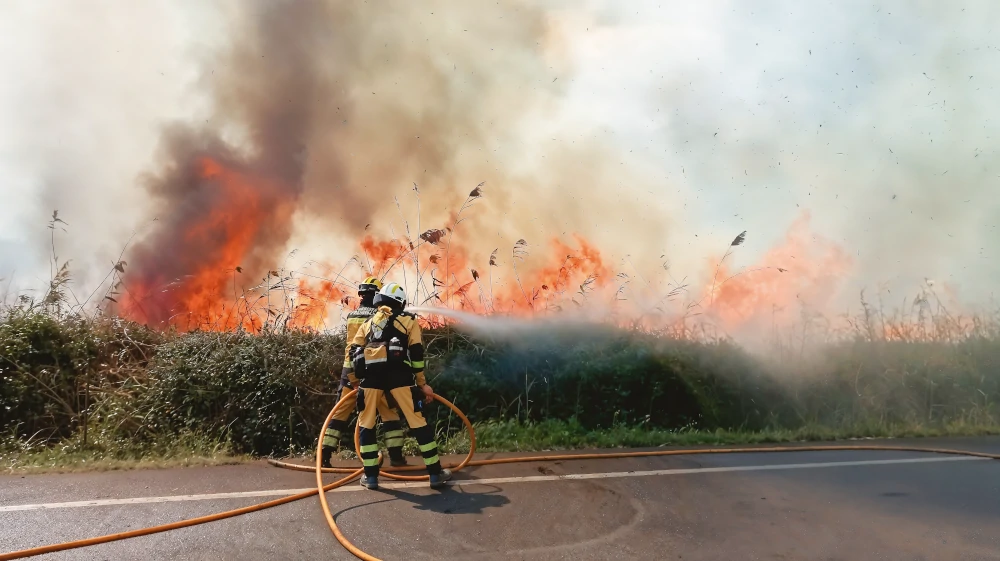
Forestry brigades work on the ground to contain the advance of the flames and prevent them from spreading. Photos: D. G. Gestió Forestal.
In summer, resources rise to over 350 personnel, five helicopters and five aircraft. On the ground, forest brigades from the Balearic Institute of Nature (IBANAT), environmental officers and Civil Protection teams are supported by fire engines and a network of more than 160 water points across the islands. All operate under a clear system with set protocols and response levels depending on fire severity. “Nothing is improvised and everyone knows what to do,” says Joan Simonet.
But the fight against fire is not limited to those months. “It never ends; crews are on standby all year round,” says the conseller. Because that shield against fire, in which the Govern invests 20 million euros annually, is built year-round.
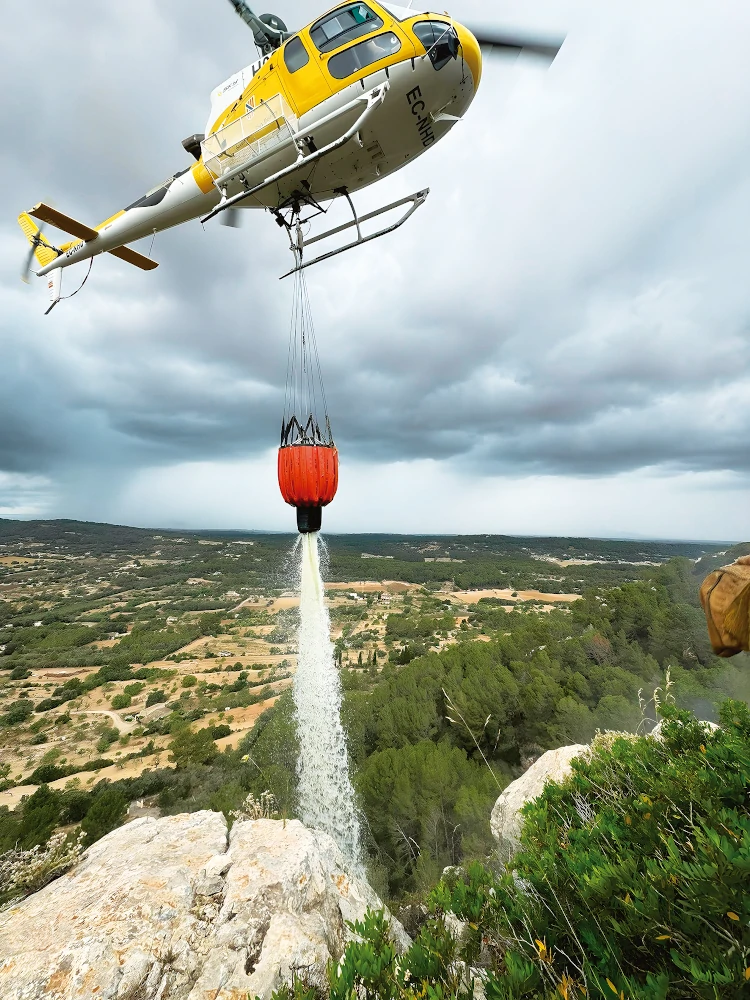
Wildfire response helicopter.
The strategy works on two fronts. “First, prevent fires; then fight them,” Simonet sums up. Following the idea that “fires are put out in winter”, work in those months focuses on prevention: clearing forest areas and creating firebreaks to improve access. “Forests cannot be left unmanaged, as fuel builds up and risk increases,” he warns. Action is also taken near homes, roads and paths, areas especially sensitive due to human presence. “A poorly extinguished cigarette, a piece of glass, rubbish… these can all start a fire,” explains the conseller.
In fact, of the 82 fires recorded in 2025, only 8.54% had a natural cause (lightning), while 29.26% were due to negligence or accidents and 39.02% were intentional; the rest were unknown or re-ignitions. “That is why public awareness campaigns are so important,” he adds. In this regard, the AlertaFoc system provides daily information on risk levels by municipality and permitted activities.
Immediate response
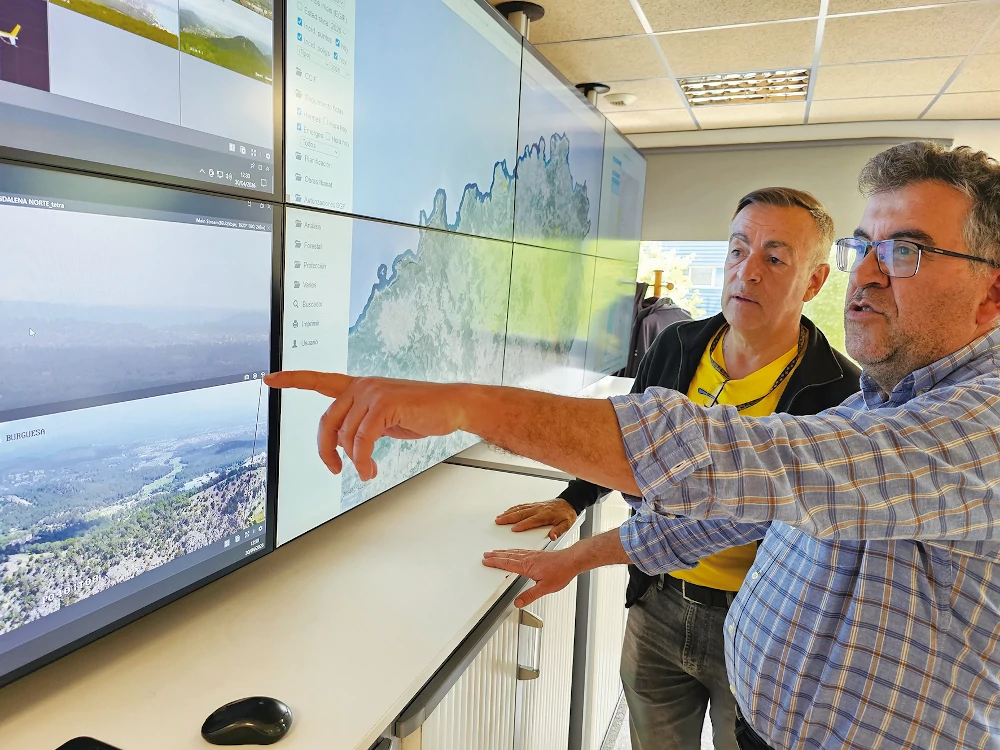
Simonet (right) at the control centre of the wildfire response operation. Photo: J. S.




Leave A Comment