
The carro triomfal de santa Catalina Tomàs 2026 (Triumphal Float of Saint Catalina Tomàs) will parade through central Palma on Saturday 17 October, starting at 18:30, with around 900 participants and more than thirty groups from eighteen municipalities across Mallorca. Emma Martínez González will be this year’s Beateta in a procession featuring marching bands, xeremiers (Mallorcan bagpipers), giants, floats and traditional performances.
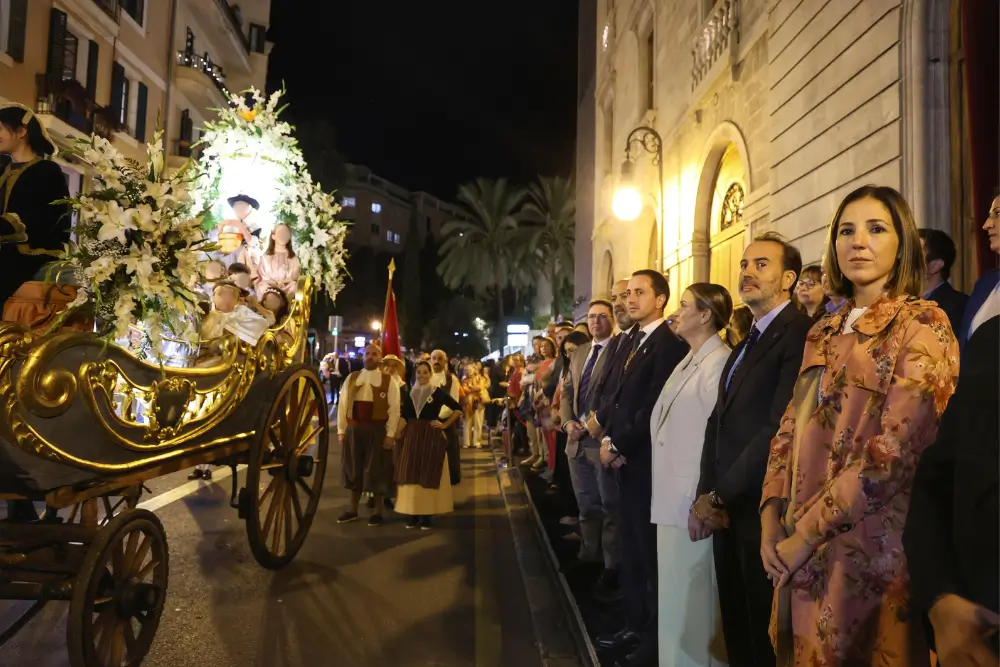
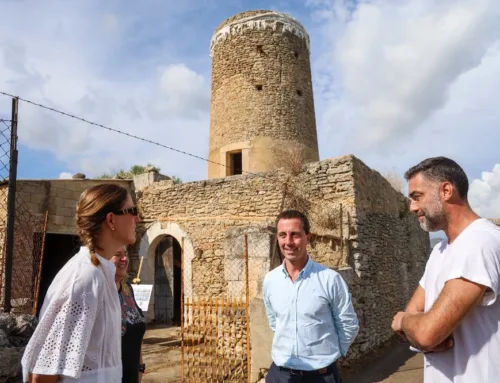
Officials attend the 2024 triumphal float procession. Photo: Consell de Mallorca.
The celebration, known as the colcada de la Beateta (Beateta Procession), centres on the carro triomfal (triumphal float) and traditionally takes place on the third Saturday in October. This year, it also has special recognition: the Consell de Mallorca has declared the processions in Palma, Valldemossa and Santa Margalida in honour of Saint Catalina Tomàs assets of intangible cultural interest of Mallorca (BICIM).
The Consell de Mallorca, the Bisbat de Mallorca (Diocese of Mallorca) and the canonry of Santa Magdalena are organising the events on 16 and 17 October, in collaboration with Palma City Council and the Teatre Principal.
Saint Catalina Tomàs triumphal float 2026: timetable and route
The traditional Beateta procession begins on Saturday 17 October at 18:30, departing from plaça de l’Hospital and passing through the main streets of central Palma.
The full route is as follows:
- Plaça de l’Hospital.
- Costa de la Sang.
- La Rambla.
- Carrer de la Riera.
- Carrer de la Unió.
- Plaça del Mercat.
- Carrer de la Unió.
- Avinguda de Jaume III.
- Carrer de Bonaire.
- Carrer del Bisbe Campins.
- Via Roma.
- Costa de la Sang.
- Carrer del Jardí Botànic.
- Plaça de Santa Magdalena.
At the end of the procession, there will be a floral offering and veneration of the body of Saint Catalina Tomàs. The Coral Sant Jaume choir will perform La Balanguera together with those attending to close the celebration.
Programme of Saint Catalina Tomàs events in Palma
The celebrations include religious and traditional activities over two days, mainly centred on the church and monastery of Santa Magdalena.
Friday 16 October
- 19:00: presentation of the Beateta, Emma Martínez González, at the church of Santa Magdalena.
- 19:30: catechism session about Saint Catalina Tomàs for children, led by Rev. Bartomeu Villalonga Moyà, at the church of Santa Magdalena.
Saturday 17 October
- 10:00: street parade around the monastery of Santa Magdalena. Coral Sant Jaume will perform Sor Tomasseta outside the church of Sant Jaume.
- 11:00: solemn celebration of the Eucharist, presided over by Rev. Bartomeu Villalonga Moyà, attended by the Beateta and accompanied by her little angels and children in traditional rural dress.
- 18:30: Saint Catalina Tomàs procession begins at plaça de l’Hospital.
- At the end: floral offering, veneration of the saint’s body and performance of La Balanguera.
More than thirty groups from eighteen municipalities across Mallorca
The procession will include representatives from Palma, Andratx, Binissalem, Campos, Consell, Felanitx, Llucmajor, Maria de la Salut, Marratxí, Muro, Pollença, Porreres, Santa Margalida, Santanyí, Selva, Sóller, Valldemossa and Vilafranca de Bonany.
Participants will include marching bands, groups of xeremiers, folk groups, giants, floats, decorated carts and portrayals of historical and religious figures associated with Saint Catalina Tomàs.
The Consell de Mallorca’s traditional wind musicians and Palma City Council’s giant xeremiers will also take part. The Palma Municipal Band will bring the procession to a close, while Coral Sant Jaume will play a special role in the musical events.
A Palma tradition dating back to 1792
The Saint Catalina Tomàs triumphal float procession in Palma is the oldest in Mallorca. Its origins date back to 1792, when celebrations were organised to mark the beatification of the religious sister, who was born in Valldemossa in 1531 and died in 1574.
The former Gran i General Consell promoted the procession, continuing its support for the cause of Saint Catalina Tomàs’s canonisation, which began in 1625 and was completed in 1930.
More than two centuries later, the procession retains its character as a civic and religious tribute, attracting participants from beyond Palma itself.
The recent declaration of the celebrations in Palma, Valldemossa and Santa Margalida as assets of intangible cultural interest of Mallorca recognises their importance as part of the island’s festive heritage and popular traditions.




Leave A Comment