
The Consell de Mallorca will restore 35 historic mills across 19 municipalities on the island through a grant scheme aimed at preserving this heritage. The work will cover 22 water-pumping mills, 12 flour mills and one watermill.
The island authority will allocate €2.5 million to the projects, which will be carried out between 2026 and 2027. The funding comes from the Sustainable Tourism Tax (ITS) and will cover 75% of the cost of each project, with owners contributing the remaining 25%.
The public investment will be complemented by around €838,000 in private funding, meaning the restoration of Mallorca’s mills will mobilise a total of around €3.35 million.
The mills in Mallorca that will be restored
Among the 35 selected projects are the Cala Banyalbufar watermill, the d’en Soler mill in Puigpunyent, the d’en Suau mill in Llubí, the Can Seda mill in Lloseta and the dels Germans mill in Son Servera.
The list also includes the privately owned Can Moreu mill, which will receive €150,000 towards a project valued at €200,000. The president of the Consell de Mallorca, Llorenç Galmés, and the vice-president and Councillor for Culture and Heritage, Antònia Roca, visited the mill following the awarding of the grants.
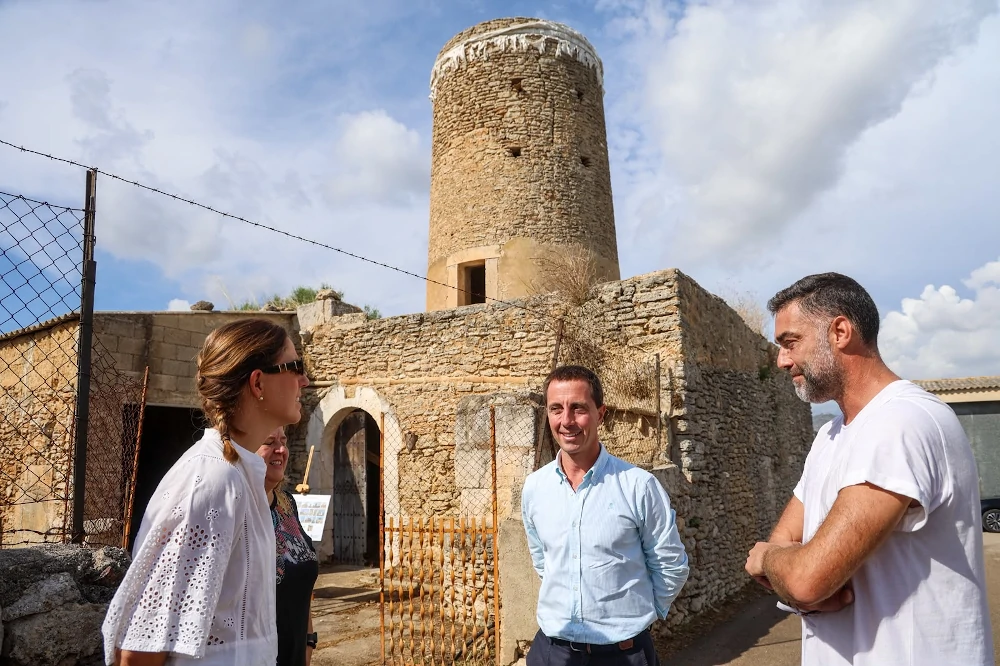
Institutional visit to the Can Moreu mill. Photo: Consell de Mallorca.
Of the 35 projects receiving funding, 25 belong to individuals and private organisations, which will receive €1,824,146.12. Another five belong to companies, which will receive €365,901.43, while five are owned by local councils, with grants totalling €324,951.96.
The work will not be limited to the buildings themselves. Projects may also include the restoration of historic machinery and must comply with heritage conservation criteria, as well as using traditional materials and techniques.
Preserving a distinctive feature of Mallorca’s landscape
“The mills are part of our identity and the landscape we want to pass on to future generations”, Galmés said. The president of the Consell defended the importance of supporting owners and organisations working to preserve these heritage assets.
Roca described the scheme as “one of the most significant investments in recent years in preserving Mallorca’s milling heritage” and highlighted that it will allow work to be carried out on both publicly and privately owned assets.
For his part, the Regional Minister for Tourism, Culture and Sports, Jaume Bauzà, said that funding through the ITS allows the tourism tax to be reinvested in protecting “our identity, our history and Mallorca’s rural landscape”.






Leave A Comment