
Two-time world champion Malén Sart champions the sustainable nature of a demanding sport and challenges the misconceptions that surround it
A flash of light cuts through the water and glints off a fish’s scales. Everything is silent. Only the muffled heartbeat of the person holding their breath underwater and patiently watching their prey. Suddenly, a 300-kilo tuna passes just a few metres away. “The most fascinating thing is that, when you dive in, you never know what you will find, and that surprise turns into happiness,” says Malén Sart. For this 57-year-old woman from Binissalem, spearfishing is “a way of life. I feel more at ease in the water than on land.”
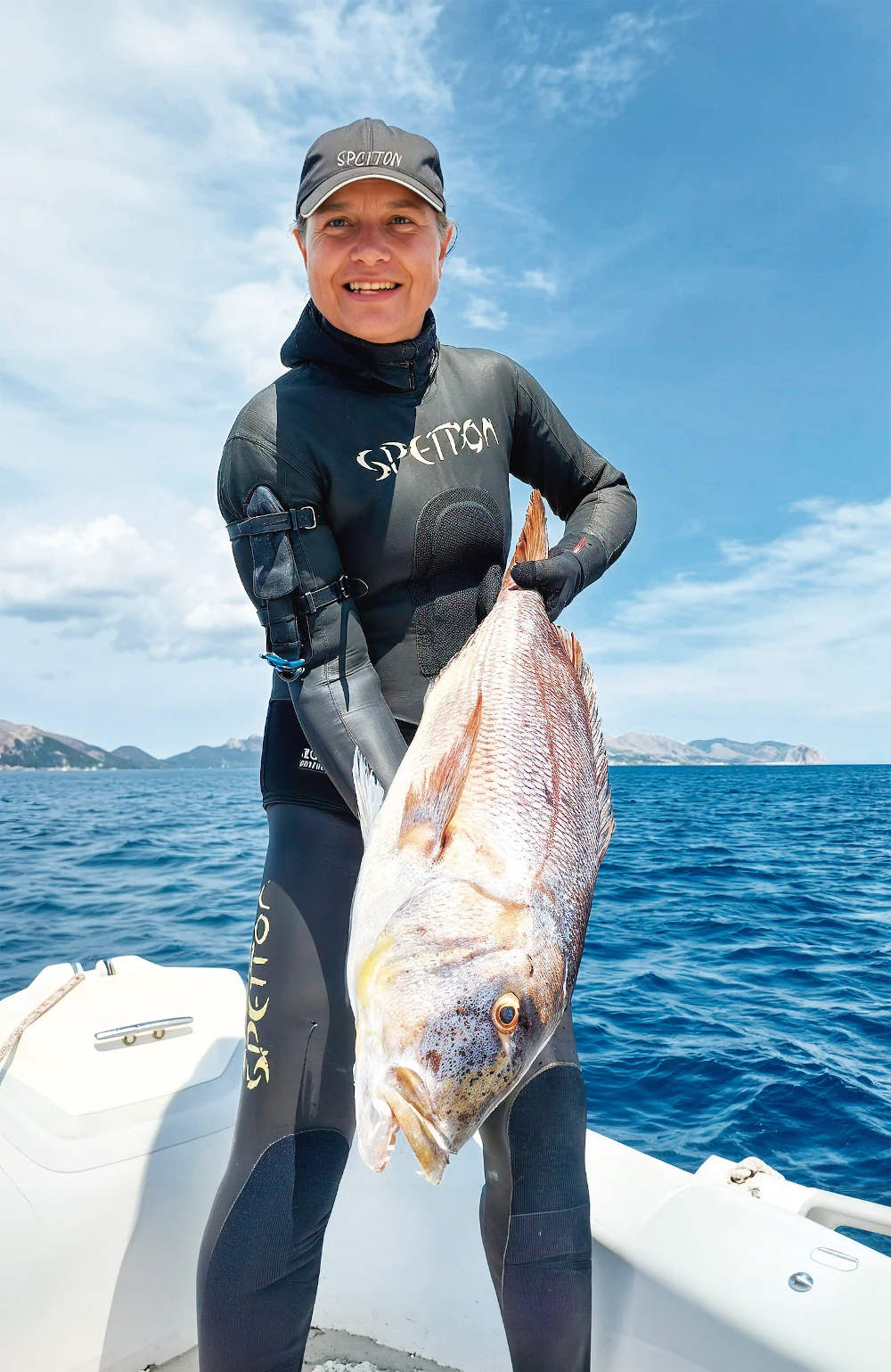
Malén Sart displays a 4.95-kilogram dentex, one of the catches she values most because of the skill required to catch it. Photo: M. S.
Sart did not take up the sport until she was nearly 40. “I tried to start at 25, but there were no suits in my size. The gear was more geared towards men,” she recalls. In her thirties, she found a suit that fitted and headed into the water, speargun in hand. “I realised I was good at it and fell in love at once.”
In 2013, encouraged by her husband, Sebastià Torre, and Tomeu Salas, a key figure in the sport in Spain, she began competing… against men, as there was no women’s category. “I told them they must have gone mad, but it was the right move.” Rather than an obstacle, it became a motivation.
The turning point came in 2016 with the first women’s nationals in Porto Cristo, and in 2019 with the first international event, the European Championship in Denmark. The rest is history: two world titles — in Sardinia (2021) and Cantabria (2023) — and three Spanish titles that have made her one of the sport’s leading figures.
Of all her wins, Sart singles out a competition in Mallorca after the pandemic, where she beat every participant, men included. “They had to tell me three times — I couldn’t believe it. That win stayed with me forever,” she says. It was not just that she was good at it: she was competing at a high level.
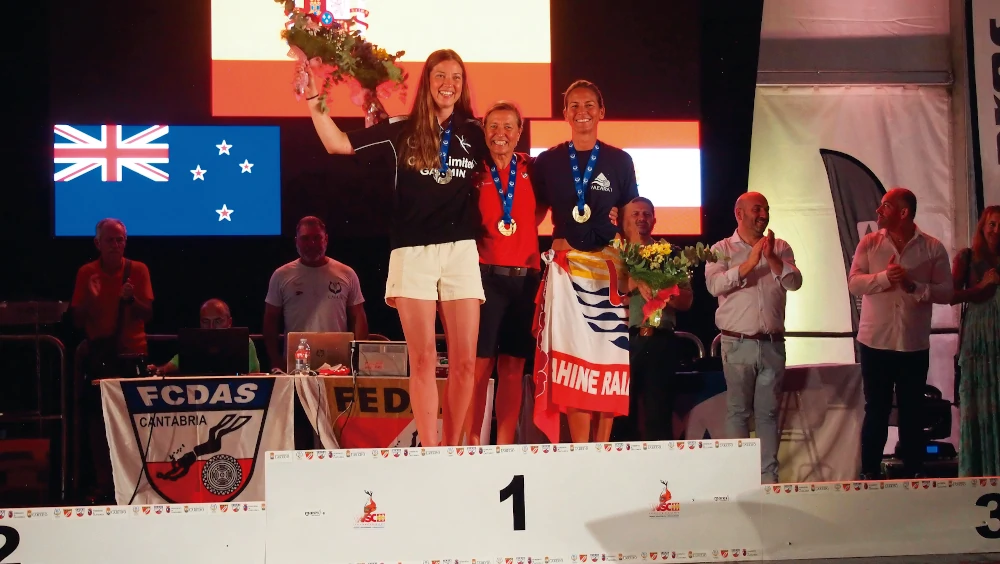
Sart (centre) on the podium after winning gold at Laredo 2023. Photo: M. S.
From her first world title, Sart recalls an honour few athletes ever receive: Club Perlas Manacor, her home club, renamed its event on the Mallorca circuit the Malén Sart Trophy. “I was thrilled, it was a real honour.”
Her second title, in Laredo, holds a unique place in her memory. “Winning in Spain, surrounded by your own people… I don’t think I could ever feel that happy again. It was the best.” And winning a world title in Mallorca? “I’d be far too stressed and wouldn’t enjoy it as much,” she admits with a laugh.
A little-known sport
“Everyone knows Cristiano or Messi — even who they date — but few on the island know Pep Amengual or Pedro Carbonell, or what spearfishing is,” says Sart. Though those two Mallorcans — along with Joan Gomis, Alberto March and Sart — have won ten world titles between them, the sport is still little known.
“I always have to explain that it is a breath-hold sport, because most people still think it is done with tanks. You dive, watch and decide whether to catch the fish. It’s as simple as that.”
That freedom to choose is one of its defining features. “It is highly selective and fully sustainable, and our rules make that clear,” she says. She also points to a basic idea of responsible consumption: “I eat all the fish I catch and, in fact, my mother is delighted. We make a great bullit de peix.”
Every time she goes out to sea, she also picks up rubbish. “Mainly plastic, but not just what floats. I also collect it from the seabed. There are parts of the Mediterranean that look like waste dumps,” she says.
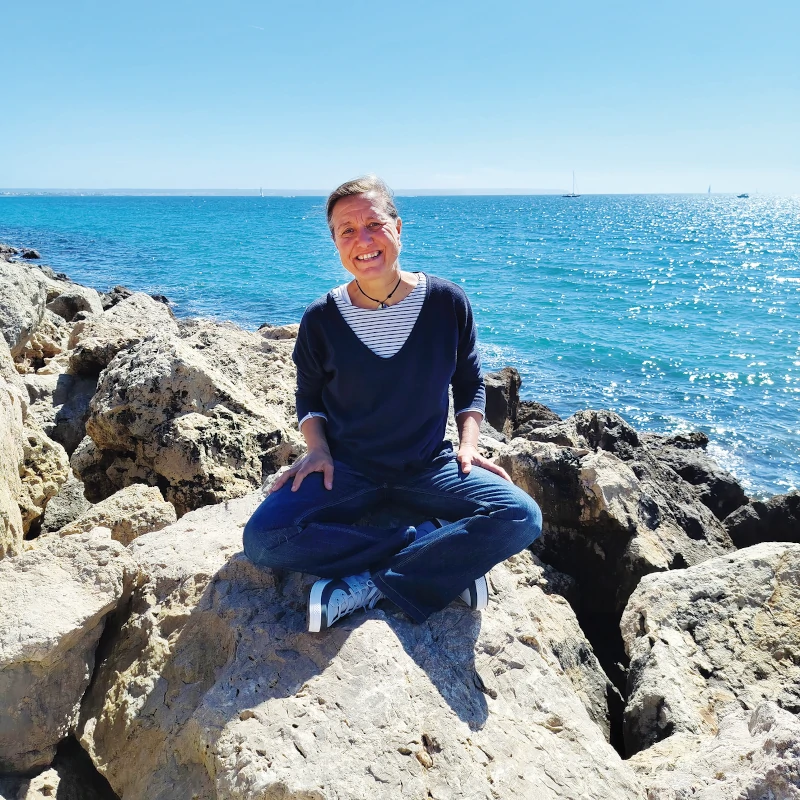
The two-time world champion poses for Mallorca Global Mag in Palma Bay. Photo: J. S.
However, spearfishing is often blamed for the decline of the sea, and Sart pushes back: “We are guests in a wonderful natural world and the first to want to protect and respect it. The real ecological disaster is caused by industrial fishing methods such as trawling or purse seining. One recent example was the catch of 23,000 kilos of spawning meagre off the coast of Huelva in a single day.”
Social media boost
In recent years, social media has helped raise the sport’s profile, but it has also created a distorted image: dives of more than 50 metres or extreme fishing in rough seas. “These are things only top specialists can do and, even then, they may need several trips to make a single video. You see that, you’re 20, you try it yourself and you could have a serious or even fatal accident — a blackout, decompression sickness… That is the real danger. For all the striking images and catches, social media does not show the reality of spearfishing,” she explains.
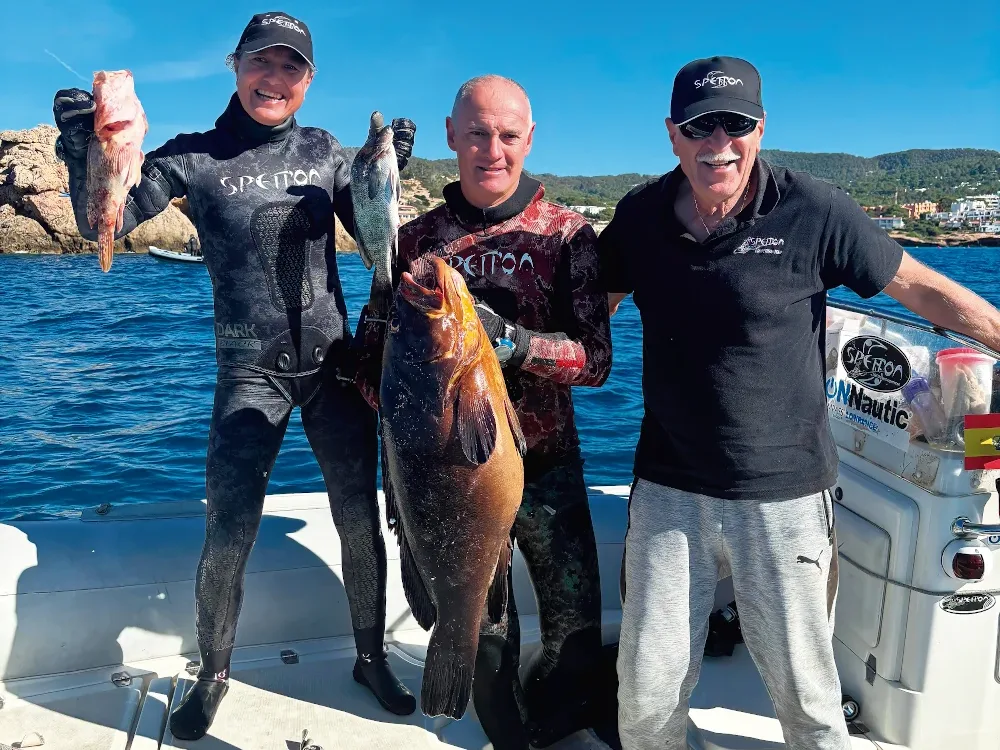
Malén Sart, her husband Sebastià Torre and Tomeu Salas, a key figure in the development of the sport in Spain. Photo: M. S.





Leave A Comment