
At the end of April, the Sa Dragonera Natural Park, a valuable protected natural area in the Balearic Islands, was startled by the presence of a specimen of an invasive species: the horseshoe whip snake (Hemorrhois hippocrepis). This sighting, unprecedented until that moment in the park but present in the Pityusic Islands for years, has alarmed the authorities, who have launched a rapid and thorough preventive campaign to protect the local native biodiversity. Mallorca Global Mag had already warned about the danger of such invasive species to the islands’ ecosystem in its previous spring–summer 2024 edition. You can read the full report at this link.
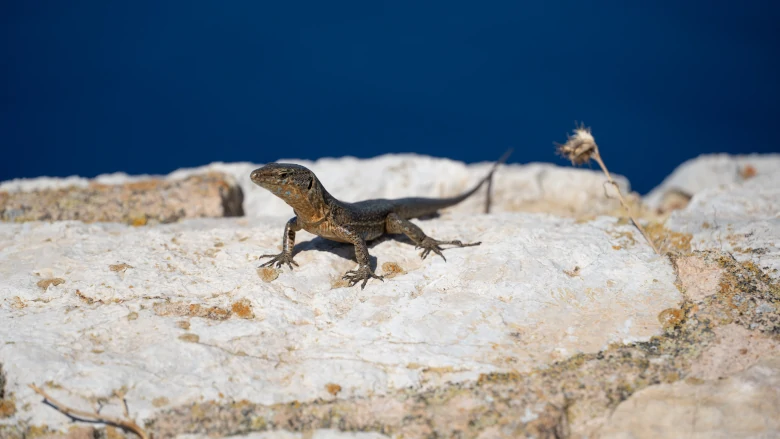
A specimen of the Balearic lizard, a species at risk due to the presence of the horseshoe whip snake in Sa Dragonera. Photos: CAIB.
The horseshoe whip snake is a non-native reptile that, in such a fragile environment as Sa Dragonera, can pose a serious threat to native species such as the Balearic lizard (Podarcis lilfordi) and several colonies of seabirds, including the European storm petrel (Hydrobates pelagicus) and the Balearic shearwater (Puffinus mauretanicus), all of which are protected and endangered.
Action plan against this invasive species in Sa Dragonera
In response to this unexpected finding, the Directorate General of Natural Environment and Forest Management, in collaboration with the Balearic Islands Wildlife Recovery Consortium (COFIB) and the Sa Dragonera Natural Park, has designed an intensive action plan to carry out a campaign of detection and trapping of invasive snakes.
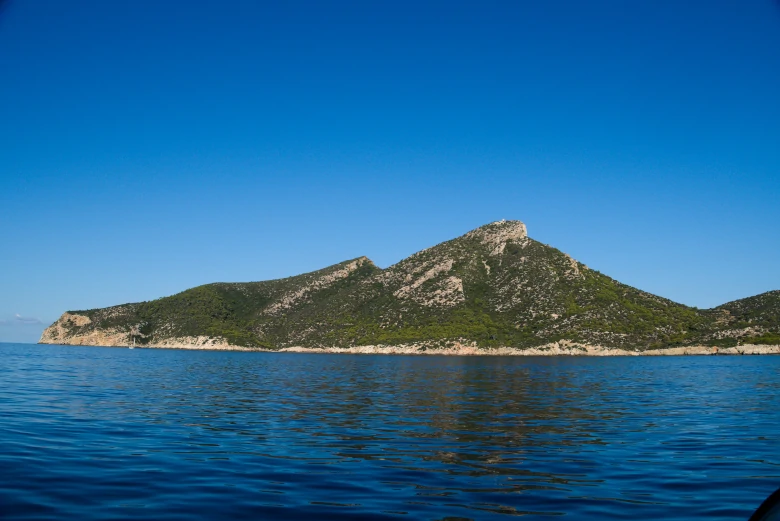
Specifically, a total of 95 capture cages will be installed, strategically distributed across Sa Dragonera, Es Pantaleu and the nearby coast of Mallorca. Of these, 85 cages will be placed at different points on Sa Dragonera, especially along the eastern coast, from the Tramuntana lighthouse to the Llebeig lighthouse. Additionally, seven more cages will be installed on the nearby coast of Mallorca and three on Es Pantaleu, with the aim of preventing the spread of the invasive species.
These traps, which will be georeferenced and labelled, will be checked regularly by COFIB technicians. They will be placed off the park’s main paths to avoid interfering with public access and visitor routes.




Leave A Comment