
The Balearic Islands has a shortage of around 17,000 homes after its population grew by 46.3% between 2000 and 2025, while the housing stock increased by 31.5%. This is one of the main findings on housing in the Balearic Islands included in the new Observatori de l’Habitatge de les Illes Balears (OHIB).
The difference between these two growth rates represents an average shortfall of 14.8% in new housing needed to keep pace with population growth. The Observatori points out, however, that the estimated shortage of 17,000 homes does not necessarily reflect actual demand.
The OHIB, launched by the Balearic Government, has just launched its website with 23 indicators covering the housing market and housing policies. The data come from different official bodies and from collaboration with organisations including the Agencia Tributaria de las Illes Balears (ATIB), the Institut d’Estadística de les Illes Balears (IBESTAT) and the Institut Cartogràfic i Geogràfic de les Illes Balears (ICGIB).
More than 10,000 affordable homes in the pipeline
In response to the housing shortage in the Balearic Islands, the Balearic Government says there are currently 10,006 affordable homes for residents in the pipeline. Access to these protected or price-capped homes requires a minimum of five years’ residence in the islands.
The planned housing supply in the Balearic Islands under the emergency housing plan is mainly distributed as follows:
- Around 4,400 affordable homes through Law 3/2024 and the Construir per llogar (Build to Rent) programme.
- More than 1,800 public homes being planned by IBAVI.
- More than 4,000 homes planned through strategic residential projects (PRE).
In addition, since 2023, more than 34,000 people have benefited from different Balearic Government schemes related to renting, buying, renovation, energy efficiency or access to a mortgage.
Construction of new flats increased by almost 19%
The figures also show a recovery in residential construction. In 2025, permits were issued for 2,452 new homes in multi-family residential buildings, the highest figure since the 2008 crisis.
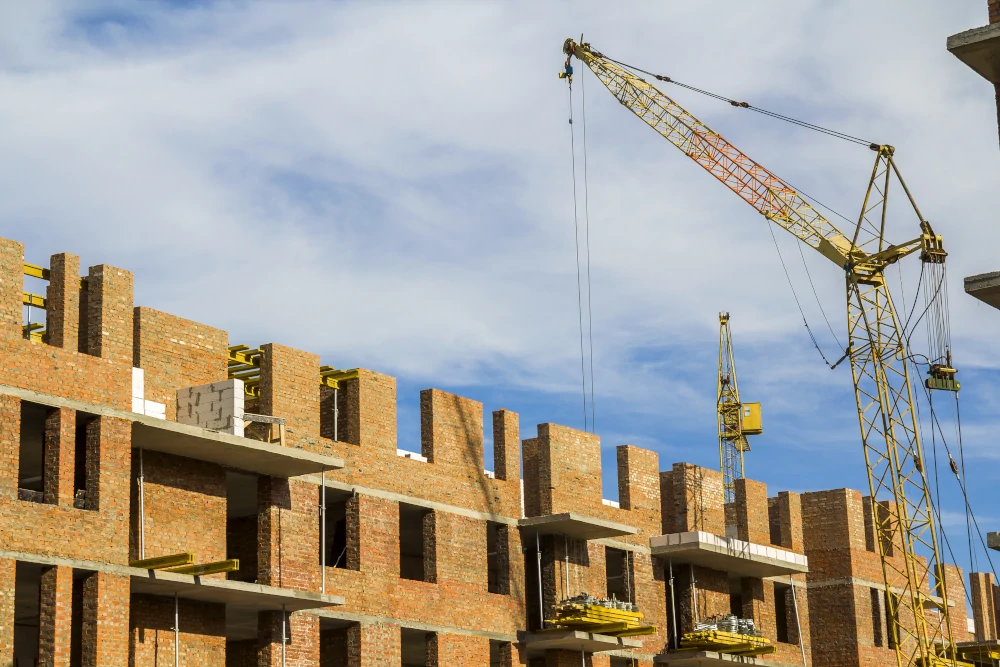
Construction of new flats increased by 18.62% compared with 2024. The Balearic Government links this trend to an increase in supply and measures adopted to speed up the processing of new developments.
Property portal asking prices are more than 38% higher than actual sale prices
Another indicator concerns housing prices in the Balearic Islands. According to the OHIB, the average price advertised on property portals in 2025 was more than 38% higher than the average actual sale price recorded by the ATIB. The difference is more than 31% when compared with data from the Colegio de Registradores de la Propiedad.
The Observatori therefore warns that prices published on property portals are asking prices and should not be confused with the amounts ultimately paid in property transactions.
There are also significant differences depending on the buyer’s origin. The average price of homes purchased in 2025 was:
- €304,120 for domestic buyers.
- €548,662 for foreign buyers, 80% more.
- €396,165 on average across all transactions.
According to the figures presented, the price-capped homes promoted by the Balearic Government are marketed at approximately 30% below actual transaction prices.
Almost half of public housing applicants want to buy
Buying a home in the Balearic Islands is also among the preferences of those registered with IBAVI as applicants for protected housing. 48.7% are considering some form of purchase: 22.8% choose this option exclusively and 25.9% opt for rent-to-buy.
Meanwhile, 36.8% prefer renting, while the remaining 14.5% express no preference.
Tourist rentals account for 4.2% of homes
Tourist rentals in the Balearic Islands currently account for 4.2% of the housing stock, with 26,143 licensed tourist rental properties.
Their evolution has varied considerably depending on the period analysed. Between 2015 and 2022, the number of these properties rose from 11,403 to 26,492, an increase of 132%. Between 2022 and 2025, by contrast, 349 were removed, representing a decrease of 1.3%.
The latest data from Spain’s National Statistics Institute (INE), based on listings published on websites and therefore also including illegal supply, show a decline of 12.6%.
The Balearic Islands has 618,908 homes
The islands’ housing stock consisted of 618,908 homes in 2025: 479,516 in Mallorca, 58,784 in Menorca, 75,519 in Eivissa and 5,089 in Formentera.
Flats account for 66% of the total. Homes in multi-family residential buildings have an average floor area of 128 m², compared with 263 m² for villas and detached houses. The average floor area across the entire housing stock is 164 m².
The Observatori also highlights the age of the buildings. 56.54% of residential buildings were built before the first energy-efficiency regulations were introduced. Of the 175,677 energy performance certificates registered for homes, 83.4% have an E, F or G rating.
In this area, nearly 15,000 grants to improve energy efficiency have been awarded in recent years through the European NextGenerationEU funds.




Leave A Comment