
The first satellite in the history of the Balearic Islands, named Posidònia, is now fully completed and is scheduled for launch this summer. The project, promoted by the Government of the Balearic Islands together with the technology company Open Cosmos, will make it possible to obtain high-resolution data and images to make progress in areas such as the fight against climate change, territorial management and the sustainability of tourism in the archipelago.
The Posidònia project has funding of three million euros, co-financed with European funds from the Government, and is being developed in partnership with the University of the Balearic Islands, Wireless DNA and Garden Hoteles.
The Balearic satellite will monitor the territory and climate change
The Balearic satellite will monitor phenomena related to climate change, sea temperature, the evolution of the coastline, human pressure on the territory and the management of natural emergencies, among other applications. It will also provide access to strategic data for public administrations, research centres and companies in the Balearic Islands.
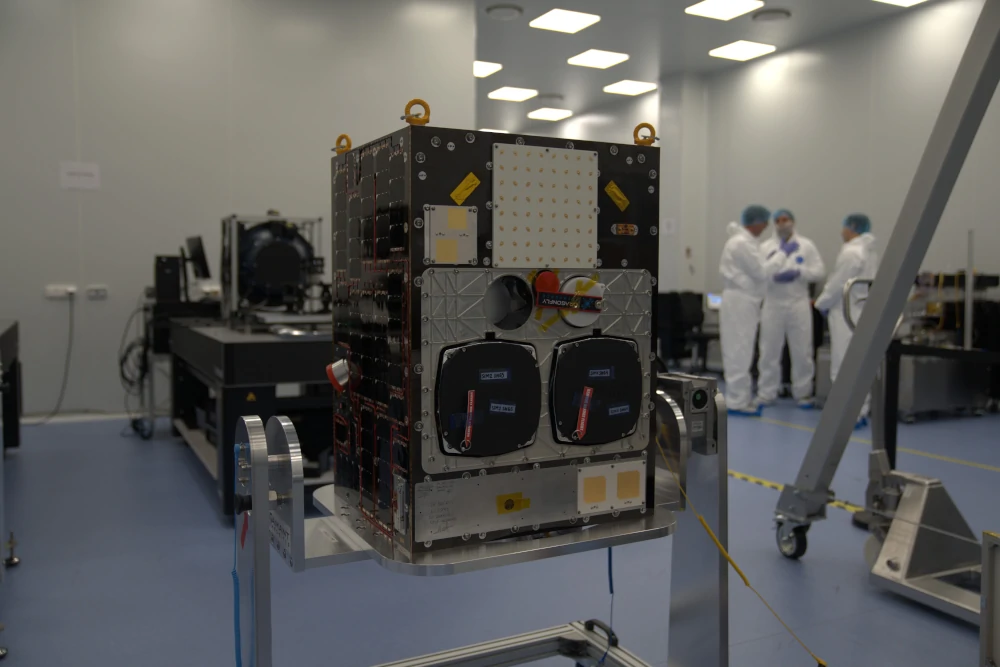
The Posidònia satellite. Photos: CAIB.
This vision had already been anticipated by the CEO and founder of Open Cosmos, Rafael Jordà, in an interview with Mallorca Global Mag in its winter 2023-2024 edition. In it, Jordà argued that the Balearic Islands should “commit to launching satellites into space” to access information on “water resources, coastal monitoring, spill monitoring, deforestation, response to fires, impact on floods…”. He also stated that “having this information is essential for the technological competitiveness of the islands”. As a Mallorcan, he added that he “would love to bring this data processing and analysis” to the islands. You can read the full interview at this link.
Antoni Costa visits Open Cosmos facilities
The first vice-president and regional minister for Economy, Finance and Innovation of the Government of the Balearic Islands, Antoni Costa, visited the Open Cosmos facilities on Wednesday to see the final state of the device before it is sent for launch. During the visit, he toured the company’s R&D&I areas and satellite factory, where Open Cosmos technical managers explained the different development, integration and validation processes for the space systems it manufactures.
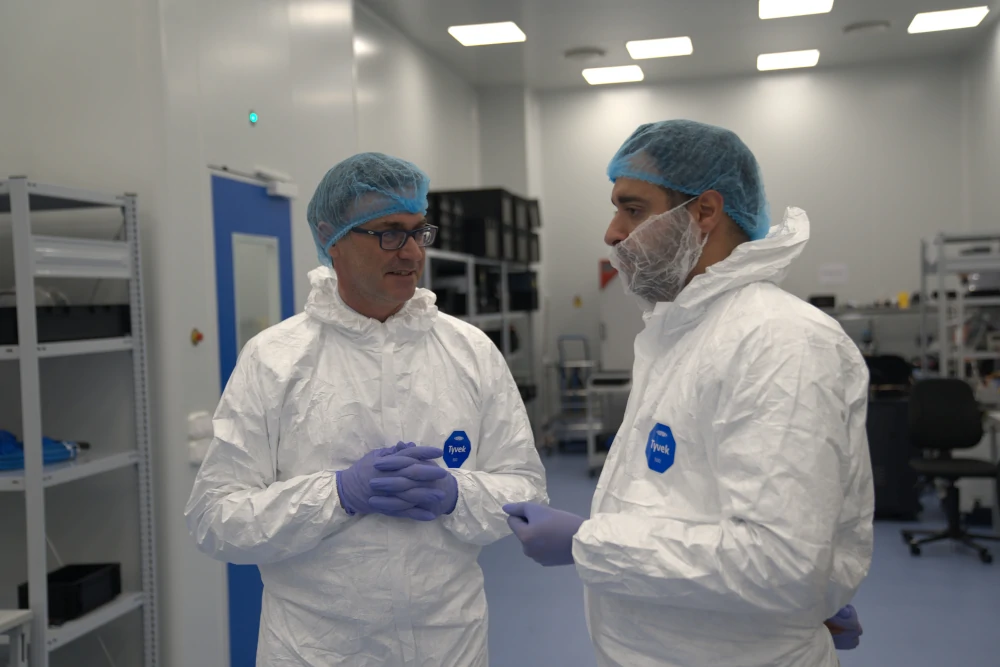
Antoni Costa, first vice-president and regional minister for Economy, Finance and Innovation, and Rafael Jordà, CEO and founder of Open Cosmos, in the Clean Room of the Mallorcan technology company.
Costa also entered the Clean Room, the high-security, environmentally controlled space where the Posidònia satellite is located, and signed the exterior structure of the device before its transfer.
The Balearic satellite places the archipelago on the aerospace map
Vice-president Costa said during the visit that “the Posidònia project symbolises the ability of the Balearic Islands to lead innovative initiatives with a real impact on the territory and on the future of our economy”. He also stressed that “public-private collaboration is helping to place the Balearic Islands on the international map of innovation and the aerospace sector”.
For his part, Rafael Jordà said that “seeing the Posidònia satellite fully completed is a historic milestone both for Open Cosmos and for the Balearic Islands”. Jordà added that the project shows that “the islands can promote high-level international technology initiatives, generating knowledge, innovation and new economic opportunities linked to the space sector”.
The name of the satellite, Posidònia, was chosen through a participatory process involving pupils from schools in the Balearic Islands, in tribute to the Mediterranean’s emblematic marine plant and a symbol of sustainability and environmental preservation. More information at this link.






Leave A Comment