

In recent years, a similar scene has been repeated in different squares, avenues and campuses. From Hong Kong to Mexico, passing through Iran, Turkey, Greece, France, Morocco and much of Southeast Asia, young people newly arrived in adulthood have taken to the streets to demand something simple yet urgent: the right not to inherit a broken world. They are members of Generation Z, born between the late 1990s and the first decade of the 21st century. Children of the 2000s, they have grown up immersed in the digital realm, and the internet is their natural space for interaction, protest and reflection. But their demands transcend the virtual. They mobilise in the streets against rising living costs, digital censorship, fiscal reforms or political corruption, and they demand what is essential: social equity, democratic transparency and a sustainable planet.
Generation Z was born in an era that promised endless horizons and grew up hearing that effort, study and perseverance would open every door for them, but that promised future has gradually faded. In its place, they have received a chain of economic crises, political instability, a destabilising climate and a technology that accelerates everything. And they have learnt to live with the suspicion that the future was mortgaged before they even had a voice.
They are often accused of being impatient. But their urgency is not capricious: it stems from the sense that the time to correct inequalities, repair damage and curb abuses is narrowing with each passing year. Far from 1970s romanticism, the young people of Gen Z are not calling for utopia, but for survival.
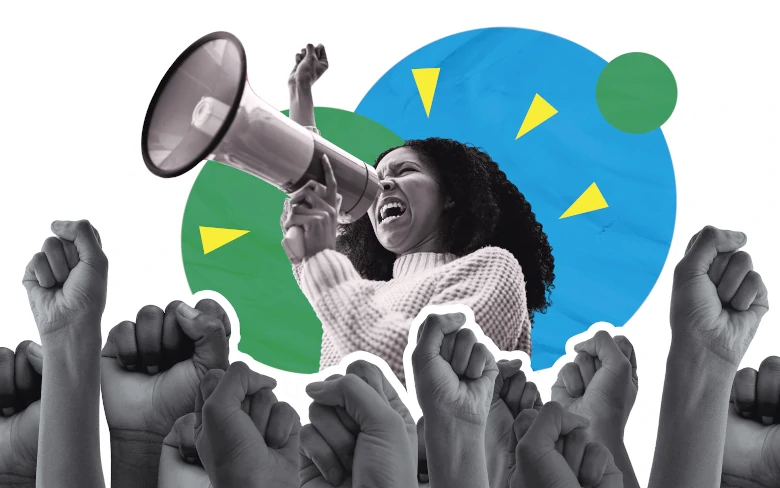
These protests are not born of a single grievance, but of an emotional accumulation: frustration, exhaustion, and both emotional and job insecurity, but also a profound desire for belonging. This “future deficit” —the perception of a social order incapable of guaranteeing wellbeing or justice— is the driving force behind their protests. Many young people find in forums, chats, impromptu TikTok livestreams and now in the streets a space where something emerges that everyday life does not always show: the conviction that things could be different.
Will they be the ones to correct today’s injustices? It’s possible. Not because they are exceptional, but because their life experience has made them particularly sensitive to what doesn’t work. Their strength does not come from having clear answers, but from their low tolerance for corruption and institutional cynicism. If they manage to turn this combination of critical awareness and willingness to act into organised, sustained strategies, they may well succeed in correcting some of the imbalances they are inheriting.
They are neither the apathetic youth many denounce nor the progressive vanguard others idealise. They are, in essence, a generation under tension
However, here a puzzling paradox emerges: while one part of Gen Z raises banners against governments and traditional structures, another seems drawn to conservative, even reactionary, discourses. In various countries, opinion studies show that young people are not necessarily the “progressive stronghold” many had imagined. How, then, can these two seemingly opposing tendencies be reconciled? How can the impulse for revolt coexist with the desire to return to a more rigid world? To break with what has been inherited, or to rebuild it with greater firmness.
When a generation grows up feeling that the world is wobbling, its response can split: some choose to challenge the system and question its structures; others lean towards discourses of order, rigid meritocracy and even nostalgia for social models they never experienced. Both mobilisation and the conservative turn stem, at heart, from the same need to regulate individual and social discomfort.
The paradox is not really a paradox. The same generation that protests can, at the same time, support conservative narratives because both tendencies respond to the same landscape of uncertainty. When the traditional mechanisms of belonging (stable employment, housing, solid institutions, clear life expectations) erode, younger generations oscillate between these two strategies. One seeks to transform the system, to overflow it; the other tries to restore an order it perceives as lost. It is a double adaptation: change or refuge.
The challenge —for them and for the societies that host them— will be to transform this ambivalent energy into a social project capable of offering stability without sacrificing the capacity for change. In that balance may lie the key to the new generational contract that the 21st century demands.
Looking at this generation requires abandoning simplistic categories. They are neither the apathetic youth that many criticise, nor the progressive vanguard that others idealise. They are a generation under tension: fragmented, hyperconnected and, above all, emotionally vulnerable to the world’s changes. Their apparent contradictions are not flaws but symptoms of a time in transformation.








Leave A Comment