
How many times, while watching a film or a series, have we found ourselves exclaiming, “Oh, Simón Andreu is in it”? And it’s hardly surprising, because the actor from Sa Pobla has been a constant presence on our screens since his debut in 1961. Andreu has played heart-throbs and priests, good men and villains, murderers and victims, aristocrats and commoners, soldiers and terrorists, popes and sinners, scientists… and even zombies! He has appeared in more than two hundred film and television productions, in addition to his work in theatre. Without noise or fuss, on or off the set, he has built a solid and respected career, marked by impeccable professionalism and a versatility that have made him the most international Mallorcan actor and an essential figure of Spanish cinema.
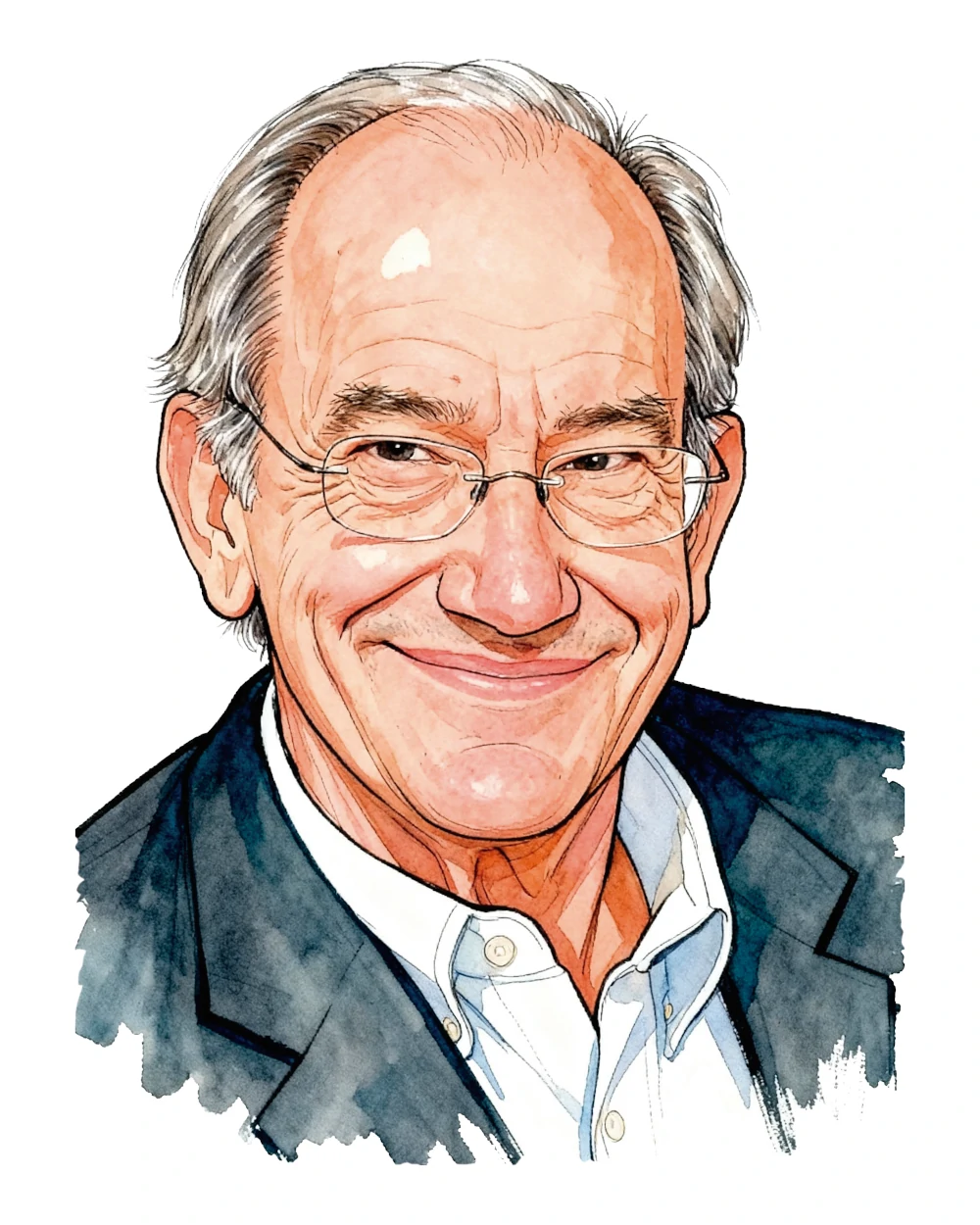
Ilustración generada con IA.
Born on 1 January 1941, Andreu discovered his vocation very early on. “I used to cry so that they would let me take part in a school play,” he recalled at the Mula Spanish Film Week. A poor student, at the age of 17 his father gave him a choice between becoming a carpenter or a blacksmith with his uncles. Unconventional and unwilling to settle, Andreu took the middle road and went off to do his military service. Afterwards, he moved to Madrid in search of a future that a pre-tourist Mallorca could not offer him. He spent some time selling vacuum cleaners until one day, while visiting the Cinearte studios with a friend, “by chance they gave me an audition and they took me on,” he explained in Diario de Mallorca. He had only gone to watch Jorge Mistral and Paquita Rico perform.
Thus, almost by chance, the prolific career of this self-taught actor began, someone who has never hidden the fact that he learned the trade by watching “the great actors on a screen.” His first roles were in Siempre es domingo, by Fernando Palacios, and Cuidado con las personas formales, by Agustín Navarro. But it was not until 1964, with the Spanish-French co-production Un balcón sobre el infierno, directed by François Villiers, that his career truly took off, thanks largely to his command of languages, something uncommon at the time. He had learned French at school and English during his military service, “in some courses they gave in the afternoons which I signed up for so I could leave the barracks early.”
From that moment on, he has worked across half the world —Spain, France, Italy, the United Kingdom, the United States, Japan and Russia— and has been directed by filmmakers such as Luciano Ercoli, Miloš Forman, Paul Verhoeven, Vicente Aranda, Eloy de la Iglesia, Fernando Fernán Gómez, José Luis Garci, Agustí Villaronga and Pilar Miró, among many others. Almodóvar could also have been on that list, but Andreu was already filming in Australia. “For me, making a short film for someone who’s just starting out is just as sacred as doing a feature with Tarantino,” he said in an interview with AISGE. This commitment is reflected in a CV that includes everything from shorts and low-budget films to major productions such as James Bond, Bridget Jones and The Chronicles of Narnia. More often a supporting actor than a lead, certainly, but as he remarked at the Fancine Festival in Málaga, these are the roles “that make my career possible.”
Simón Andreu is a sincere, understated and modest man, with a wry touch and no fear of speaking plainly: “I don’t go to the Goyas because people shove you aside to take a photo.” And though he has accumulated several awards and honours —including the Premi Ramon Llull— what he values most from all these years is that “almost everything I know I’ve learned through cinema.” He is passionate about his profession, but says it hasn’t changed his life. The people who truly have are “those I’ve shared my life with: my wife, my children, my friends.” Well, them… and the great James Mason, who, during the filming of El hombre de Río Malo, told him: “‘Bloody hell, you’re a very good actor.’ That kept my ego inflated for 40 years.”




Leave A Comment