
The former Es Carnatge plant has been transformed into the largest marine nursery in Spain
Where diesel engines once roared and smoking chimneys rose into the air, life is now being cultivated. On the grounds of the former Sant Joan de Déu thermal power plant, in Es Carnatge in Palma, part of the infrastructure that for decades powered Mallorca’s electricity consumption now serves to produce 50 million sea bass, sea bream and meagre fry each year. This is Aquicultura Balear —a fish farm owned by Cooke España, based in Murcia— an example of industrial reconversion where fossil energy has given way to an activity that generates 5% of all fry of these species reared in the Mediterranean. “We can say that we fill one plate of fish a year on every Spaniard’s table,” sums up its director, Alberto Morente.
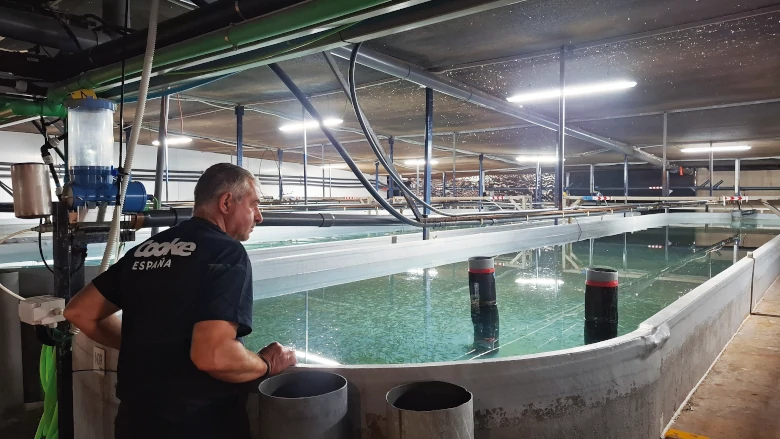
A technician from Aquicultura Balear oversees one of the breeding pools at Sant Joan de Déu, where millions of fry are being reared. Photo: ABSA.
Under the ground of what was once the power plant —closed in 2002 and taken down five years later— its old pulse can still be felt. In the 1980s, Endesa cut a 100-metre channel into the rock to cool the plant with sea water. Along the channel, thirty wells now feed the pools where the fish swim. “Mallorca’s subsoil is made of marès, a porous stone that acts as a natural filter. The water keeps its salt level, but it reaches us clean, at 20 degrees and with no micro-organisms,” Morente explains. This pure water, he adds, “is the best raw material for raising an animal.”
Much more than just the channel has been reused from the old plant: the intake and discharge outfalls, part of the pumping system and underground pipework, as well as the electrical and transformer stations, have all been retained. On its 40,000-m² site, former buildings have also been repurposed, such as the brigade garages, which were converted into the new hatchery inaugurated in March 2025. “The structure was perfect; we only had to empty the interior and build the pools and equipment we needed inside.” This reuse makes even more sense on an island with limited land and resources.
One hundred million in a decade
Aquicultura Balear’s output has grown from seven million fry in 2004 to fifty million today, with the aim of doubling that figure in the next decade. To the usual species —sea bream, sea bass and meagre— a new challenge is now added: amberjack, “highly prized by Balearic consumers but hard to breed,” Morente notes. All these species, he adds, “sell very well in Spain and Europe, and new markets are opening in North America thanks to Cooke’s sales network,” the Canadian seafood giant that has owned the fish farm since 2010.
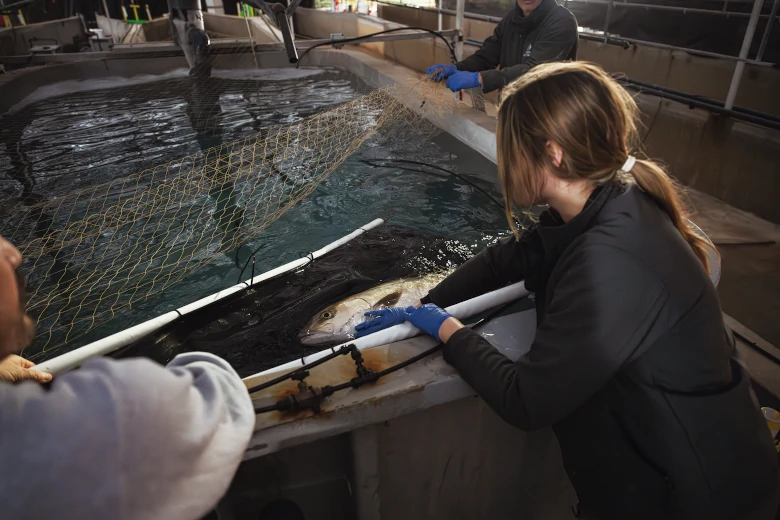
Monitoring broodstock and fry is a constant task at the Palma fish farm. Photo: ABSA.
This growth rests on four key pillars: sustainability, biosecurity, innovation and wellbeing —both that of the fish and of the hundred employees of Aquicultura Balear, including biologists, vets, technicians and skilled operators, “who are vital for the proper running of the site,” Morente stresses. The fish farm produces its own oxygen, much of its feed, and soon also its own energy, thanks to a planned solar plant. In addition, new recirculation systems will allow the reuse of water to “make the most of such a precious resource,” he notes. “We produce energy, water and food —three essential activities that must be sustainable,” he concludes.
El viaje de Es Carnatge al plato
Fotos: ABSA.
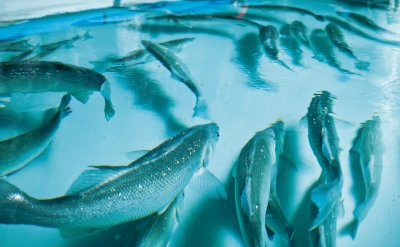
01. Breeding stock: the origin of life. Everything begins with adult specimens aged four to seven years, selected for their robustness and genetic quality. In pools with controlled light and temperature, spawning is regulated and the reproductive cycle is adjusted to match production needs. The eggs are collected daily and hatch in incubators.
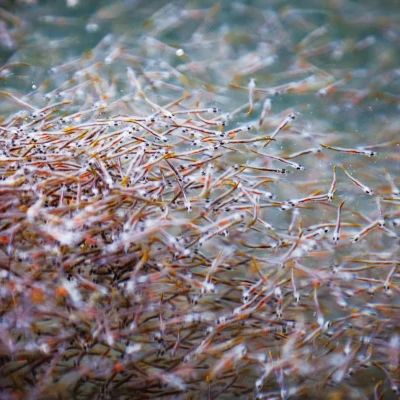
02. Larval rearing and weaning. During the first 35 days, the larvae feed on vitamin- and fatty-acid-enriched zooplankton, to which a colourant is added to monitor their feeding. Once they reach the size of a needle, they learn to eat dry feed, are graded by size, and the first count is carried out.
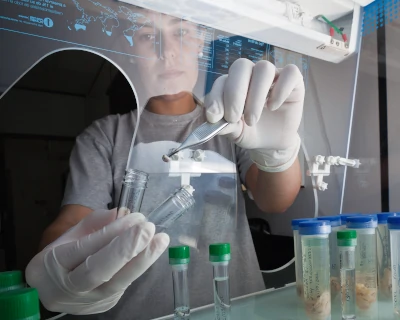
03. Quality control, welfare and biosecurity. Each stage of the process is subject to thorough checks, with particular attention paid to traceability and disease prevention. Continuous monitoring measures are applied to ensure animal welfare and the final quality of the product.
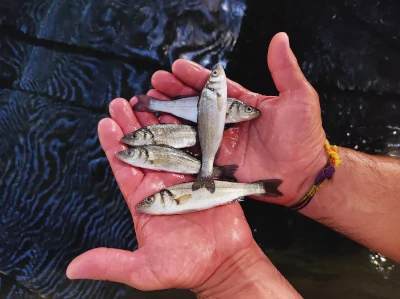
04. Pre-fattening. When they reach a weight of two grams, the fish move on to this stage, which takes place between Sant Joan de Déu and Es Murterar, in Alcúdia, where Aquicultura Balear – Cooke España operates another facility in a former power plant, another example of repurposing installations once dedicated to energy production. There, they grow to fifteen grams.
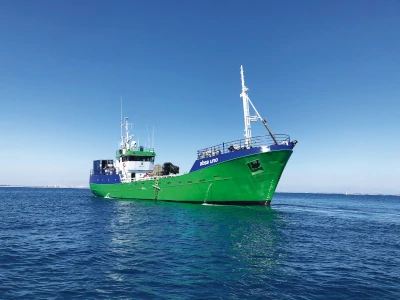
05. Journey to the Levant. When they are about fifteen centimetres long and weigh around fifteen grams, the juveniles travel by boat, in oxygenated holds, to the nine sea farms that Cooke España runs along the Levantine coast, where they grow in floating enclosures for months.
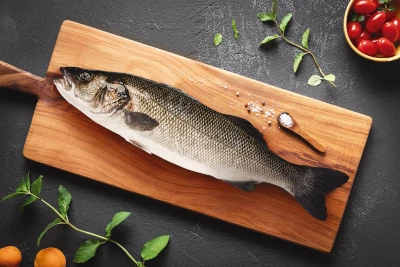
06. Bon profit! When they reach full market size, the fish are distributed to markets across half the world. In fact, there is a 50% chance that one of these specimens born in Palma will eventually end up on our plate. Enjoy!





Leave A Comment