
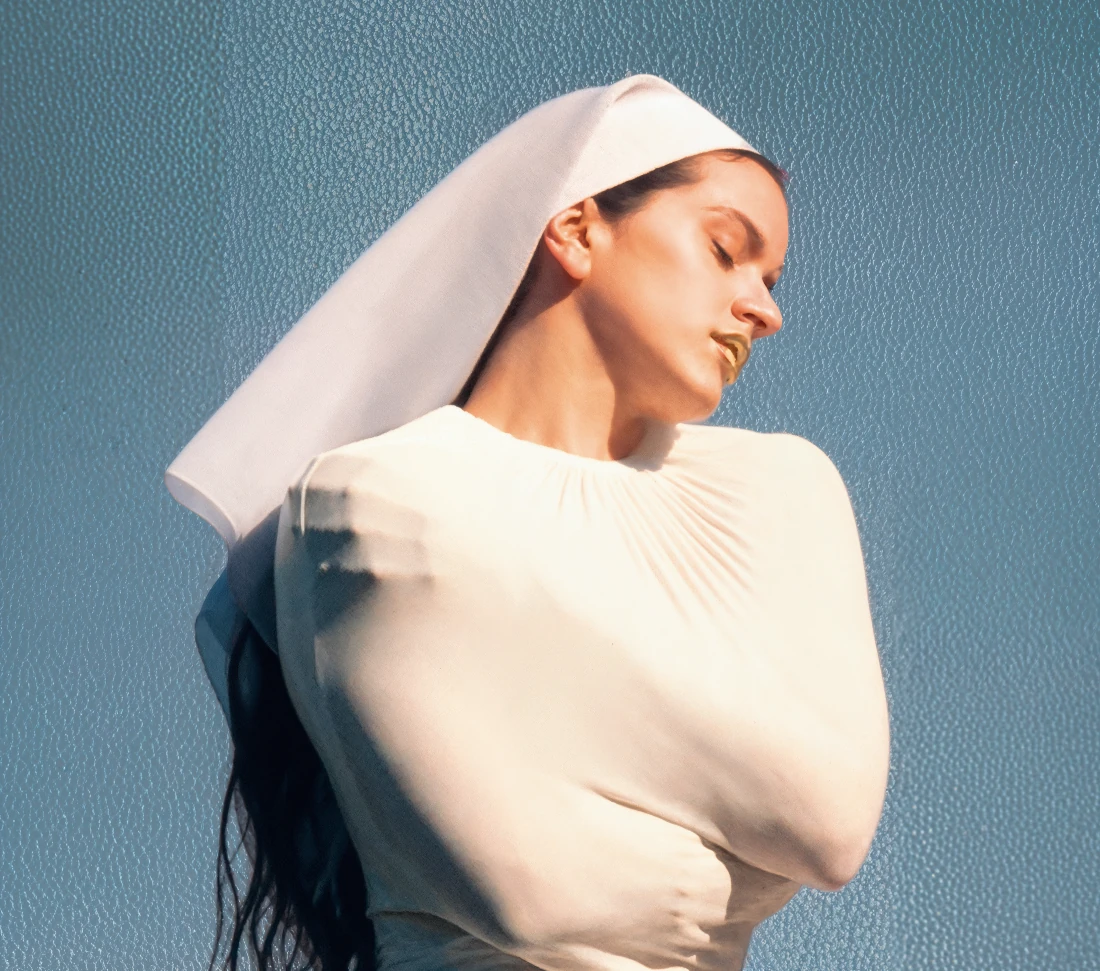
Photo: Noah Dillon.
At 33 —the age of Christ— Rosalía has delivered with LUX the most powerful release of her career. Neither the comebacks of Alejandro Sanz or Pablo Alborán, nor the unstoppable momentum of Mallorca-born Rels B —the most-streamed Spanish artist of 2025— have been able to compete with the cultural gravitational pull the Catalan singer has commanded since the album’s November release.
The numbers speak for themselves. Rosalía has 40 million monthly listeners on Spotify, far ahead of 24.8 million for Rels B or 12.7 million for Aitana. LUX debuted with 42.1 million streams in a single day, the best global opening ever for a Spanish-language album performed by a woman, doubling the launch numbers of Motomami.
And the phenomenon did not stop at streaming: she sold 17,457 vinyl records in a single week in Spain, an unprecedented figure in a market where the usual top barely reaches 3,000 units. A physical and digital tsunami that crossed borders: eight out of every ten YouTube views came from outside Spain.
Meanwhile, her song Divinize made history as the first Catalan-language song ever to debut in Spotify’s Global Top 50, an unprecedented milestone that reopens the map for minority languages in the industry. And all this after announcing the album with no prior single, defying the logic of music algorithms.
Languages and Mystics
In LUX, thirteen languages coexist —from Spanish to Japanese, including Arabic, Sicilian and Hebrew— alongside a choir of mystics who construct a unique spiritual universe and shape the symbolic world of the album.
Her impact goes beyond music: only a global phenomenon could bring together, in a sketch on La Revuelta, Almodóvar, Putellas, Machi, Carmena, Estopa… in a delirious community meeting. Her fourth album has not only shattered records; it has provided a precise blueprint for how to turn a release into a cultural event. A strategy so finely crafted that it will likely be studied in communication schools.
Between controversies —such as her recent clash with Miguel Adrover— and Mediterranean nods —from her appearance with Almodóvar in Pain and Glory to that card game with crisps and olives in Despechá, filmed in Portitxol— Rosalía once again places herself at the centre of public debate.
Like the Sibyl, she anticipates and moves: the artist has activated a symbolic territory where spirituality converses with the contemporary. And with LUX, she has shaken the foundations of pop music. Once again.




Leave A Comment