
The Palma City Council has definitively approved the municipal budget for 2026, which for the first time exceeds €626 million and consolidates the highest level of investment in the city’s recent history. The accounts, approved at the Plenary Session held on Monday, 22 December, represent a 2.7% increase compared to 2025 and strengthen key areas such as social services, public safety, mobility, street cleaning and housing.
The budget amounts precisely to €626.67 million, which represents €16.46 million more than the previous financial year and a cumulative increase of over €151 million since 2022. Final approval was secured with the votes of PP and Vox, while PSIB-PSOE, Més per Palma and the Mixed Group voted against.
Less debt, sustained investment and tax cuts
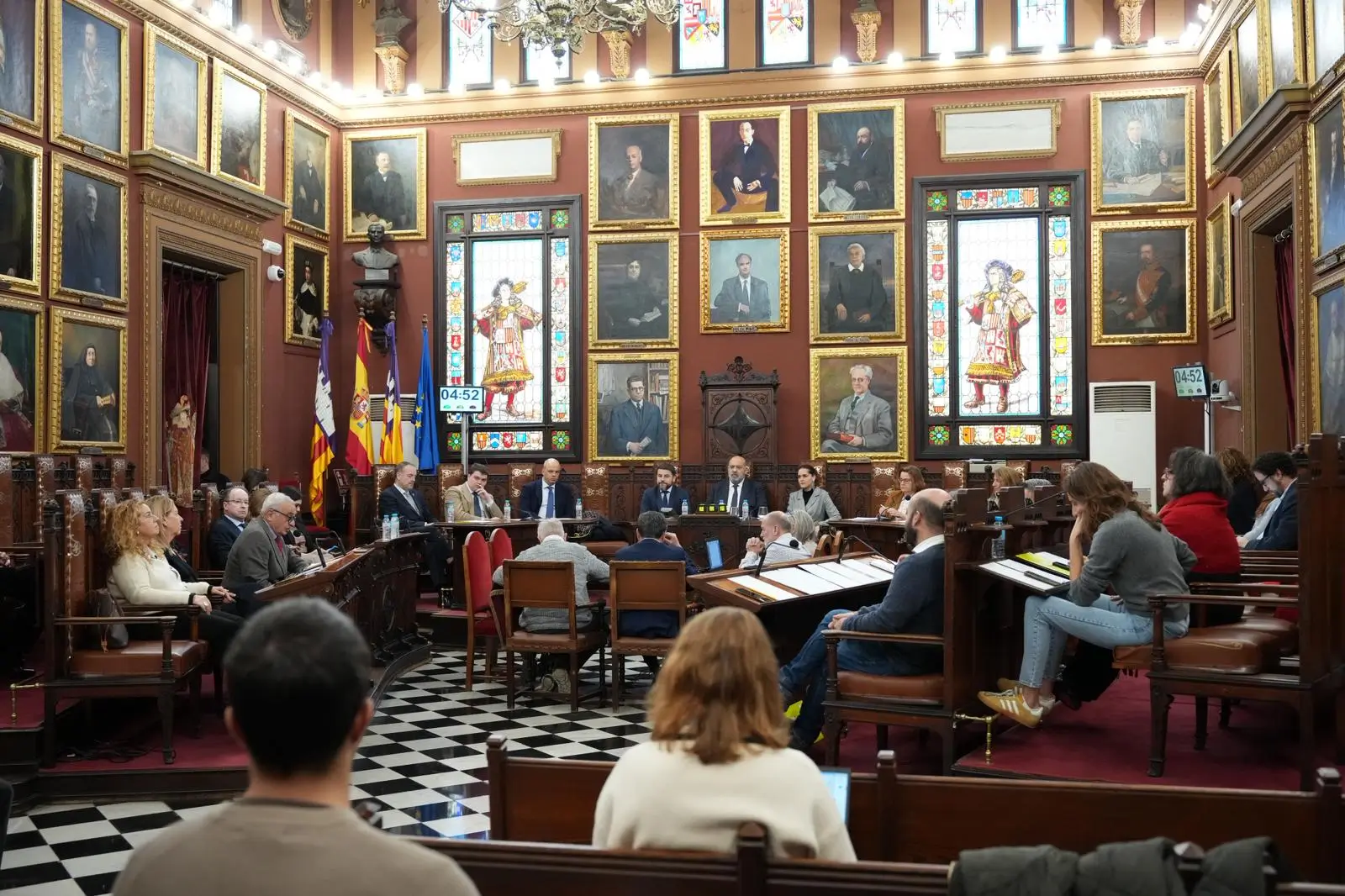
The governing team has defined the 2026 accounts as “realistic, balanced and responsible”, maintaining the course of recent years: progressive debt reduction, containment of fiscal pressure and reinforcement of essential public services.
Among the planned tax measures is the second phase of the reduction in the municipal capital gains tax, which will stand at 18%, as well as a reduction in the ICIO from November 2026, allowing taxpayers to deduct 50% of urban planning licence fees.
Overall, the budget provides for €90 million in investments, with actions distributed across neighbourhoods and strategic city projects.
Public safety, emergencies and cleaning: the most significant allocations
One of the most substantial chapters is Public Safety, which will receive €121 million. Key measures include:
-
Creation of 50 new Local Police positions
-
Investment of €1.5 million in new vehicles
-
Launch of the project for the new Local Police headquarters
-
Development of the new Police Force Organisation Plan
In the Fire Brigade area, €3 million is allocated to vehicles, €700,000 to station improvements, and Civil Protection will be expanded to 25 volunteers.
The budget also maintains the Palma a Punt cleaning programme, with €38 million earmarked for water network renewal, wastewater treatment and fleet modernisation.
Mobility: more electric buses and expansion of BiciPalma
In terms of urban mobility, the 2026 budget will allow progress in the electrification of public transport. The incorporation of the first 57 electric buses is planned, out of a total of 113 scheduled over the next four years.
The ORA parking zone will also be expanded, and the fourth phase of BiciPalma will be implemented, adding 23 new stations and 230 electric bicycles.
Infrastructure, neighbourhoods and public spaces
The Infrastructure department will receive €130.5 million, earmarked for the maintenance of parks and gardens, pavements, road resurfacing, street lighting and the construction of new neighbourhood facilities.
City projects moving forward include the renovation of Plaza Mayor, the future service centre in the former Metropolitan building, the Exhibition Centre, GESA, the Botanical Garden, the new sports hall on the former Lluís Sitjar site and the Demographic Control Centre.
Social services, education and housing strengthened
The budget strengthens social services, with an increase of nearly €5 million, expanding short-stay accommodation places and reinforcing services for women victims of violence, with increases of 60% and 36% respectively.
In Education, the management of municipal schools will be tendered with salary improvements, the nursery schools in Ciutat Antiga and Santa Catalina will be acquired for €3.8 million, the Patis Oberts programme will be expanded, and a new facility in Son Oliva is planned.
Regarding housing, the first phase of the Shock Plan will be launched, with the construction of 166 homes on municipal plots in Camp Redó and Son Ferragut, with an investment of €9 million spread over two years.
Sport and culture: medium-term investments
The Sports department includes the refurbishment of all changing rooms at municipal football pitches, new facilities in Sant Jordi and Es Garroveral, the modernisation of the Palau Municipal d’Esports de Son Moix, and progress on the future athletics track and the renovation of Germans Escalas.
In Culture, funding is strengthened for the programming at Casal Solleric and Can Balaguer, subsidies to the Teatre Principal and the Gremi de Llibreters are maintained, €300,000 is allocated to the musealisation of Castell de Bellver, and completion of the works at the Torres del Temple is planned, in line with Palma’s bid to become European Capital of Culture.
A budget to consolidate Palma’s transformation
With these accounts, Palma City Council faces 2026 with a budget that commits to greater investment, strengthened services and structural projects, while maintaining the debt reduction and tax cuts initiated in previous years.
A scenario that will shape much of the city’s municipal policy in the coming year and have a direct impact on daily life in neighbourhoods, mobility, public space and city services.



Leave A Comment