Palma has taken a decisive step towards becoming European Capital of Culture 2031. The mayor, Jaime Martínez Llabrés, yesterday presented the city’s candidacy at the European Parliament in Brussels, describing it as “an extraordinary, challenging and transformative challenge for our city.”
The event was attended by the President of the Balearic Government, Marga Prohens, MEPs Rosa Estarás and Antonio López-Istúriz, as well as representatives of the European Commission and Palma City Council, including Deputy Mayor and Councillor for Culture Javier Bonet, and the General Coordinator for Culture and Tourism, Fernando Gómez de la Cuesta.
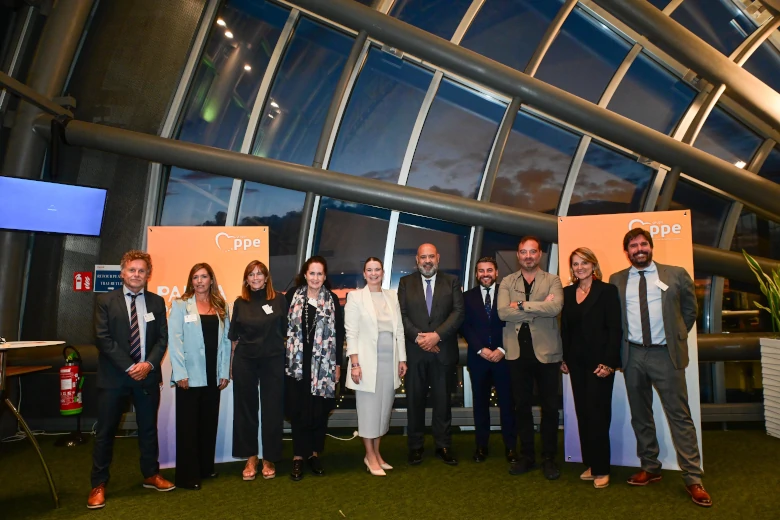
Centre: Marga Prohens, President of the Balearic Islands, and Jaime Martínez Llabrés, Mayor of Palma, with the rest of the delegation present in Brussels. Photos: Palma City Council.
Mediterranean in motion: an inclusive and transformative candidacy
Under the slogan Mediterranean in motion, Martínez Llabrés explained that the project has a clear purpose: “a commitment to a culture where everyone can participate on equal terms and to universal accessibility in spaces, content and activities.”
The mayor stressed that culture in Palma “is experiencing a major qualitative leap and is shaping up as an essential element for sustainable development, social cohesion and the international projection of the city.” Martínez Llabrés added that the European Capital of Culture is conceived as “a tool for inclusion, a space for dialogue, an economic driver and an instrument to improve quality of life for all people.”
Citizen participation and collective approach
Martínez Llabrés underlined that the candidacy for European Capital of Culture 2031 is “a project that involves each and every citizen, not only of Palma, but also of all the towns and cities of Mallorca and the Balearic Islands.” He also pointed out that a participatory process has been launched, open to individuals, groups and organisations, enabling everyone to contribute ideas and cultural projects.
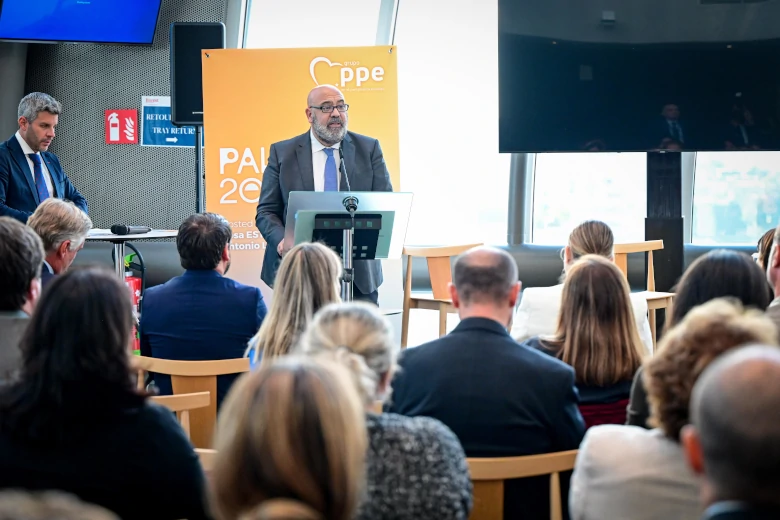
The Mayor of Palma, Jaime Martínez Llabrés, during his address.
Unlike other candidacies, the mayor noted that “we have not chosen to create a single artistic direction, but rather to establish two independent professional committees, one artistic and one scientific,” tasked with developing the programme’s content with full autonomy and aiming for a consensual project.
Experts and strategic projects
During the presentation, members of the working groups outlined several strategic projects:
-
Antoni Barceló, architect, explained how initiatives such as the Plaça Major redevelopment not only transform physical spaces but also redefine citizens’ relationship with the city.
-
Mar Matas, from Apropa Cultura Balears, highlighted the importance of inclusion and human sustainability as the basis of the cultural project.
-
Anna Traveset, CSIC researcher, stressed the need for green spaces and climate refuges, citing the Metropolitan Forest as an example.
Next steps towards the European Capital of Culture
Candidate cities must submit their projects by the end of 2025, which will be assessed by a committee of 10 EU experts. In Spain, this report will be reviewed by the Ministry of Culture, which will select the cities advancing to the final stage of the competition. Nationally, Palma is competing with cities such as Granada, León, Las Palmas de Gran Canaria, Pamplona and Vitoria. The final decision will be announced four years before the start of the title year, that is, before 2027.



Leave A Comment