
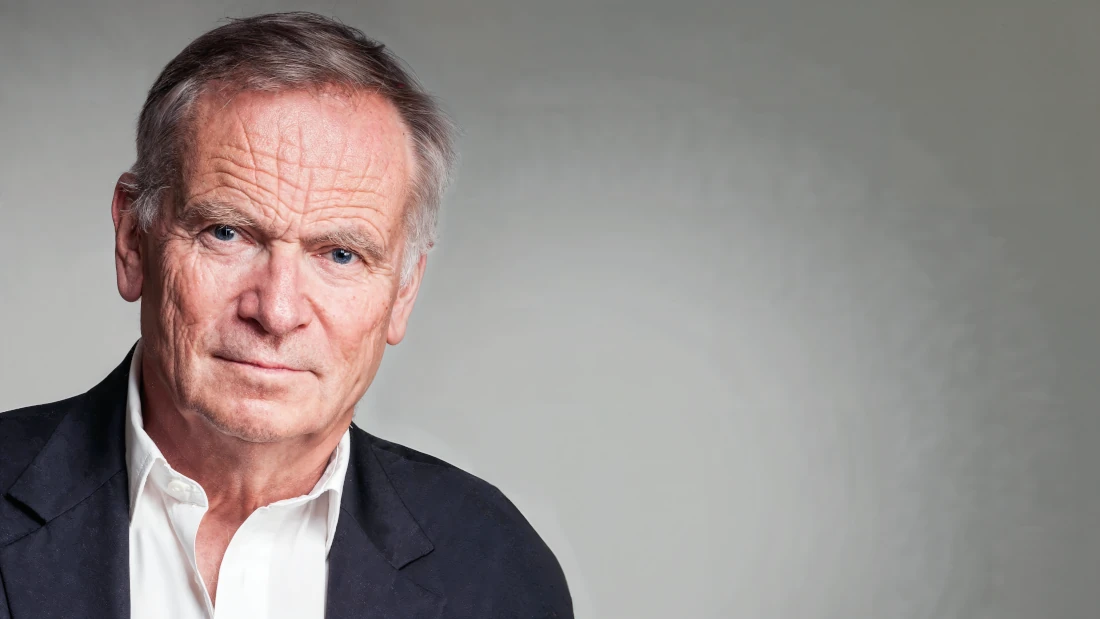
British writer Jeffrey Archer. Photo: Broosk Saib.
Jeffrey Archer (London, 1940) could easily be the main character in several novels. He experienced prison before becoming one of the world’s most widely read authors. After three decades writing at his mansion in Sa Torre, he has just released what he says will be his second-to-last novel before retiring.
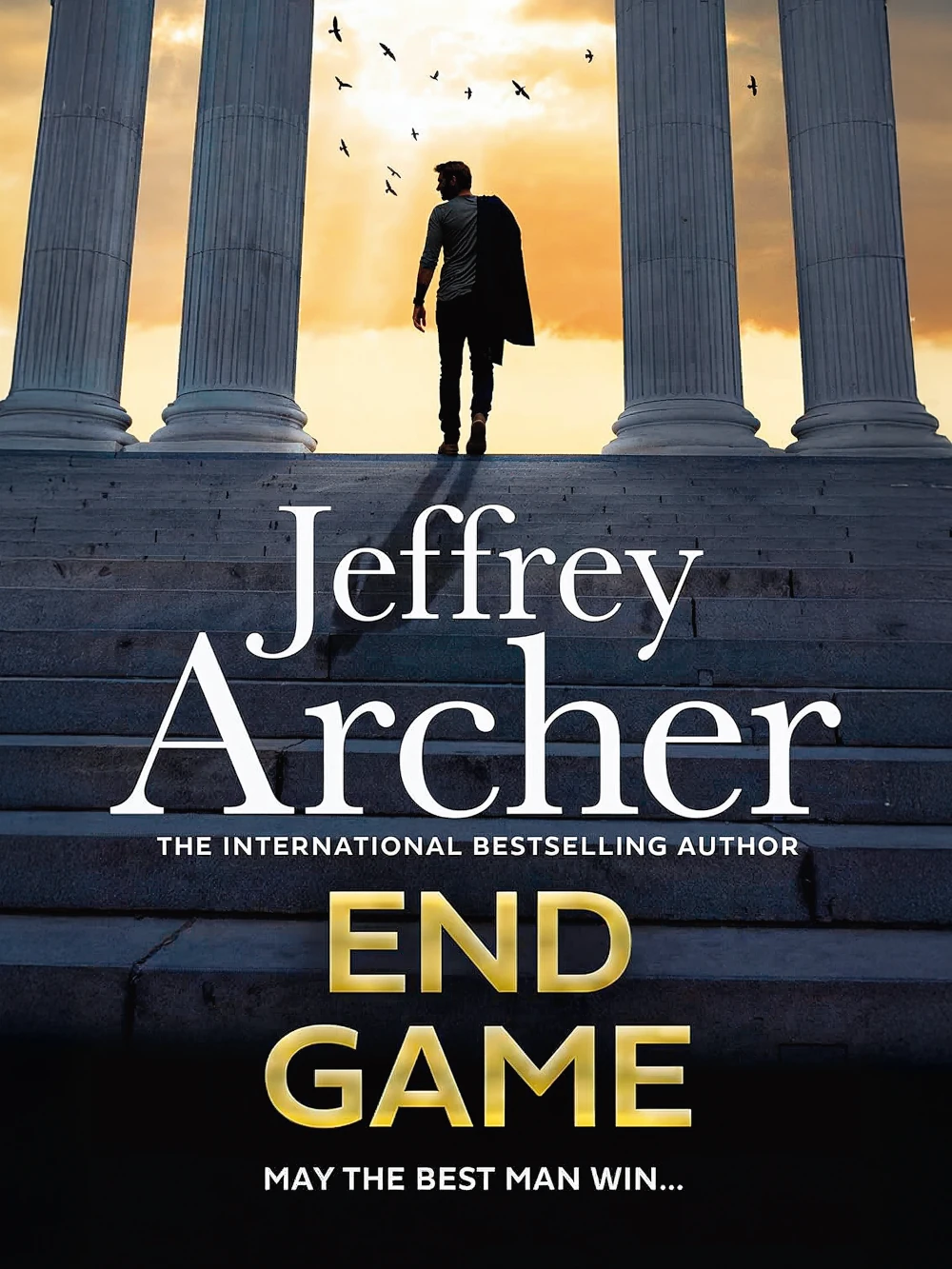
– End Game marks the conclusion of the William Warwick series. How do you feel saying goodbye to the character?
— From the days when he was a constable on the beat in Lambeth all the way through to becoming a commander at the 2012 Olympic Games, I’ve enjoyed his company.
– With nearly 300 million books sold, what has been the biggest challenge in keeping readers engaged?
— Readers who are not looking for sex, violence, bad language or fantasy romance like a good story. And that hasn’t changed. Next year will be my fiftieth year writing. Fashions change, moods change, but I haven’t. People remain loyal when they feel familiar and safe with you.
With End Game I was lucky the timing coincided with the London Olympics. It allowed me to write about a subject I know well. The real Commander Broadhurst told me fourteen things that went wrong during the Games that the public never found out about. I then added seven of my own and challenged readers to decide which really happened.
– Do you believe literature still has the power to influence society?
— I don’t write with that intention. But recently an American told me that reading Kane and Abel had changed his whole life. He’s now a billionaire. A lot of readers see themselves in Abel and feel they can go from nothing to the top.
– How do you view the role of the writer in today’s world?
— There are so many ways of reaching people now. Those over fifty still read newspapers, which are read online more than ever. And then there’s Google, Facebook, TikTok… so the writer remains very important.
– And what about the role of the politician? Does it still matter?
— So many of the finest people in my country —and I suspect in France, Germany, Italy and Spain— no longer want to go into politics. It’s unpleasant, badly paid and you’re attacked every day. When I was at Oxford, everyone wanted to be a lawyer, a journalist or a politician. Now nobody wants to be any of those three.
Before, everyone wanted to be a lawyer, a journalist or a politician. Now nobody wants to be any of those three
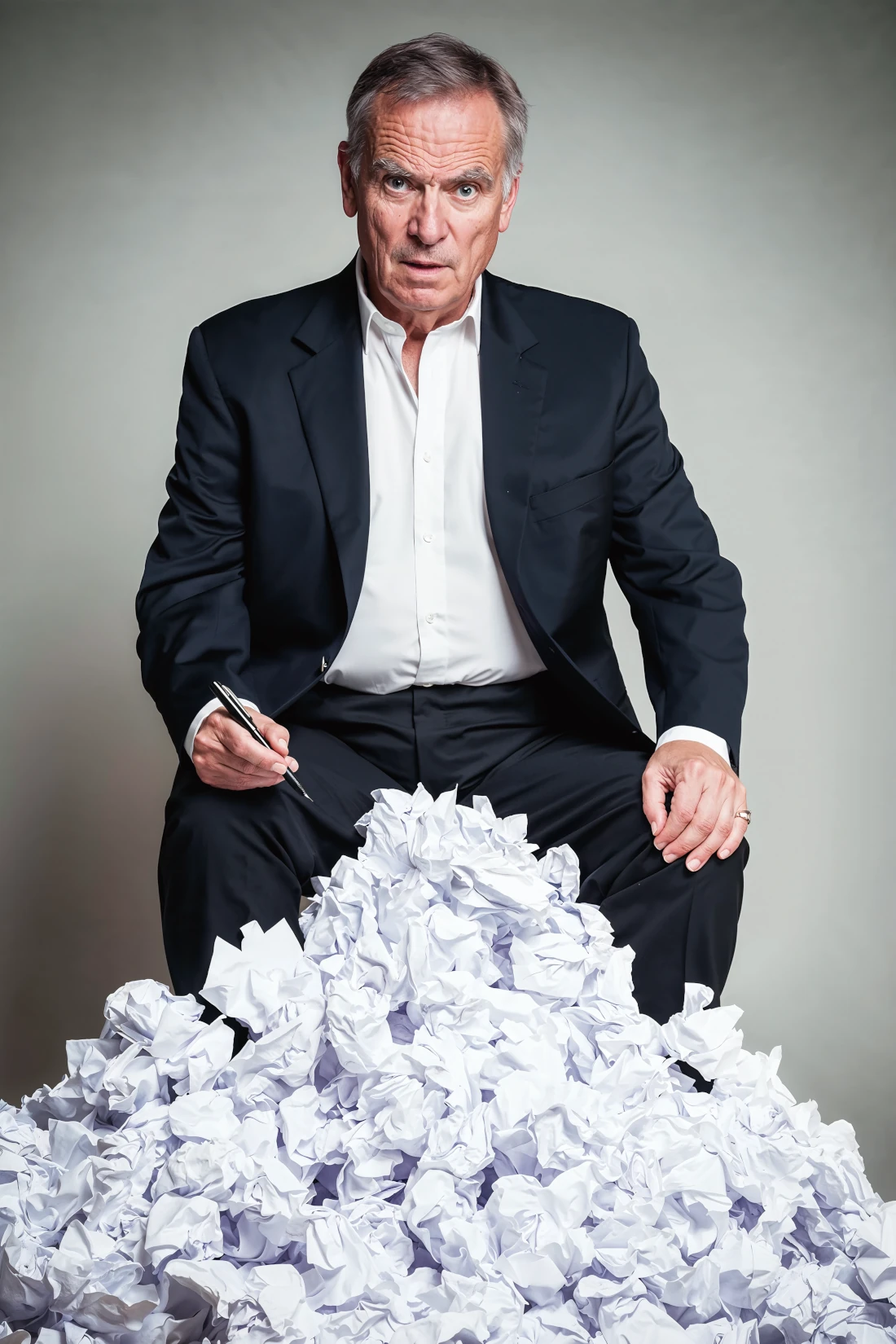
Photo: Broosk Saib.
– Is there anything you still haven’t written and would like to?
— I have one more novel to write before I retire, to be published next October. It began when I read a speech by Hitler from 1936 and Churchill’s reply. I realised the war could have ended on 15 September 1940. That set me researching.
– Looking back, what do you consider your greatest achievement?
— I’m childish enough to be proud that I ran for my country. Working with Margaret Thatcher for eleven years mattered, and raising 72 million pounds as a charity auctioneer too. But nothing tops reaching number one on the New York Times bestsellers list.
– Has Mallorca’s landscape or its people influenced your writing?
— I’ve been writing in Mallorca for 30 years, and years ago I built a home in Sa Torre. It has wonderful weather and atmosphere, and I’ve found the people an absolute delight. I think Palma is one of the loveliest cities on earth. My office is literally built into a cliff overlooking the sea. It’s an ideal place to write.
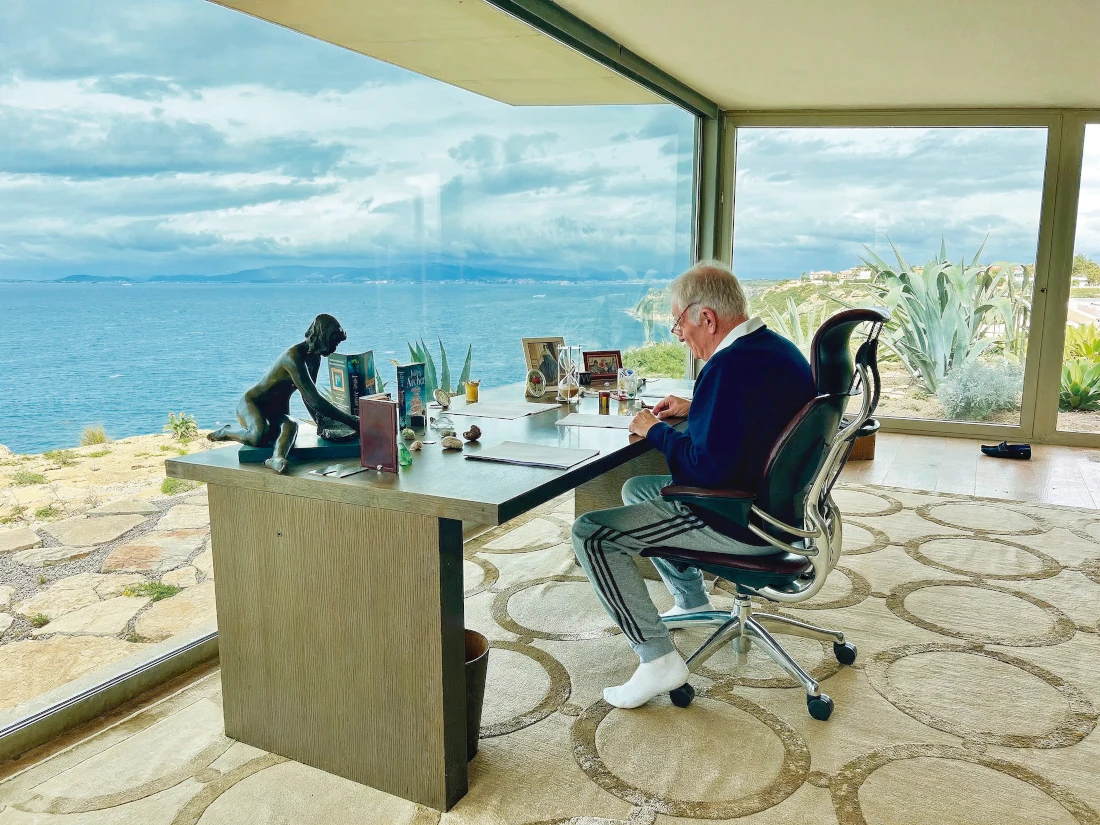
Archer, at Writer’s Block, his home in Sa Torre, Mallorca. Photo: Jeffrey Archer/Facebook.
– If you could invite three people to dinner at your home here, whom would you choose?
— William Shakespeare, Charles Dickens and Thomas Jefferson.
– Speaking of politics and current affairs: how do you see the United Kingdom after Brexit?
— We haven’t been out long enough to make a firm judgment. I voted to remain in Europe. I felt strongly we were better as part of a larger team.
– What is your opinion on the international tensions involving Trump, Putin, Xi Jinping or Netanyahu?
— Netanyahu is a genuinely bad man and has harmed the Jewish cause considerably. Trump is a strange dichotomy. I read that he complained about his photograph on the cover of Time magazine. If they put my book on the cover, I’d be delighted. But he’s complaining about his hair. How can a president of the United States care about that?
And yet his achievement in Gaza has been staggering. So, for me, he’s two people.
– What is your view on Spanish politics?
— I’ve been following with fascination the problems your prime minister and his wife have faced. I’m amazed he has survived and fascinated to see what happens next.
– The far right is on the rise in Europe. What’s your take?
— Across the world! Trump is far right as well. In Britain we’re four years away from an election, and if a lot can happen in a week, imagine four years. France, Germany… But Italy is the worst case. That wicked Prime Minister Meloni has been stealing our richest people, taking them to Milan and offering wonderful tax terms. She is a wicked woman and should be removed.
– Are we closer to a Third World War than we think?
— In truth, we’re already in a world war. Russia versus Ukraine, Palestinians versus Israelis, problems in Afghanistan, and the Americans facing chaos in cities like Los Angeles and Chicago. But a “formal” world war —Russia and China versus America and Europe— I don’t think that’s credible. Nations rely so heavily on each other economically that a war would bankrupt almost everyone.
– Can literature help prevent those international tensions?
— It always does. The old cliché “the pen is mightier than the sword” still holds true.




Leave A Comment