
Mallorca Global Mag interviews the global gastronomic icon Ferran Adrià exclusively
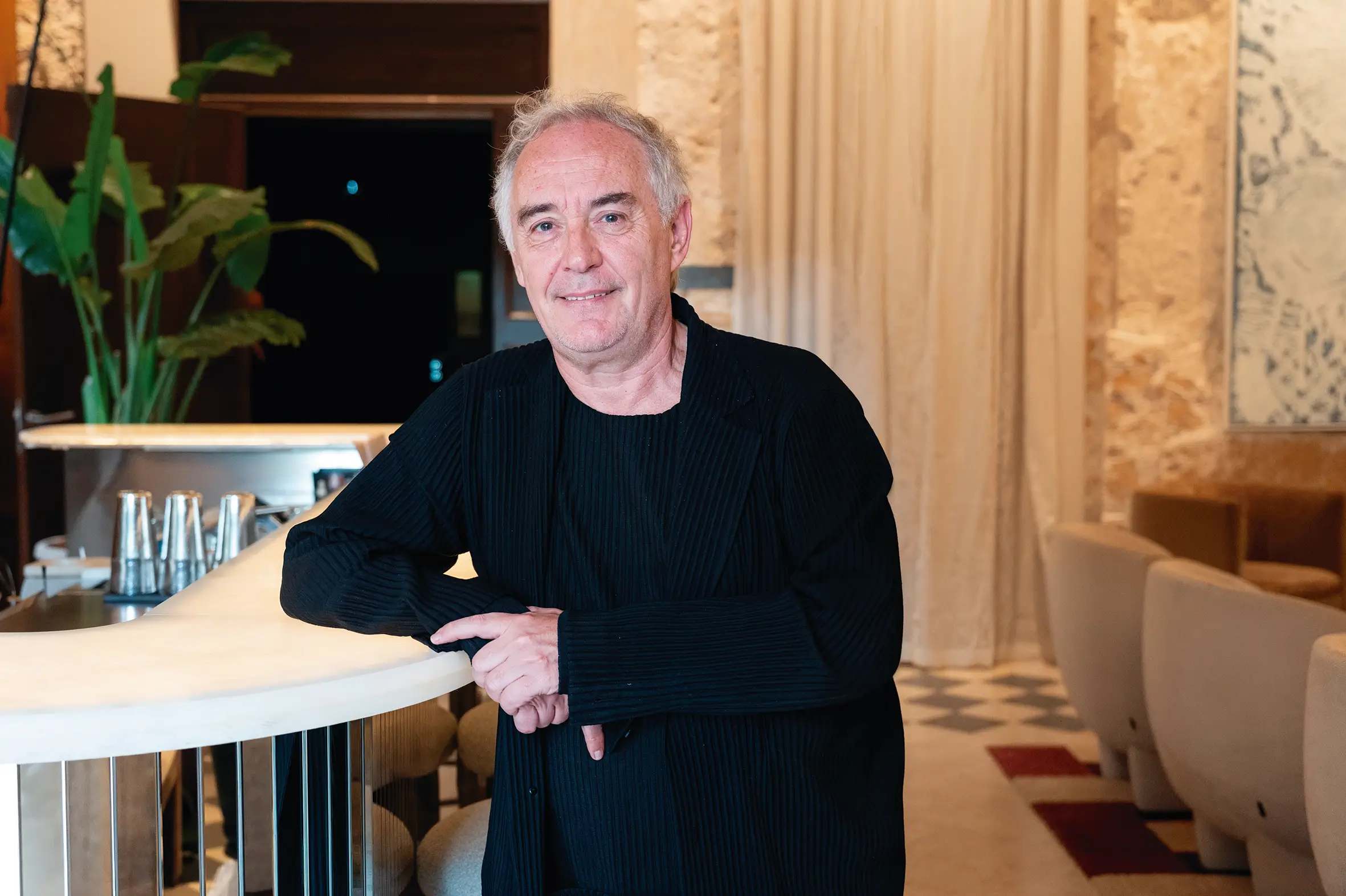
Photos: Piter Castillo.
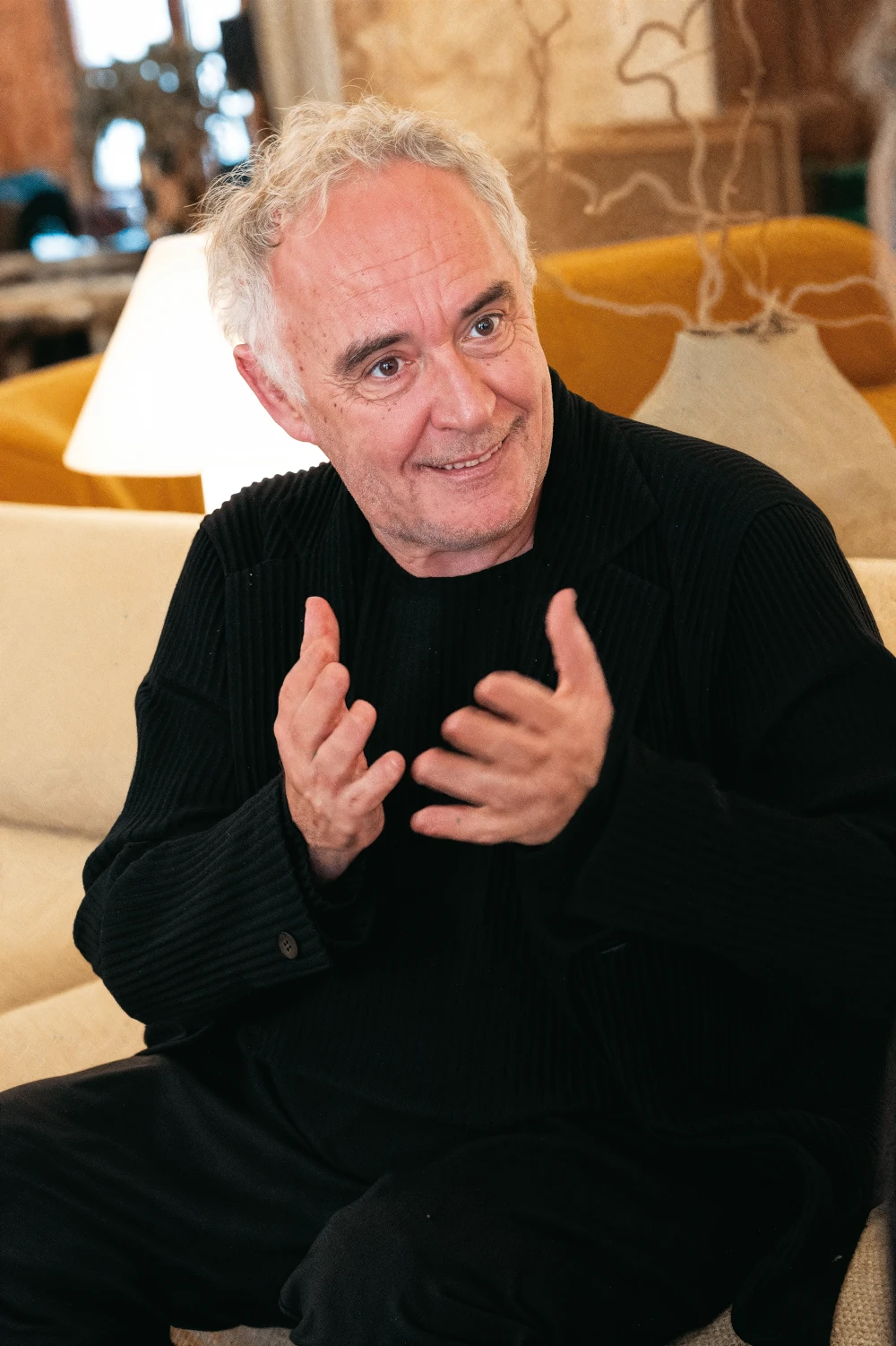
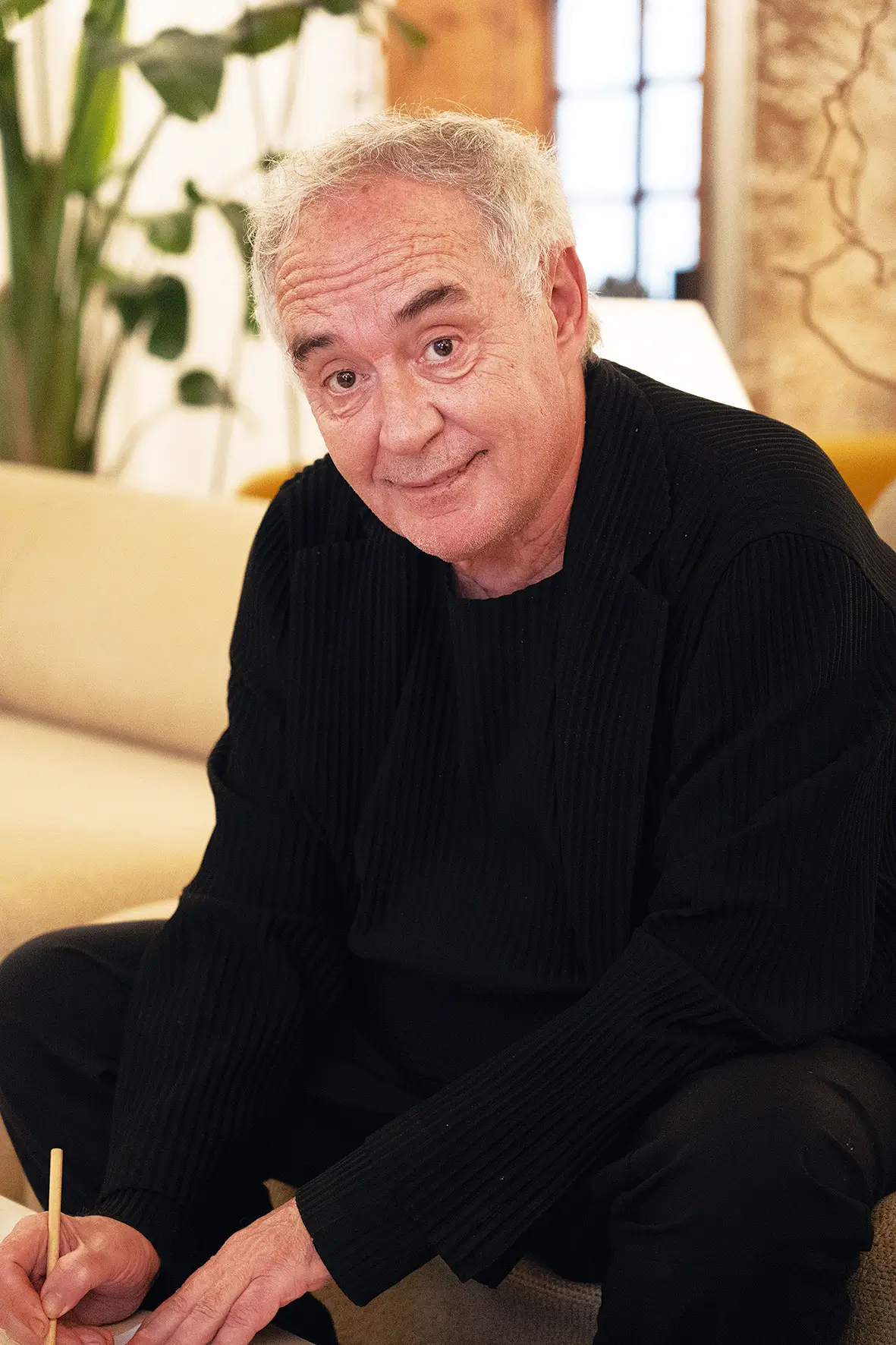
Revered around the world for having forever changed the way we understand cuisine, Ferran Adrià has visited Mallorca with CaixaBank to share his experience in innovation and management in the restaurant industry. In an exclusive interview for Mallorca Global Mag, the chef who revolutionized contemporary gastronomy details his vision of the future of the sector, the importance of adaptation, and the value of the products that define the island.
– Your career as a chef began by chance. To what extent has that been an advantage for developing such a disruptive outlook on gastronomy?
– It has been vital. When you devote yourself to creating at the highest level, having a master is not necessarily good. Starting accidentally, not out of vocation, becoming head chef at elBulli at 22, was fundamental. If I had had a mentor, my career would have been different, without a doubt.
– You’ve said you wanted to retire at 50, that you didn’t want money to be what drove you…
– Well, this needs to be explained properly. We were two partners, Juli Soler and I, and for 14 years we didn’t make any money. Later we developed a business model in which elBulli wasn’t our source of income, because we didn’t want it to be. We advised twenty multinationals in the food industry and that’s how we earned money… for what the restaurant world is, since we’re not football players – he jokes. Not distributing dividends allowed us to save. In my case, since I don’t have children, I said fine, at 50 I retire. How much money do I need for the lifestyle I lead? Which is more modest than people might imagine. And I said okay, I’m retiring. But I’m still involved with elBullifoundation, where, naturally, I don’t get paid. There was a legend that elBulli didn’t make money, that we were ruined… If I’m here and I have a foundation, I can’t be ruined. But I’m not Messi or Michael Jordan, you have to work.
– What have you learned from that direct contact with the food industry?
– A lot. A restaurant has nothing to do with a company like Pepsico or Nestlé, with thousands and thousands of employees and staggering billions in revenue. You learn the good and what not to do. It’s a completely different sector from restaurants, especially in terms of innovation, which is where I was involved. So I have a more holistic vision and I’ve learned a great deal.
– Is there any unexplored creative frontier in contemporary cuisine?
– Certainly. It would be absurd to think we’re the last link. Avant-garde movements and ruptures aren’t planned in gastronomy. It would be foolish to think the world ends with this generation. That said, nobody knows what the next major steps will be. There are always small steps, but something as important as what we experienced in the mid-90s with the whole Spanish movement… well, we don’t know. If I had to mention something, I’d talk about Neuralink, Elon Musk’s company that manipulates your brain so you’re eating without eating. It’s not that sci-fi—look at AI.
– You’ve commented that “in the end, you cook what you like to eat.” What do you truly enjoy eating? Is there anything you absolutely dislike?
– It would be bad not to think and only reproduce, and there are many chefs who don’t like what they do. I like everything, everything that’s good. What I don’t like, anecdotally, is pepper.
– Do you cook a lot in your daily life?
– José Andrés loves cooking at home, but I’ve never liked it. When I’m with my wife, since we don’t have children, we go out a lot. I go for simple things—grilled sole, a little salad…
– Are you picky when you go to restaurants?
– Never. I know how hard it is and I think it’s rude, out of respect for colleagues, to be a pain. I only got angry once, 35 years ago, because I went somewhere to eat and there was a tank with Mediterranean lobsters. I ordered rice and they brought me American lobster. “Do you know who I am?” I said. It was the only time in my life—I was a kid. I’m very affectionate with people, very understanding, and I think everyone should be.
– In Spain, certain products and regions have gained great prominence because you incorporated them into elBulli, as happened with the asparagus from Tudela de Duero.
– Luis made extraordinary asparagus. I tried them with my team and we found them incredible. When I went to any event, I’d say: this guy makes amazing asparagus. But we didn’t do it for any reason other than he deserved it. I speak highly of people who deserve it; if not, I don’t speak. When I go somewhere and I don’t say how good it is, it means I think it’s not very good. But I don’t say “hey, I didn’t like this.”
– In the case of Mallorca, what products have you used or which do you think have the potential to transcend beyond the island?
– I haven’t used many. My brother is making a sobrasada that Miquel Barceló tried and was blown away by. He adds sobrasada fat to wagyu beef and makes a sort of tartare that’s incredible. I love the creaminess sobrasada gives. And then there’s the ensaïmada. Every time I come here, I get the feeling Mallorcans are embarrassed to say that the island’s distinctive elements are sobrasada and ensaïmada. In Catalonia, I don’t have any product like that, none. The ensaïmada is a work of art; there’s nothing like it anywhere in the world that I know of. With sobrasada we could say Italy has something similar, but not of this quality, and even less now that you have the black pig, which makes it even better. You should be proud; there should be ensaïmadas in every airport in the world, truly. It’s a star product, like sobrasada which, at room temperature with honeycomb, is delicious.
– At one point you worked on creating a hotel chain, elBulli Hotel…
– We did it with a Mallorcan, my great friend Pedro Pueyo, who passed away. The problem was that the 2008 crisis hit, and thank goodness it was stopped. My hobby is hotels—mine and my wife’s. We know the best hotels in the world; it’s the only thing I truly spend money on. I don’t have a car, restaurants aren’t that expensive… The best restaurant in the world costs a thousand euros, in Spain around 500, which is a lot of money. But compared to hotels, no. A good room in the Maldives costs four thousand. I like them first because it’s my hobby and second because professionally I was a consultant for NH for ten years, and I’m always interested in staying up to date and seeing what’s new.
– How do you see the relationship between gastronomy and hotels, which is often linked, especially in a place like Mallorca?
– This comes from history; the turning point is in France when the Palaces were created. César Ritz and Escoffier teamed up and started giving it a very gastronomic approach. Before that, hotels as we understand them didn’t exist. They were royal or aristocratic palaces, inns. There has been an evolution; in Spain it wasn’t very common because until 20 years ago there were no foreign chains. Mandarin, Four Seasons, etc. arrived just a few days ago, so to speak. And now there are chains doing it and there’s that interest. I don’t understand—and this is personal—that in a five-star luxury hotel there’s a breakfast buffet. As a guest, I think they should serve it at the table. We created a breakfast that still hasn’t been surpassed: a table buffet where they brought you proposals and you chose. In an NH, having a buffet is normal, but if you pay 1,500 euros per room… you wouldn’t get up for lunch or dinner, would you? Why do it for breakfast?
– There are already hotels betting on renowned chefs…
– The Mandarin Oriental in Madrid, for me the most interesting city hotel in Spain, always has great gastronomy. They’re with Quique Dacosta, a three-star Michelin chef. Why do they hire a chef? Because it’s very difficult to communicate a hotel. Instagram? No, the people who go don’t take photos, but in a restaurant they do. What do you communicate—that it’s a very beautiful hotel? Do you know how many beautiful hotels there are in the world? When I pay 4,000 euros for a hotel in the Maldives, I expect galactic cuisine, and sometimes it’s hard to find. But gastronomy generates publicity, like the example with Quique, who is an extraordinary chef. There aren’t many chefs in hotels in Spain who manage all the hotel’s gastronomy. From here, you have to understand that it’s an investment in communication and not a business for a hotel; what makes money are banquets. Around the world there are many—Bvlgari has Niko Romito. And I think it’s efficient, as long as it’s a serious person—we’re talking 5-star—because a 4-star can’t have a proper restaurant; it’s impossible. Sometimes you see just one waiter. In my time as NH advisor, I concluded that the restaurant concept in a hotel must be reinvented. Like at the Camper in Barcelona, which is great because it doesn’t have a restaurant—Dos Palillos is next door. Instead, they offer a service similar to an airport VIP lounge. You eat without paying, and this is more profitable than running a restaurant. In this, you have to reinvent, rethink.
– What specific challenges do you see in the restaurant sector in Mallorca, so marked by seasonality and tourism pressure?
– I’ve been working with CaixaBank for 10 years on restaurant management. We’re experiencing the most violent and disruptive shift in the business model—the way you make money—in my 43-year career. Why? Fortunately, restaurants have reached the 8-hour workday, so it’s one of two things: either you close days or you hire more staff, because someone has to pay for it. Tax pressure: I pay all my taxes, and if I’ve ever done it wrong, I’ve had to pay. I don’t like people not paying taxes, sorry. Whether small or large. And then the raw materials—some have gone up 30–40% since COVID. What used to make money now doesn’t, and everyone is shaken. When we began giving courses with CaixaBank, only a handful attended. Here in Mallorca it was full, and how is everyone? Frankly, scared. Profitability has dropped, 95% don’t create annual budgets or budget controls… It’s a drama.
– You highlight the importance of marketing in contemporary gastronomy. What should restaurateurs understand?
– First: what is marketing? And within marketing, what is communication? This is somewhat complex. And what is commercialization. You have to understand it, because many don’t. In Spain in general we’re not fond of analytical marketing, market studies… Don’t open a pizzeria on a street where there are already four.
– Your Sapiens methodology emphasizes management as vital. What metrics or indicators should any restaurateur review?
– First you must understand what Sapiens is: a methodology for having criteria and making decisions. For what? For anything. This is something we began 10 years ago and people laughed at it, like when I started at elBulli. Now it’s the study methodology used at MACC—it’s no joke. In short, Sapiens helps connect knowledge. If not, you won’t understand. When you open a restaurant, you have to create a business plan, and people have no idea what this is. Not just restaurateurs. In Spain there are 1.5 million small businesses and freelancers. Only 5% know what a business plan is. If you don’t create one, by the time you open the restaurant, you’re dead. That’s why six out of ten restaurants and bars don’t last more than five years; 22% don’t last more than two. A total drama. Now, as we’ve discussed, we’re living a tough moment, but I’m very optimistic because for the first time everyone is starting to realize it. And someone in the company must understand how their business works.
– Is there any proposal you would like to accept if the right conditions were met?
– All projects are linked to the foundation. Educational projects, the museum at elBulli, etc. We have a project related to the hotel sector. But I can’t say what, who, or where. Because it’s not certain it will come to fruition. It’s about creating the most magical hotel ever. Creating magic is difficult, but if it happens, it will be in three or four years.
– What skills should a chef or restaurateur prioritize to stand out in the coming years?
– To open a restaurant, 90% of the time three things are very clear. One is quality. If you don’t offer quality, it hardly works. But there is relative quality and absolute quality. You can be the best three-euro or four-euro hamburger in Palma, or the best hamburger regardless of price. Then, all the management, before opening and after. Finally, having an innovative attitude, which is not innovation but being alert. Thanks to the Internet, I know what’s happening in India or Tokyo in my sector. You have to figure out how not to fall behind. It’s like when people say now “I’m innovating a lot with AI, with Chat.” I say: what are you innovating if you didn’t create the chat? You’re adapting a tool to your work. That’s not innovation.
– From an educational standpoint, in culinary schools, what would you rewrite or implement?
– We’re now opening MACC (Madrid Culinary Campus); the buildings will be ready in January 2027 and they’re amazing. One will be a museum of the history of gastronomy and the classrooms will be inside. This has never been done. We’re analysing, reflecting, testing… We want to record the classes, because you might be sick for two weeks, or when you’ve been studying a double degree for 4 years, do you remember what you studied in the first year? Something that seemed impossible, we’re doing it. It’s very important to revolutionize by questioning the status quo, which is uncomfortable because we generally want to live without problems and believe we’re right when we’re not. You must differentiate vocational training, which is super necessary, from gastronomic university programs, which have only existed for 20 years—the first was in Italy. We’re babies. What’s the difference between a university and a cooking school? The first is management—business administration. My nephew is studying a double degree at MACC. He is studying the same business program as any CEO of an IBEX company. And then research, study—not scientific. Final-year projects, theses… for example, on Mallorcan cuisine. The problem is: who pays for this? Still, I’m very positive. I’m giving data to reflect the situation we’re in, and we need to step up. ChatGPT, which is a masterpiece, is complex for many reasons. In normal education you study the Visigothic kings, provincial capitals, countries… That’s silly! ChatGPT gives it to you in a second. What you need to understand is what a country is and what a capital is. We’re in a moment where information—though already the case with Google—is available in seconds.
– Finally, what would you say to the Ferran Adrià from before elBulli’s creative revolution?
– I have flaws and virtues like everyone, but whatever you can’t change, don’t worry about it—don’t waste time. Only learn from the past. There’s no one today who has been able to be innovative in two or three fields. You could debate Elon Musk. Leonardo da Vinci—those were different times, when doing something new was much easier than now. Look, the smartphone is from 2007. What important new thing is there in 18 iPhones? Very little, because it’s not easy to create things that break the mold. And we’ve been cooking for two and a half million years.




Leave A Comment