
Hospital Universitario Son Espases has introduced the amyloid brain PET-CT into the Balearic public health system, a key advancement for the early detection of Alzheimer’s disease in the Balearics. This technique allows the identification of beta-amyloid accumulation in the brain, a central biomarker of the disease, even in very early stages when symptoms are mild.
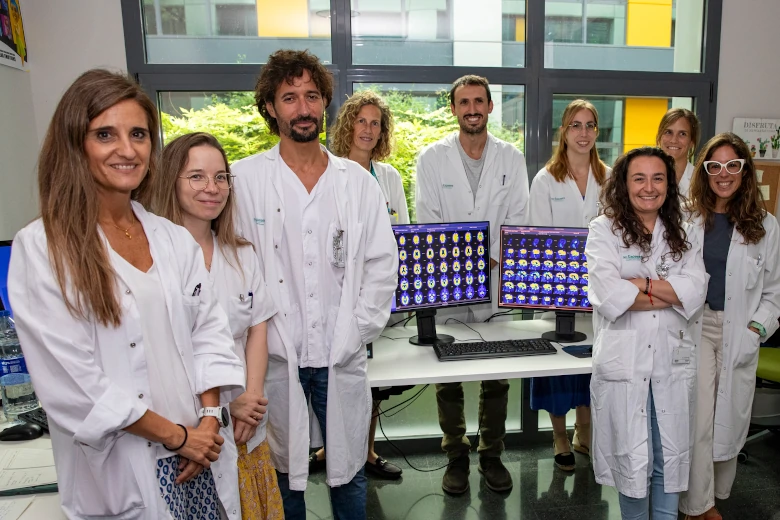
The Nuclear Medicine Service at Son Espases. Photo: CAIB.
The test is requested by the cognitive neurology unit, which assesses the suitability of the study based on the type of cognitive impairment or the patient’s symptoms. Subsequently, the Nuclear Medicine Service performs the PET-CT and analyses the results, providing crucial information to confirm or rule out the diagnosis.
The test is indicated for patients with mild cognitive impairment, atypical dementia symptoms, or an uncertain clinical diagnosis, and is particularly useful in those under 65 years old. Additionally, it allows the differentiation of Alzheimer’s disease from other dementias, such as frontotemporal dementia or atypical parkinsonisms, significantly improving diagnostic accuracy.
With the introduction of this technique, the early detection of Alzheimer’s disease in the Balearics is strengthened, aligning with the recommendations of the Spanish Society of Nuclear Medicine and Molecular Imaging and the Spanish Society of Neurology. Furthermore, it will be essential for accessing future treatments targeting amyloid deposits, currently pending approval in Spain.
Over €5 million allocated to support people with Alzheimer’s and their family caregivers
The Ministry of Families is allocating more than €5 million to the care of people with Alzheimer’s and other neurodegenerative diseases, as well as to support their family caregivers. Part of the investment goes to projects such as the AFAMA Family Comprehensive Care and User Follow-up Point, which helps caregivers balance work and personal life.
In addition, grants have been awarded to social organisations: AFAMA Pollença received €224,336, AFAEF Ibiza and Formentera €111,343, and Llar de la Memòria €15,206, for programmes providing comprehensive care, transport, and autonomy promotion.
Since December 2023, 108 new free day centre places have been created (78 at Llar de la Memòria and Més Vida, and 30 at Centro de Día Mente) to ensure specialised care and facilitate family work-life balance.
The Minister, Sandra Fernández, emphasises that “Alzheimer’s disease not only affects the diagnosed person but also their entire family,” highlighting the Government’s commitment to accessible, high-quality resources such as residential places, home care, telecare, and financial support for caregivers.






Leave A Comment