
Son Sant Joan regained momentum in March after a subdued start to the year. Palma Airport closed last month with 1,594,849 passengers, representing a 2.8% increase compared with March 2025 and ending the downward trend recorded in January and February.
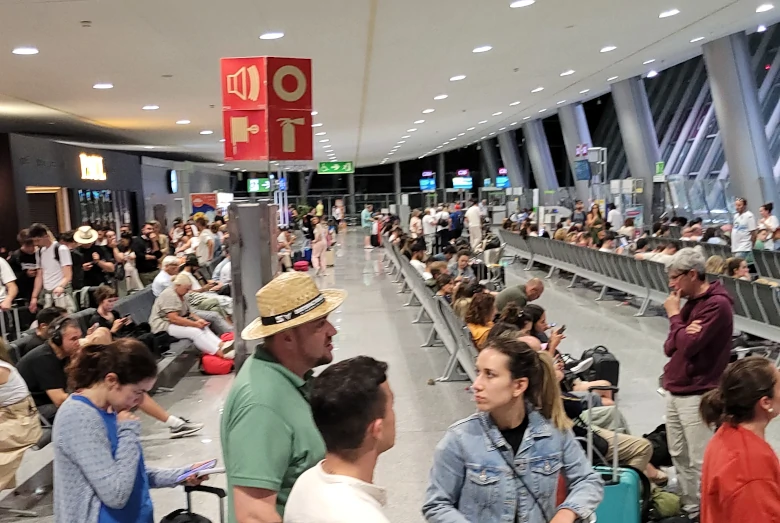
March growth was driven mainly by international traffic, which reached 882,059 travellers, with a notable 7.1% increase. By contrast, the domestic market, with 712,611 passengers, recorded a 2% decline, showing that the recovery has been led by external demand.
In terms of operations, the airport handled 13,015 flights, including take-offs and landings, a 3.1% increase compared with the same month last year, consolidating the reactivation of air traffic activity in line with the start of the tourist season.
A turnaround after two negative months
March’s strong performance contrasts with the figures recorded in previous months. In January, the airport handled 882,638 passengers, a 3% decrease year on year, with declines in both domestic traffic (-1.3%) and international traffic (-5.7%), as well as 8,496 operations (-1.9%).
The downward trend continued in February, with 1,024,342 passengers, representing a 3.1% decline compared with 2025. Both domestic traffic (-3.2%) and international traffic (-2.9%) fell, while operations dropped to 8,829 flights (-4.2%).
Against this backdrop, March marks a turning point, driven by the strength of the international market and the calendar effect of Easter, which this year has been spread across March and April.
First-quarter balance
Despite the improvement in March, the cumulative balance for the first quarter remains slightly negative. Between January and March, 3,501,829 passengers passed through Palma Airport, 0.5% fewer than in the same period of 2025.
Over the same period, the airport handled 30,340 flights, which also represents a 0.5% year-on-year decline. These figures show that March’s recovery has not been enough to fully offset the downturn recorded in the first two months of the year.
Context within the Aena Group
At a global level, the Aena network closed March with 29.9 million passengers, a 4.3% increase compared with a year earlier, and a 6% rise in operations. In Spain, growth stood at 3.9%, although this was slightly below the figure recorded in the same period of the previous year.
According to the airport operator, first-quarter performance was boosted by factors such as the timing of Easter and the transfer of passengers from rail transport following the accident recorded in January, elements that have helped to stimulate air travel demand.
In this context, Palma Airport heads into the coming months with signs of recovery, at a key moment for the start of the high tourist season in the Balearic Islands.








Leave A Comment