
The sharks and rays of the Balearic Islands will, for the first time, be backed by a dedicated protection strategy. The Government of the Balearic Islands, through the Ministry of Agriculture, Fisheries and the Natural Environment, has approved the Action Plan for the Conservation of Elasmobranchs in the Balearic Islands—a pioneering initiative in Spain and across the Mediterranean that marks a turning point for marine conservation in the archipelago.
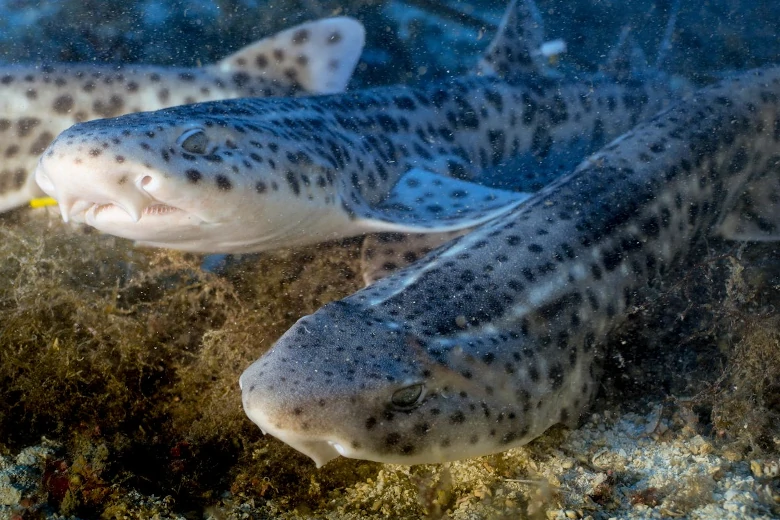
The tope shark (locally known as alitán or gatvaire) is one of the elasmobranch species at risk of extinction in Balearic waters. Photo: CAIB.
The document, already published in the Official Gazette of the Balearic Islands (BOIB), sets out a comprehensive framework for action to halt the decline of these species, which are essential to the balance of marine ecosystems. The Director General for Fisheries, Antoni M. Grau, stressed that “this Plan represents a decisive step towards more effective protection of the Balearic Sea, bringing together conservation and responsible fishing.” “The Balearic Islands are once again at the forefront of marine policy, with a rigorous, practical and ambitious tool built with the involvement of the sector and the scientific community,” he added.
Concerning situation for sharks and rays in the Balearic Islands
The need for the plan reflects an alarming reality. Of the 56 elasmobranch species—sharks and rays—recorded in the Balearics, 34 are threatened and 17 are critically endangered or have already become regionally extinct.
Sharks and rays play an essential role in marine ecosystems, sitting at the top of the food chain. Their disappearance can trigger serious ecological imbalances.
The Director General for the Natural Environment and Forest Management, Anna Torres, said that “conserving sharks and rays is not only about protecting species; it is a commitment to the health of marine ecosystems and the future of our natural heritage.” Torres also underlined that “the Balearic Sea remains an area of exceptional biological richness within the western Mediterranean, and it is everyone’s responsibility to protect it with tools such as this Plan.”
A pioneering plan for marine conservation
The strategy approved by the Government is structured around six key lines of action:
- Sensitisation and improved identification of protected species.
- Enhanced scientific monitoring.
- Reducing accidental (bycatch) captures.
- Sustainable fisheries management.
- Research and innovation through IRFAP.
- Strengthening surveillance and enforcement.
Among the first measures are updated identification guides and specific protocols for accidental captures.
Reducing accidental captures, one of the central pillars
One of the plan’s main aims is to minimise the involuntary capture of sharks and rays. To that end, it will promote safe handling and release techniques, as well as potential incentives for the fishing sector.
The Government insists that cooperation with fishers will be vital to ensure the measures are effective. “The presence of the fishing sector is essential for the measures to be workable and effective. This Plan cannot be understood without cooperation and shared responsibility,” Grau said.
The plan also formalises a Group of Experts on Sharks and Rays, bringing together scientists, public administrations, conservation organisations and representatives of the fishing sector.







Leave A Comment