
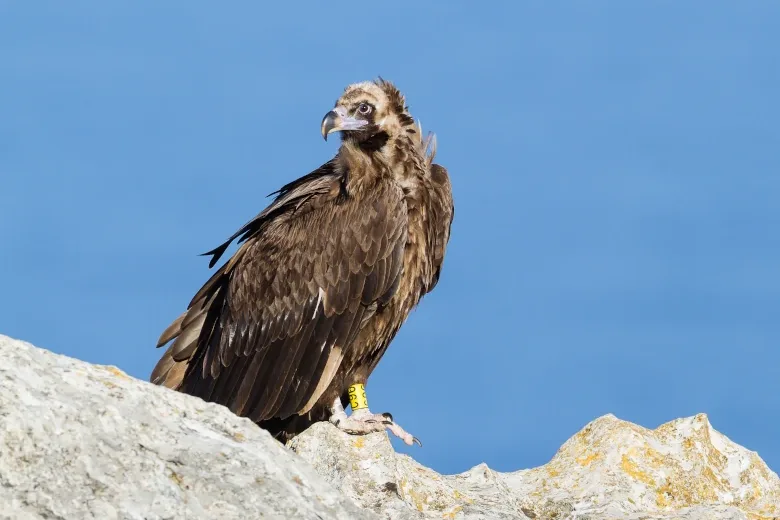
The Government has issued an alert as the breeding season of the birds of prey of the Balearic Islands gets under way, one of the most delicate periods for these protected species. The Ministry of Agriculture, Fisheries and the Natural Environment warns that human disturbance in breeding areas can lead to nests being abandoned, chicks being lost and reproductive failure.
The regional authorities remind the public that, during these months, the reproductive activity of some of the archipelago’s most emblematic and vulnerable species is concentrated:
- Black vulture and griffon vulture → December – August
- Red kite → February – June
- Osprey and Bonelli’s eagle → February – July
Key restrictions during the breeding season
In this regard, the Ministry stresses that failing to comply with access restrictions in exclusion zones, entering unauthorised climbing areas or creating noise, whether from land or sea, can have serious consequences for the breeding success of these protected species. Before visiting any natural area, it is essential to check the current restrictions and the applicable regulations.
Respecting these measures, the Government underlines, not only protects wildlife, but also helps to conserve ecosystems and encourages responsible coexistence with the natural environment of the Balearic Islands.
Monitoring campaign for the breeding of the birds of prey of the Balearic Islands
The Ministry of Agriculture, Fisheries and the Natural Environment, through the Directorate-General for the Natural Environment and Forest Management, has once again carried out monitoring of the breeding of the birds of prey of the Balearic Islands, as part of conservation actions for these protected and particularly fragile species.
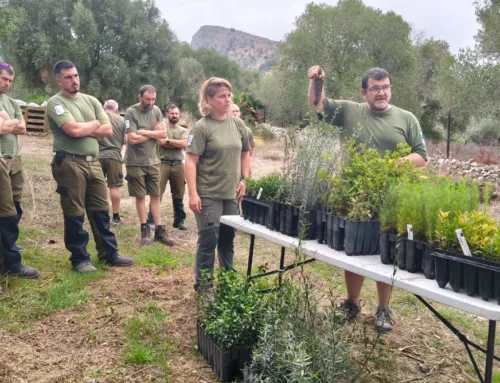
The Environmental Ranger Service, in coordination with the Species Protection Service, has carried out observation visits to breeding territories and nests to check occupancy, laying, hatching, breeding success and productivity. Inspections have been conducted both from land and from the sea, with the support of boats and the use of specialist optics—a methodology that helps to minimise disturbance to the birds during the breeding process.
Black vulture (Aegypius monachus) and griffon vulture (Gyps fulvus)
Breeding of the black vulture (voltor negre) and the griffon vulture (voltor lleonat) remains restricted to Mallorca. The black vulture recorded fifty-four occupied nests, all with eggs laid. Despite losses of clutches and chick mortality during the season, thirty-five individuals ultimately fledged. In a feature published in Mallorca Global Mag, we look back at how the species recovered on the island and the risks that still affect its survival today. Read it via this link.
The griffon vulture, meanwhile, maintained figures considered stable, with forty-two pairs and a total production of thirty-eight fledged chicks.
Red kite (Milvus milvus)
In Mallorca, more than a hundred red kite nests (milana) were checked, with dozens of occupied territories and a minimum of sixty-two chicks recorded. In Menorca, an increase in the number of territorial pairs was detected, although productivity was lower than the previous year.
Osprey (Pandion haliaetus)
In the case of the osprey (àguila peixatera), Mallorca recorded eleven territorial pairs, five of which bred successfully, with a total of eleven chicks. Although a slight increase in pairs has been noted in recent years, productivity remains low, mainly linked to human disturbance and difficulties in obtaining food.
In the Cabrera Archipelago Maritime-Terrestrial National Park, five territorial pairs were detected, with three successful breeding attempts and four chicks. During the season, clutches were lost and one abandoned chick had to be rescued. Ibiza, meanwhile, showed a positive trend with three successful pairs and four fledged chicks, while Menorca remained stable with four territorial pairs and six fledged chicks.
Bonelli’s eagle (Hieraaetus fasciatus)
As for Bonelli’s eagle (àguila coabarrada), monitoring confirms a stable situation in Mallorca. During the campaign, fourteen territorial pairs were monitored, with successful breeding in eight nests and a minimum of thirteen fledged chicks. In addition, a further six territorial pairs were detected that did not breed.
Comprehensive Conservation Plan for Diurnal Raptors
At the same time, the Government has continued implementing the Comprehensive Conservation Plan for Diurnal Raptors (Plan Terrasse), which includes tagging individuals with GPS/GSM transmitters. This technology makes it possible to detect threats such as illegal shooting, poisoning, electrocutions or collisions with power lines, as well as providing key information on dispersal movements and juvenile survival.







Leave A Comment